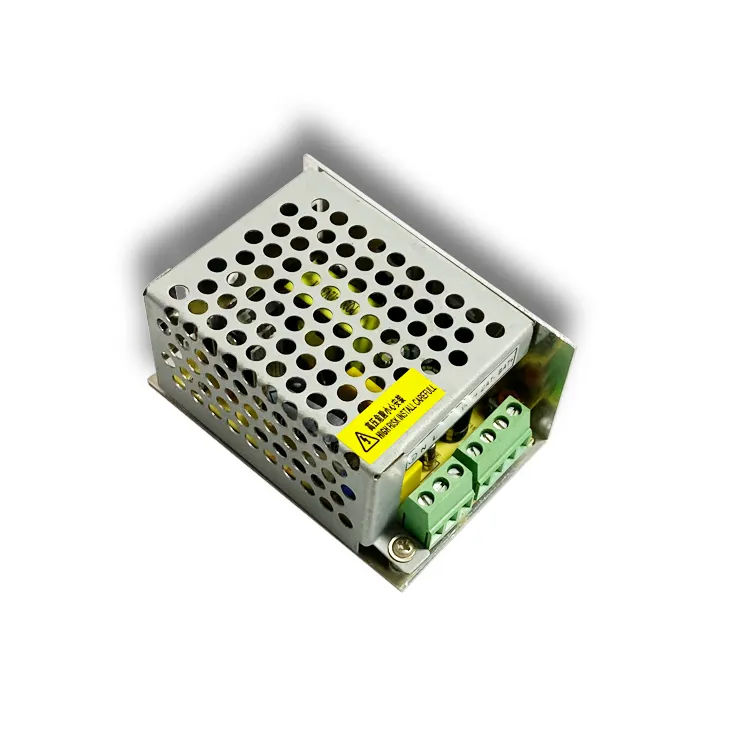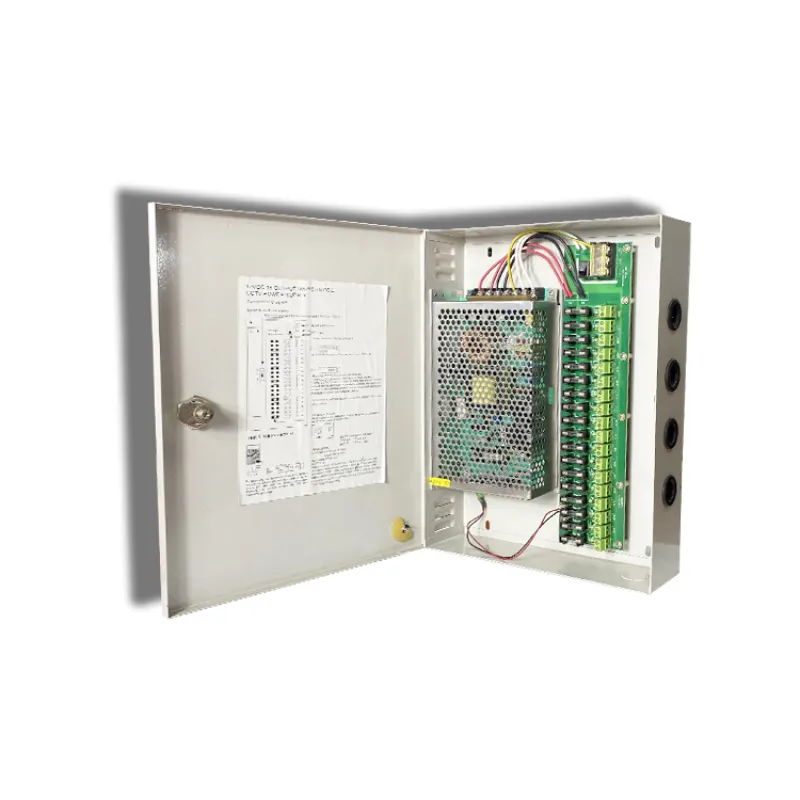
An online search for “EPS emergency power supply” mixes two very different product classes: high-power AC systems for building loads and low-voltage DC backup supplies installed in emergency-lighting or security control boxes. The Sanyi Power® 43 Series belongs to the second group. Selection starts with system voltage, load current, output circuits and battery requirements—not with the EPS label alone.
Output count, current and construction vary across the 43 Series. After selecting a model, verify terminal definitions, current per circuit, dimensions and certification scope against the exact datasheet and project agreement.
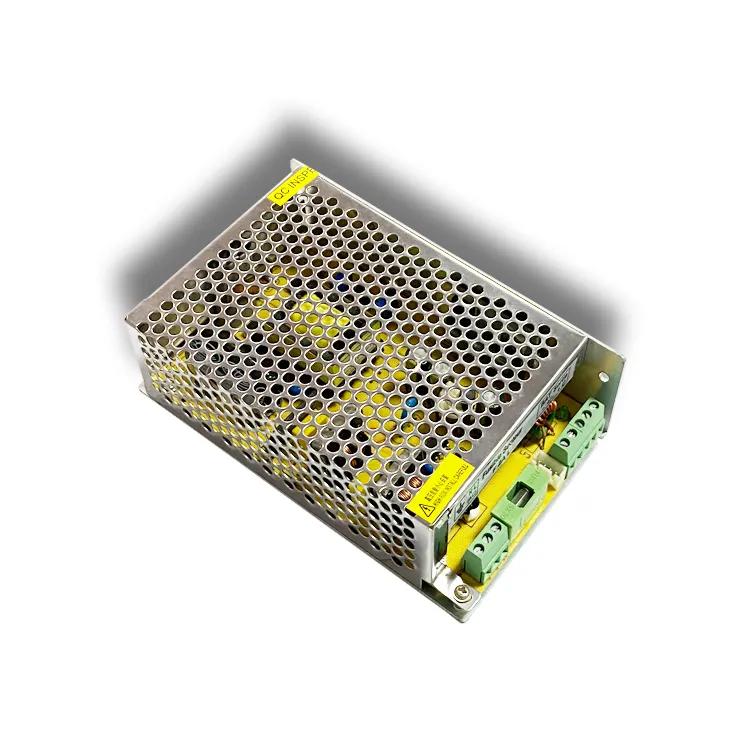
Which models are included in the 43 Series?
The current product family covers:
- EPS-SD-4301
- EPS-SP-4303
- EPS-ST-4304
- EPS-ST-4308
- EPS-ST-4310
The family provides 1, 3, 4, 8 and 10-output configurations in 12V and 24V systems. The input range is AC 100–240V, 50/60Hz. The 12V family is rated at DC 13.5V and the 24V family at DC 27V.
| Selection item | Confirmed 43 Series range | Confirm for the project |
|---|---|---|
| Models | EPS-SD-4301 / EPS-SP-4303 / EPS-ST-4304 / EPS-ST-4308 / EPS-ST-4310 | Terminals, enclosure and exact configuration |
| Input | AC 100–240V, 50/60Hz | Site mains and grounding |
| 12V family | DC 13.5V; 1.5A / 3A / 5A / 10A depending on model | Exact model and allowable load |
| 24V family | DC 27V; 1A / 1.5A / 4A / 5A depending on model | Exact model and allowable load |
| Output circuits | 1 / 3 / 4 / 8 / 10 | Load, cable and protection per circuit |
| Battery management | Float charging and automatic transfer to battery when mains fails | Battery type, capacity and target runtime |
| Ambient | -10°C to 60°C | Datasheet derating, mounting and cooling |
See the 43 Series EPS product page for the complete image gallery, specifications and inquiry entry point.
After selecting a model, use the 43 Series mains/battery transfer, float-charging and wiring guide to plan outage, restoration and battery checks.
Step 1: establish the 12V or 24V system
The load, battery and power supply must use a compatible voltage system. “12V” and “24V” describe the system families; they do not mean the supply remains at exactly 12.0V or 24.0V. The rated outputs are DC 13.5V and DC 27V to support battery float charging.
Before requesting a quotation, confirm:
- the load’s allowable voltage range;
- whether the battery system is 12V or 24V;
- whether controllers, locks, cameras, luminaires or alarm devices accept the actual float-bus voltage;
- whether any load requires a regulated output isolated from the battery bus.
An application label such as “access control power” or “emergency light power” is not enough to choose the voltage.
Step 2: calculate total current and every circuit load
List every load by circuit rather than multiplying only the device nameplate quantity. The starting calculation is:
Total steady-state current = sum of the steady-state current of all circuits
Check startup or actuation current separately for magnetic locks, relays, sounders, lighting drivers and other dynamic loads. Engineering margin should reflect load behaviour, cable loss, temperature and the project standard. One fixed percentage cannot replace a real calculation.
In a four-output system, the four circuits may carry different loads. A satisfactory total-current figure does not prove that one circuit can carry the entire load. Include current per circuit and simultaneous operating conditions in the requirement sheet so the exact model can be verified.
Step 3: use output count to plan wiring and fault isolation
The 43 Series covers 1, 3, 4, 8 and 10 outputs. Multiple outputs can simplify zoning, labeling and troubleshooting for access control, CCTV, alarm or lighting circuits. More outputs, however, do not automatically mean more total power.
Ask these questions when choosing the output count:
- What equipment is connected to each circuit?
- Must other circuits remain available if one circuit is overloaded or shorted?
- Have cable length, conductor size and terminal voltage drop been calculated?
- Are separate zones required inside the security control box?
- Can maintenance staff identify a failed load from the circuit labels?
For long low-voltage DC cable runs, use the voltage-drop calculator as an initial check, then compare the result with the load’s allowable terminal voltage.
Step 4: size the battery from target runtime
Backup time depends on usable battery capacity, load, cable losses, battery ageing and temperature. An initial calculation can start with:
Theoretical capacity (Ah) = load current (A) × backup time (h)
This is a theoretical minimum, not a final battery size. The project must also account for permitted depth of discharge, capacity at low temperature and end of life, wiring losses and the required design margin. Battery chemistry, charging voltage and allowable charging current must match the supply’s float-charging arrangement.
Provide at least:
- battery type and nominal voltage;
- battery capacity or target runtime;
- loads that must operate during normal mains and during an outage;
- minimum and maximum ambient temperature;
- whether the battery shares the same enclosure.
Step 5: define environment, EMI and protection checks
Confirmed family information includes a built-in EMI filter, overload and charging protection, and an operating range of -10°C to 60°C with datasheet derating at elevated temperature. These family-level statements do not replace system validation.
During sample approval, check:
- restarts, false alarms or video interference when the supply and load operate together;
- load behaviour when mains is removed and restored;
- voltage at the end of the longest cable;
- enclosure, terminal and component temperatures at rated load and elevated ambient;
- overload, short-circuit and battery-fault behaviour and recovery against the datasheet;
- safety, EMC and certification requirements for the exact model, configuration and destination market.
EMC is a system property affected by cables, grounding, enclosure, load and installation. Use an industrial power supply EMC pre-compliance plan to define sample tests before formal evaluation.
How is the 43 Series different from a UPS or high-power AC EPS?
The 43 Series provides low-voltage DC backup with multiple outputs, battery float charging and automatic mains/battery transfer. A UPS may provide AC or another conditioned output to keep specified equipment operating. A high-power AC EPS may serve larger building emergency loads. Output form, capacity, transfer architecture, load profile and applicable standards can all differ.
The shared “EPS” abbreviation does not make these products interchangeable. Draw the system power architecture first, then select the product class.
RFQ checklist
| Information | What to provide | Required |
|---|---|---|
| Mains input | AC voltage and frequency range | Yes |
| Load system | 12V or 24V and allowable voltage range | Yes |
| Circuit loads | Equipment and steady/start current per circuit | Yes |
| Output count | Required 1 / 3 / 4 / 8 / 10-output arrangement | Yes |
| Battery | Type, voltage and capacity | Yes |
| Runtime | Target operation time after mains failure | Yes |
| Environment | Temperature, mounting, cooling and cable length | Yes |
| Destination market | Safety, EMC and certification scope | Yes |
| Purchase plan | Sample quantity and estimated volume | Recommended |
FAQ
Is the 43 Series a 12V or 24V supply?
Both families are available. The 12V family is rated at DC 13.5V and the 24V family at DC 27V. Select the system that matches the load and battery.
How many output circuits are available?
The family covers 1, 3, 4, 8 and 10-output configurations. Confirm current per circuit and wiring in the exact model datasheet.
How long will the battery backup last?
The power-supply model alone cannot determine runtime. Battery capacity, load, cable loss, battery condition and temperature must be calculated from the load list and target duration.
Can the 43 Series directly replace a UPS?
Not by name alone. The 43 Series is a low-voltage DC backup solution; a UPS can use a different output and load architecture.
Do the displayed certification marks cover every model and configuration?
Series-level information does not automatically cover every voltage, enclosure or customized version. State the destination market and verify the valid certificate and report for the exact configuration.
Request 43 Series selection support
Send the voltage system, load per circuit, output count, battery parameters, target runtime, ambient temperature and quantity through the Sanyi Power assistant. If information is incomplete, the engineering team will identify the missing inputs before recommending a model.