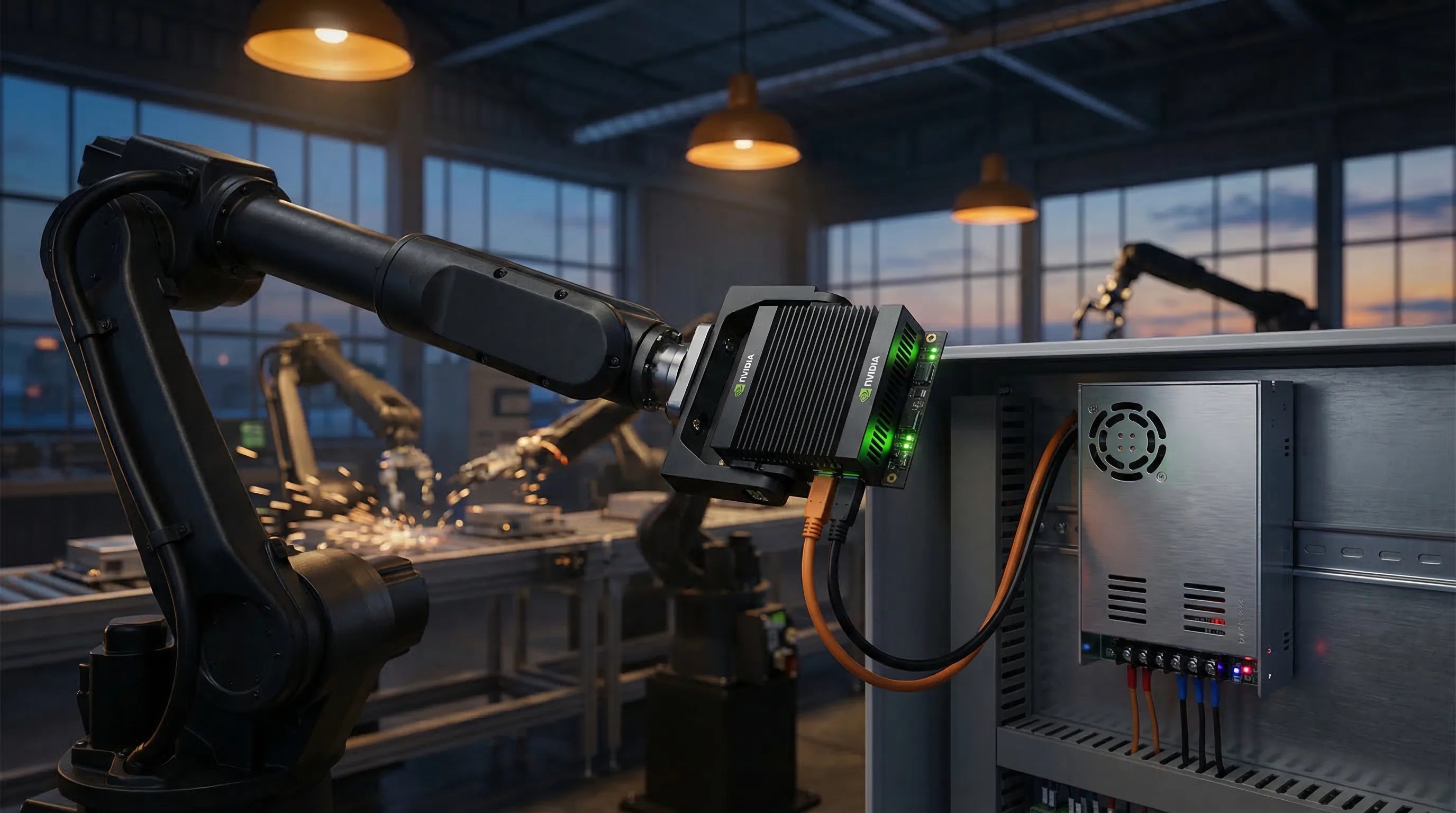

At the 47th minute of the GTC 2026 keynote, Jensen Huang switched to a Jetson Thor spec sheet.
In the preceding 46 minutes, he had announced $1 trillion in combined Blackwell and Vera Rubin purchase order expectations, unveiled the Kyber rack prototype drawing 600,000 watts per cabinet, confirmed that BYD, Nissan, and Hyundai would develop L4 autonomous driving on NVIDIA platforms, and brought a robot named Olaf on stage to demonstrate grasping and walking. These announcements dominated every tech headline within hours.
The Jetson Thor spec sheet stayed on screen for roughly 15 seconds.
It read: input voltage 9-28V, power draw 40-130W.
If you work in power supplies, one thing jumps out immediately: the previous-generation Jetson AGX Orin had an input range of 7-20V at 15-60W. Before that, Jetson Xavier was 9-20V at 10-30W.
Three generations, and the power ceiling went from 30W to 130W — a 4x increase. But the voltage shift matters more: 28V. That number has crossed from consumer electronics into industrial power distribution territory. The 24V DC bus systems found in millions of factories worldwide sit squarely within this range.
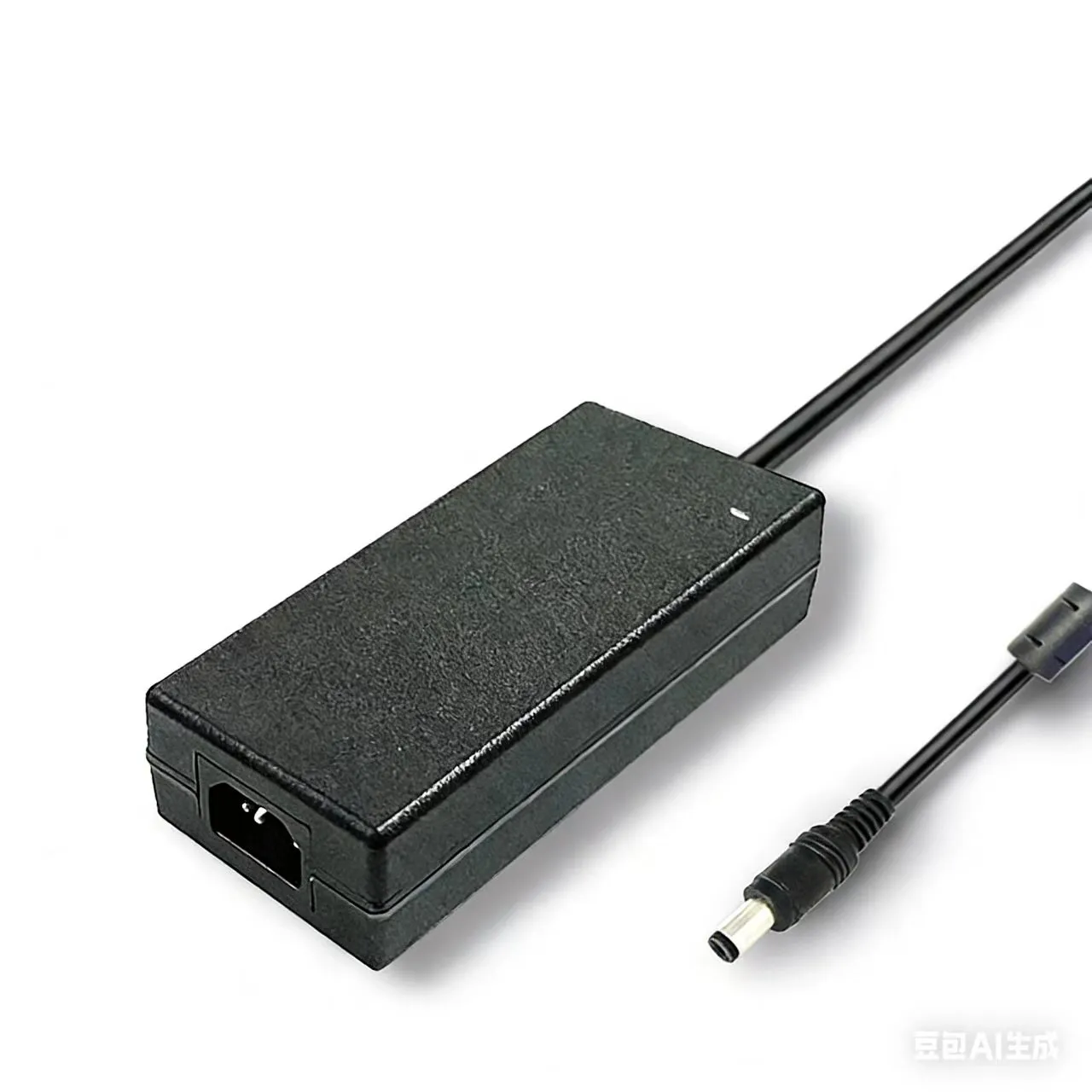
Put differently: NVIDIA's edge AI chips have moved from needing a USB adapter to needing an industrial switching power supply.
This transition is happening faster than most supply chains can respond.
The Edge: A Power Vacuum Behind the Trillion-Dollar Order Book
The dominant narrative at GTC 2026 was compute and foundation models. But Huang spent approximately 20 minutes discussing Physical AI — robots, autonomous vehicles, production line visual inspection — a direction whose impact on the power supply industry may run deeper than data center GPUs.
The reason lies in a structural difference on the supply side. Data center power infrastructure is mature — vendors like Delta, Vertiv, and others deliver complete solutions from UPS to PDU to 800V HVDC (see our NVIDIA 800V HVDC Deep Dive). At the edge, however — beside factory production lines, at warehouse charging stations, inside roadside traffic computing cabinets, next to surgical imaging terminals — power solutions are far less standardized.
Several data points outline the scale of this market:
- Deloitte 2026 TMT Predictions: AI inference workloads will account for two-thirds of all compute in 2026 (up from one-third in 2023), with inference-optimized chip revenue exceeding $50 billion. A significant share of inference will occur at the edge
- Precedence Research: The global edge AI market grows from $25.6 billion in 2025 to $143 billion by 2034, at a 21% CAGR
- IFR: Global industrial robot installations are projected to grow from 542,000 units (2024) to 619,000 units (2026), with a total installed base of 4.7 million
Every one of these edge AI devices needs a power supply matched to its operating environment — not the climate-controlled conditions of a data center, but dust, vibration, temperature swings from -30°C to +60°C, and rain exposure.
From 15W to 300W: The NVIDIA Edge Platform Power Evolution
Laying out several generations of NVIDIA edge platforms side by side, the power escalation trend is unmistakable:
| Platform | Positioning | AI Performance | TDP / System Power | Input Voltage |
|---|---|---|---|---|
| Jetson Orin Nano | Entry-level edge inference | 40 TOPS | 7–15W | 5-19V |
| Jetson AGX Orin | Mainstream robots/AMR | 275 TOPS | 15–60W | 7-20V |
| Jetson AGX Orin Industrial | Industrial-grade (wide temp) | 248 TOPS | 15–75W | 7-20V |
| Jetson Thor T4000 | Mid-range Physical AI | 1,200 TFLOPS (FP4) | 40–70W | 9-28V |
| Jetson Thor T5000 | High-end humanoid robots | 2,070 TFLOPS (FP4) | 40–130W | 9-28V |
| IGX Thor | Industrial/medical edge AI | 5,581 TFLOPS (FP4) | 300W+ (with dGPU) | Industrial PSU |
Sources: NVIDIA Jetson Thor, NVIDIA IGX Thor Blog, NVIDIA Developer Blog
Jetson Thor delivers 7.5x the AI compute and 3.5x better energy efficiency compared to Jetson AGX Orin — performance has surged, but power draw has risen accordingly.
An underestimated signal
Power consumption growth was expected — higher compute inevitably means higher power draw. The voltage shift, however, deserves closer attention. The Jetson Thor development kit ships with a 28V/5A adapter (140W), with an input voltage range expanded from 7-20V to 9-28V. 28V falls squarely within the industrial 24V DC distribution standard. This means NVIDIA's edge AI product line is migrating from consumer electronics power delivery to industrial switching power supply infrastructure.
Five Scenarios: New Power Requirements for Edge AI
1. Smart Manufacturing: Production Line Visual Inspection
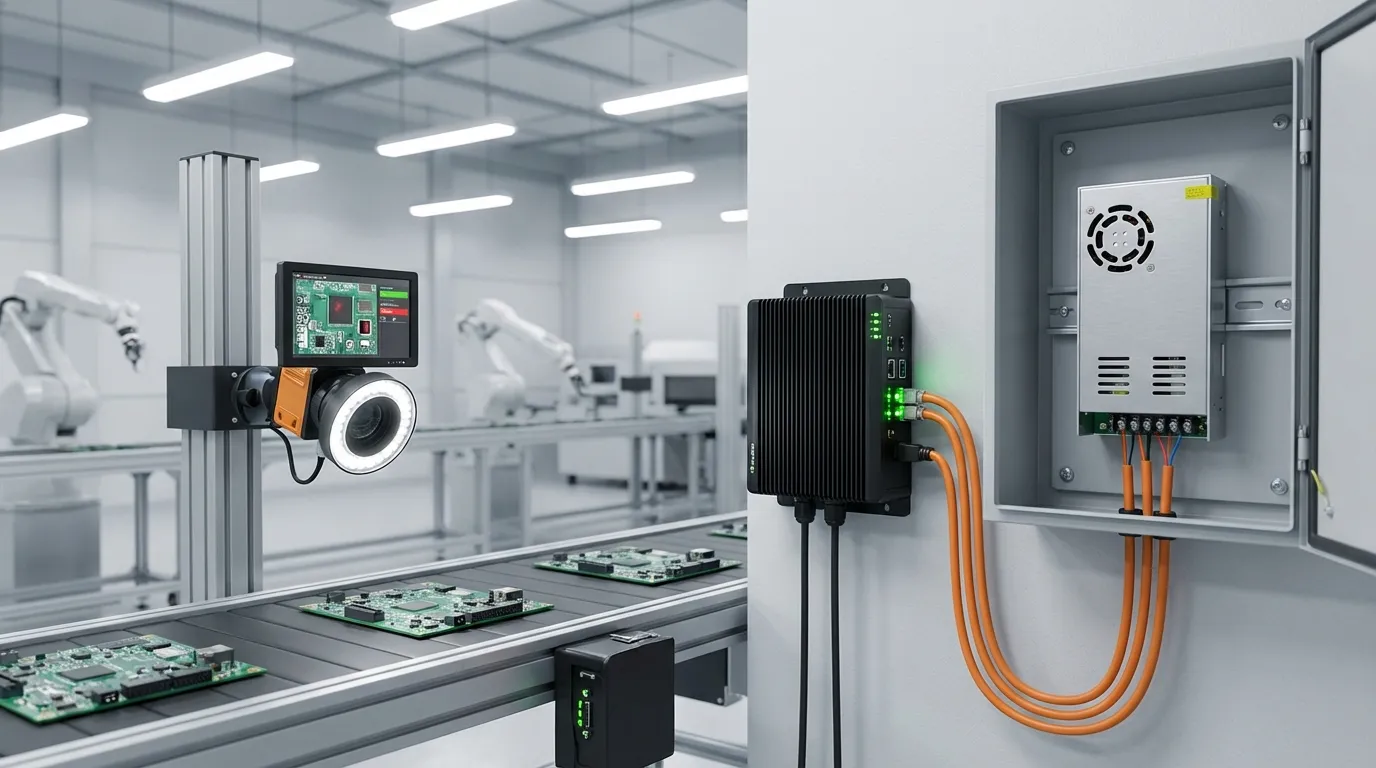
Scenario: AI vision systems perform real-time defect detection, replacing manual visual inspection. Typical configuration: IGX Thor (5,581 TFLOPS) + industrial camera + lighting controller. Manufacturing is the fastest-growing edge AI segment, with Grand View Research projecting a 23% CAGR.
Power challenges:
- Single system power draw 300-500W (IGX Thor with dGPU 300W+ plus industrial camera 30W plus lighting 50W)
- Production lines run 24/7; power supplies must sustain continuous full-load operation. Critical applications require 99.999% availability (< 5.26 minutes downtime per year)
- Factory environment: dust, vibration, high temperatures (some lines exceed 45°C ambient)
- IGX Thor supports a 10-year lifecycle; power supplies must match this reliability tier
Power supply requirements: 240W-480W industrial switching PSU, DC 24V output (matching Jetson Thor's 9-28V input range), wide temperature design (-10°C to +50°C), MTBF > 50,000 hours, overcurrent/overvoltage/short-circuit/overtemperature protection.
2. Warehouse Logistics: AMR / AGV Charging Stations
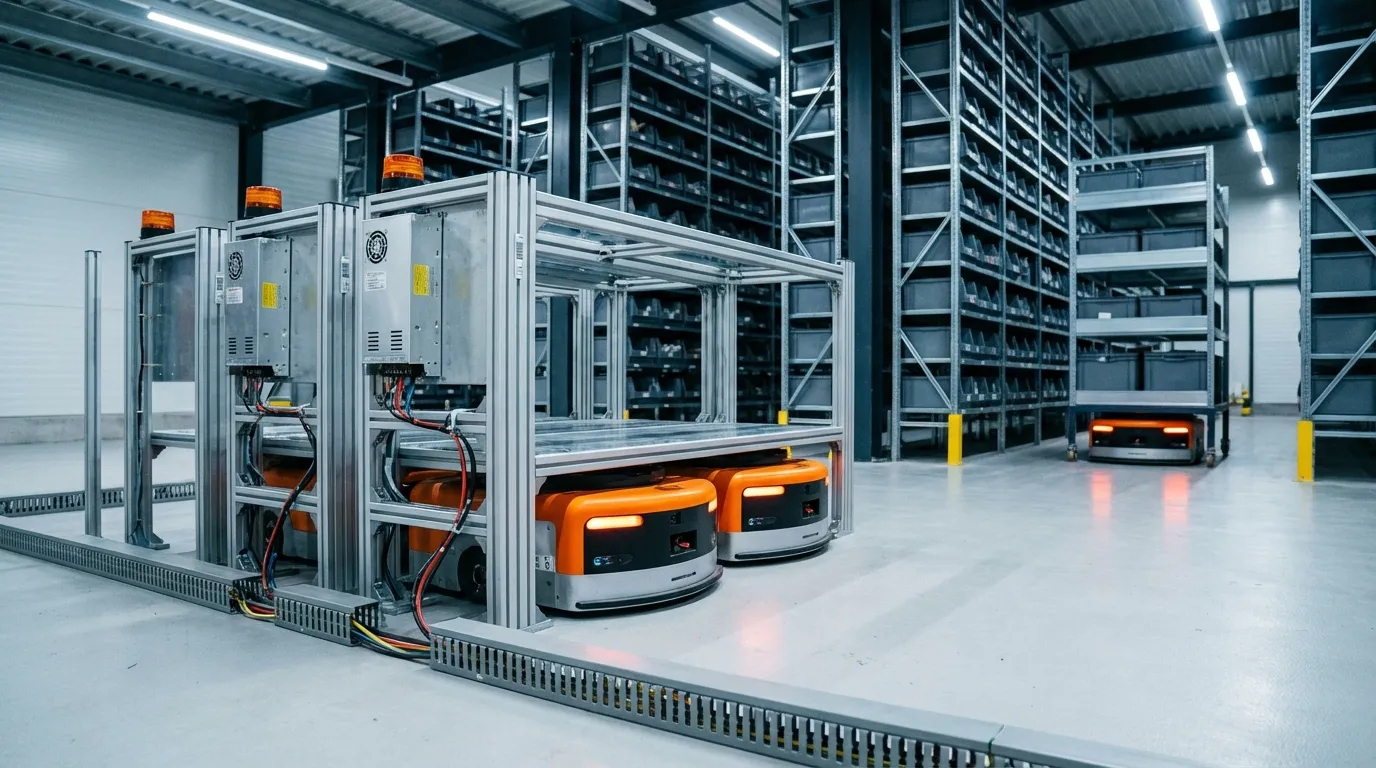
Scenario: Warehouse AMR vehicles running Jetson Thor T4000 (40-70W) for autonomous navigation and picking, returning to charging docks between tasks. According to the International Federation of Robotics (IFR), global industrial robot installations are projected to grow from 542,000 units in 2024 to 619,000 in 2026, with a total installed base of 4.7 million.
Power challenges:
- Charging stations must deliver DC 24V/48V at high current
- Multiple AMRs charging simultaneously can reach several kilowatts total
- Warehouse environments require dust-proof and ESD-resistant designs
- High efficiency is essential — lower power waste directly reduces operating costs
Power supply requirements: Multiple 300W-500W switching PSUs in parallel, efficiency ≥ 87%, universal voltage input (AC 100-240V).
3. Smart Transportation: Roadside Computing Units (RSU)
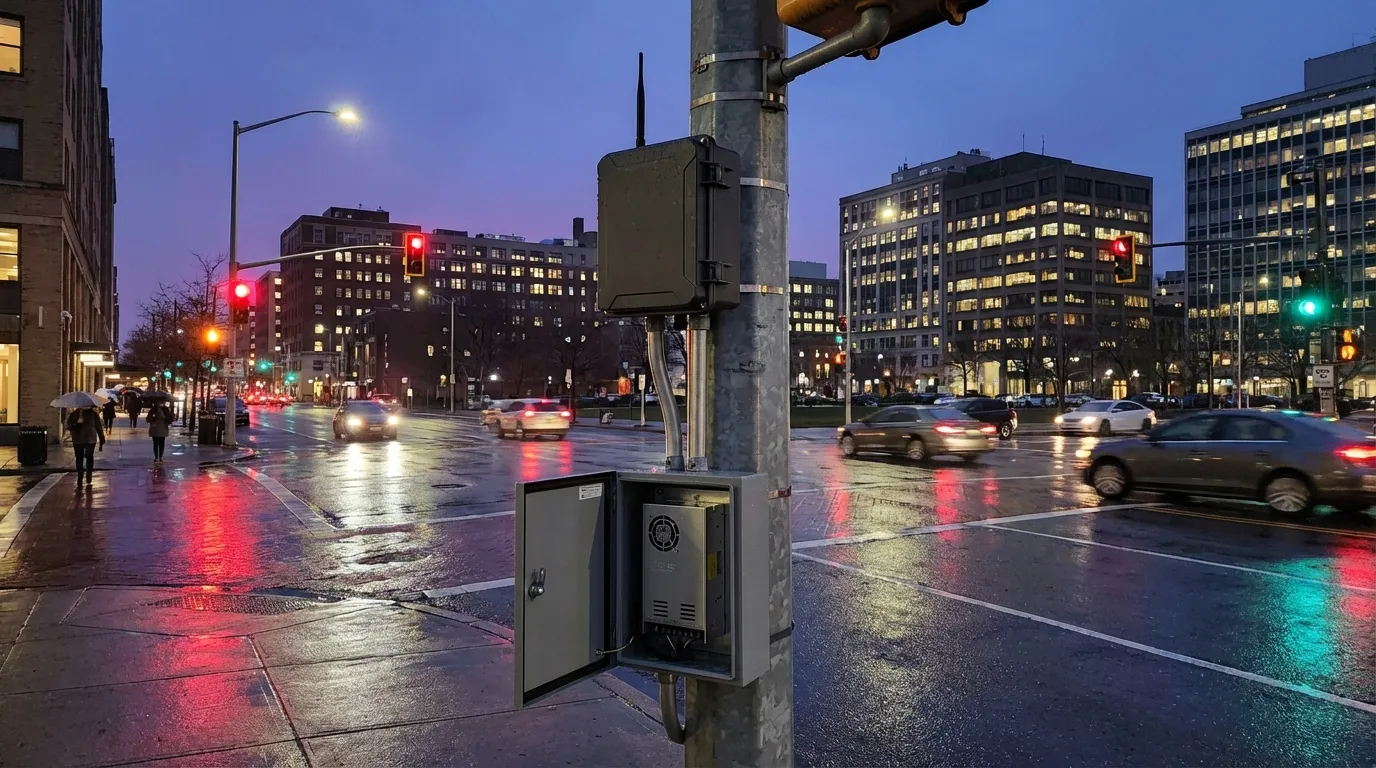
Scenario: AI compute boxes (based on Jetson Thor / Orin) deployed at intersections for vehicle-infrastructure coordination, signal optimization, and incident detection.
Power challenges:
- Outdoor exposure: -30°C to +60°C temperature extremes, rain, wind, sun
- Surge and lightning protection required
- Power interruption means the intersection goes "blind" — a direct traffic safety risk
- Typically powered from streetlight distribution boxes at DC 12V/24V
Power supply requirements: Rainproof or waterproof switching PSU (IP65+), wide temperature range, built-in surge protection. For uninterruptible operation, pair with a UPS backup unit.
4. Medical Imaging: AI-Assisted Diagnostic Terminals
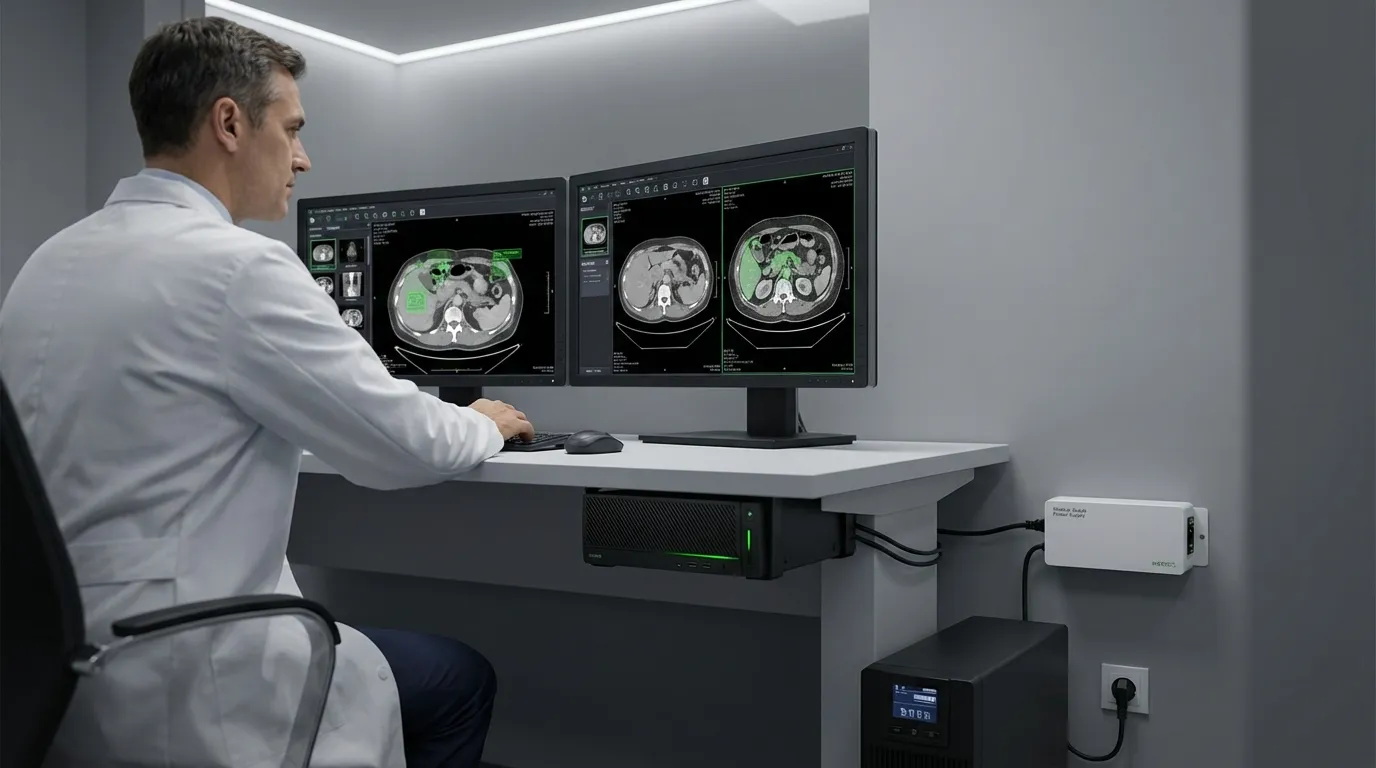
Scenario: Hospitals deploy IGX Thor for local AI analysis of CT/MRI images, assisting physicians with rapid diagnosis. IGX Thor includes a safety MCU (Microcontroller Unit) for functional safety requirements. CMR Surgical CTO Chris Fryer stated: "With IGX Thor, we have the potential to deploy next-generation AI assistants and real-time surgical guidance systems."
Power challenges:
- Medical equipment demands extremely low ripple and noise (< 100mV)
- Power interruptions can impact diagnostic workflows or even surgical safety
- Medical safety certifications required
- IGX Thor supports 400GbE networking interfaces, increasing overall system power draw
Power supply requirements: Low-ripple switching PSU, UPS uninterruptible protection, full certifications (CE/FCC/3C).
5. AI Surveillance: Edge Analysis Servers + Front-End Cameras
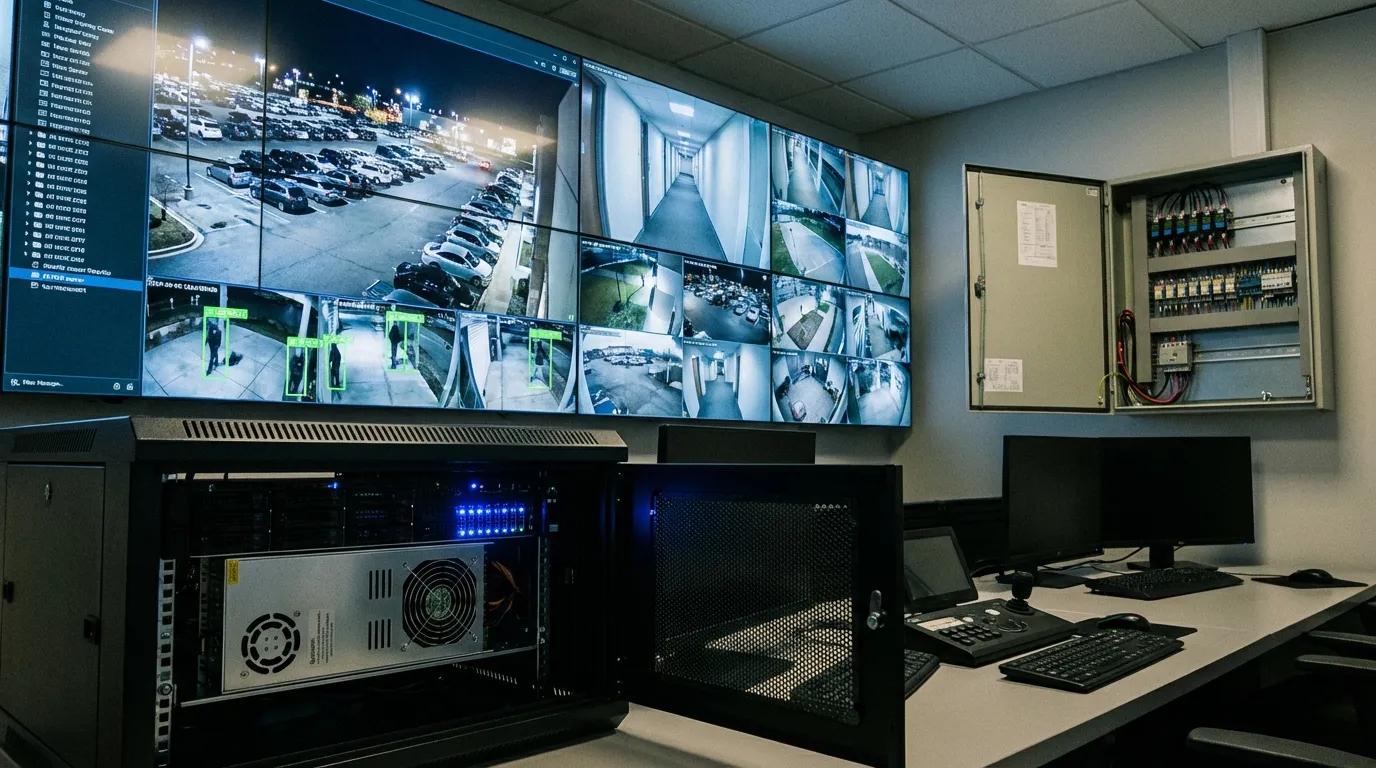
Scenario: AI NVR or edge analysis boxes processing feeds from dozens of AI cameras for face recognition, behavior analysis, and perimeter detection.
Power challenges:
- AI NVR devices draw 100-300W
- Front-end AI cameras draw 12-25W each, at scale
- Centralized power management needed — a single-channel fault must not affect other channels
- Outdoor cameras require weatherproof power solutions
Power supply requirements: 240W-480W industrial PSU for AI analysis hosts; PoE switch power (with PoE PSU) or centralized power distribution boxes (5/9/18 channel options) for cameras.
Edge AI Power Supply Selection: Five Critical Parameters
Regardless of scenario, selecting a power supply for edge AI comes down to five parameters:
| Parameter | Why It Matters | Recommended Value |
|---|---|---|
| Power headroom | AI inference creates transient peak loads; sustained full-load operation is normal | Rated power ≥ 1.3x actual load |
| Operating temperature | Factory/outdoor environments have significant temperature variation | Minimum -10°C to +50°C; outdoor: -30°C to +60°C |
| Efficiency | At scale, each 1% efficiency improvement × number of nodes = significant energy savings | ≥ 87% (higher is better) |
| Protection features | Edge devices are unattended — failures cannot rely on manual intervention | OCP + OVP + SCP + OTP (four-way protection) |
| MTBF | Continuous operation is mandatory; replacing a power supply means stopping the line | ≥ 50,000 hours |
How to calculate power headroom
Example: An IGX Thor visual inspection system — AI host 200W + industrial camera 30W + lighting 50W = actual load 280W.
At 1.3x headroom: 280 × 1.3 = 364W. Select a 480W switching PSU — this provides adequate margin while keeping the PSU in its optimal 60%-70% efficiency range.
Post-GTC: Four Structural Shifts in Edge AI Power
The $1 trillion chip order book will ultimately materialize in specific deployment scenarios. Every Jetson Thor or IGX Thor installed in a factory, warehouse, intersection, or operating room requires a power supply capable of continuous operation exceeding 50,000 hours in challenging environments.
From GTC 2026's product roadmap, four structural shifts in power supply requirements are observable:
- Power tier migration: Edge AI devices are jumping from the 15W tier to 100-300W, making 200W-500W industrial PSUs essential
- Environmental resilience: Outdoor, high-temperature, and dusty deployments are increasingly common — weatherproofing and wide-temperature design are no longer optional but mandatory
- DC power preference: Edge AI devices almost universally run on DC 12V/24V/48V; switching PSUs and PoE solutions are a better match than traditional AC adapters
- Uninterruptible power: Mission-critical scenarios (traffic, medical, security) cannot tolerate power loss — UPS backup is becoming standard
Sanyi Technology Edge AI Power Solutions
| Scenario | Recommended Product | Power | Key Features |
|---|---|---|---|
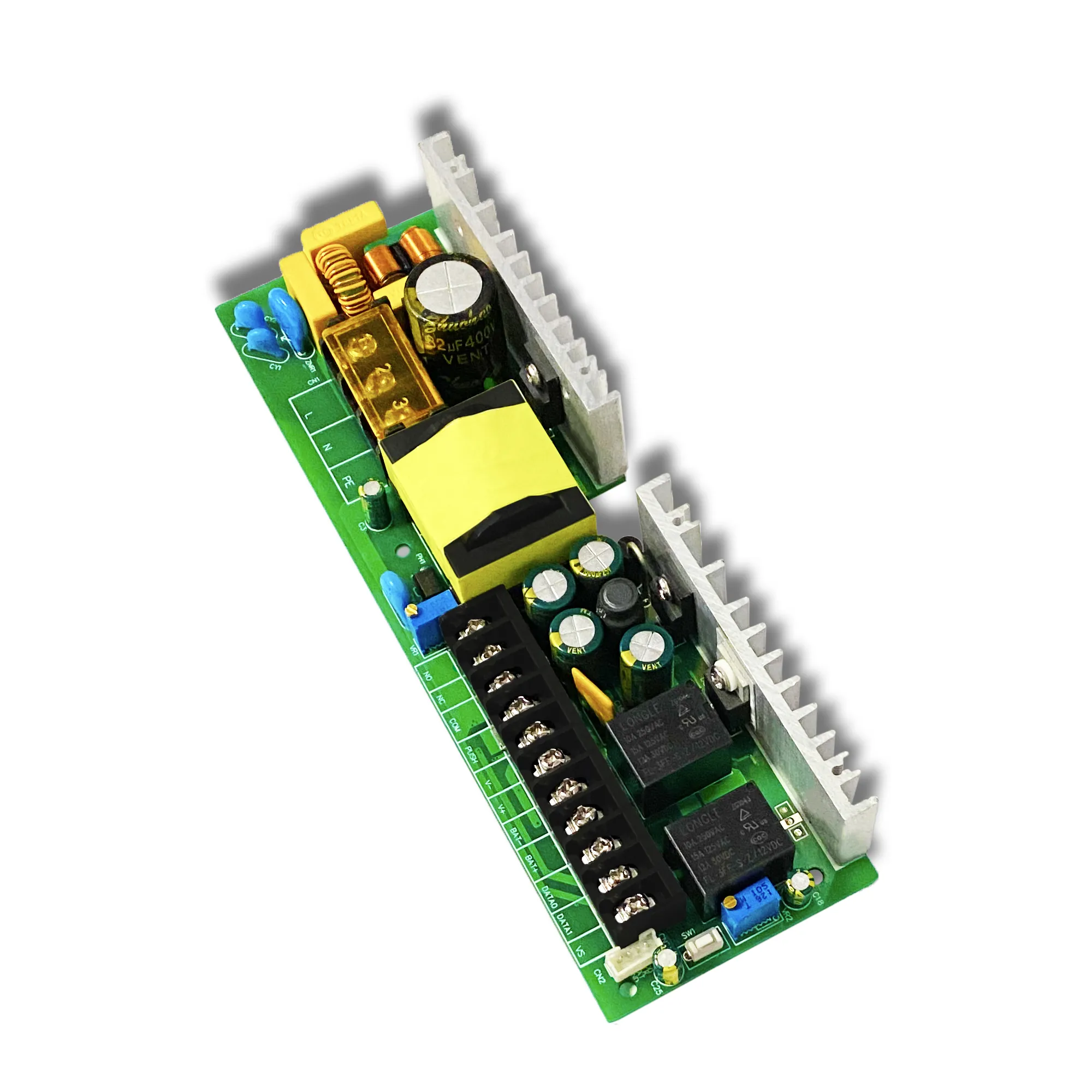
| Production line inspection | SFY-Z High-Power Switching PSU | 240W-480W | Wide temp -10~+50°C, MTBF > 50,000h |
| AMR charging / industrial control | SFY-I Mid-Power Switching PSU | 120W-200W | Universal voltage input, metal chassis |
| Roadside computing | SNT Rainproof Switching PSU | 36W-96W | Weatherproof, -30~+60°C |
| AI NVR / analysis server | SFY-Z High-Power Switching PSU | 240W-480W | Aluminum chassis, sustained full-load |
| AI camera centralized power | SD-CH18 Centralized Power Box | 120W-200W | 18 channels, individual fuse protection |
| Backup power protection | UPS Backup Power | — | Automatic switchover on mains failure |
Need a custom power solution for your edge AI project? Contact us for a tailored power supply design.
FAQ
Q: What do the data center power announcements at GTC (600kW racks, 800V HVDC) have to do with edge AI power?
Almost nothing directly — they are two entirely different domains. Data center racks draw 120kW-600kW using 800V high-voltage DC distribution and liquid cooling (see our NVIDIA 800V HVDC Deep Dive). Edge AI devices draw 100-300W and work with standard AC-DC switching power supplies. However, edge devices face environmental challenges (dust, heat, outdoor exposure) far beyond those in data center server rooms. In short: data center power competes on power density; edge power competes on environmental resilience.
Q: What power supply specs do NVIDIA Jetson Thor and IGX Thor require?
Jetson Thor T5000 accepts 9-28V input at 40-130W; the development kit ships with a 28V/5A (140W) adapter. IGX Thor with a discrete dGPU exceeds 300W system power. Both are well-suited to industrial DC 24V switching power supplies — 24V falls within Jetson Thor's 9-28V input range. Select a PSU rated at least 1.3x the actual system load.
Q: What certifications are needed for edge AI power supplies?
For China deployments, 3C certification is the minimum. Export projects require CE (EU), FCC (North America), and RoHS (environmental compliance). Medical scenarios may additionally require IEC 60601-related certifications. Always verify that the power supply's certifications cover your target market.
Q: Should I use PoE or centralized switching PSU for edge AI cameras?
For small deployments (< 8 units) with moderate power draw (< 25W each), PoE switches are more convenient — a single Ethernet cable handles both data and power. For large-scale deployments (dozens to hundreds of cameras) or higher-power devices, centralized power distribution boxes with dedicated power cables offer better reliability and flexibility. See our PoE Power Budget Calculator Guide for detailed planning.
Q: How should I select power supplies for outdoor or high-temperature edge AI deployments?
Outdoor scenarios require rainproof (IP65+) or fully sealed waterproof (IP67) power supplies with an operating temperature range covering at least -30°C to +60°C. For high-temperature factory environments (45°C+), select wide-temperature industrial PSUs with MTBF ≥ 50,000 hours and overcurrent/overvoltage/short-circuit/overtemperature (four-way) protection. For scenarios where power loss is unacceptable (traffic, medical), pair with a UPS backup unit.
Data in this article is sourced from the NVIDIA GTC 2026 keynote, NVIDIA Jetson Thor product page, NVIDIA IGX Thor blog, Deloitte 2026 TMT Predictions, Precedence Research Edge AI Market Report, and IDC Edge Computing Spending Forecast. For more edge AI power solutions, contact Sanyi Technology.
.webp)