
You're wiring a 6-door office retrofit. The bid says "12V power supply, qty 1." The integrator before you used a generic 5A switching brick from the parts bin and tied four 600-lb mag locks, two electric strikes, the controller, the readers, and the REX motion sensors all to the same pair of terminals. The system worked the day of handover. Three weeks later one strike fires, the brick browns out, the controller resets, and every mag lock on the loop drops for 400 milliseconds. The client's insurance carrier wants a written explanation.
Access control power looks like a commodity until a door doesn't lock — or doesn't unlock when the fire panel says it should. This guide walks through how to size an access control power supply correctly: load math by hardware type, fail-safe vs fail-secure implications, battery backup runtime targets, cable voltage drop, centralized vs per-door topology, and how to pick the right product the first time.
Why Access Control Power Is Not Just a 12V Brick
A small access control system has 4–10 different load types on the same DC bus, each with its own behavior:
- Continuous loads — Magnetic locks are energized 24/7. A single 600-lb mag pulls 0.5 A at 12 V, every minute of every day. Multiply by 6 doors and you're already sourcing 3 A continuously, before anything else turns on.
- Inrush spikes — An electric strike draws 5–10× its hold current for the first 50–100 ms when energized. A PSU sized only for steady-state will dip below the 10.8 V threshold during the spike, and the controller (sharing the same rail) reboots.
- Mixed voltage requirements — Most controllers and readers run on 12 V. Some heavy-duty mag locks and most outdoor electric strikes prefer 24 V because doubling the voltage halves the current and quadruples the allowable cable length. A real installation often needs both.
- Life-safety coupling — Fail-safe mag locks must release on power loss. That means the absence of clean power is a feature, not a fault — but it also means the battery backup behavior has to be coordinated with the fire alarm system.
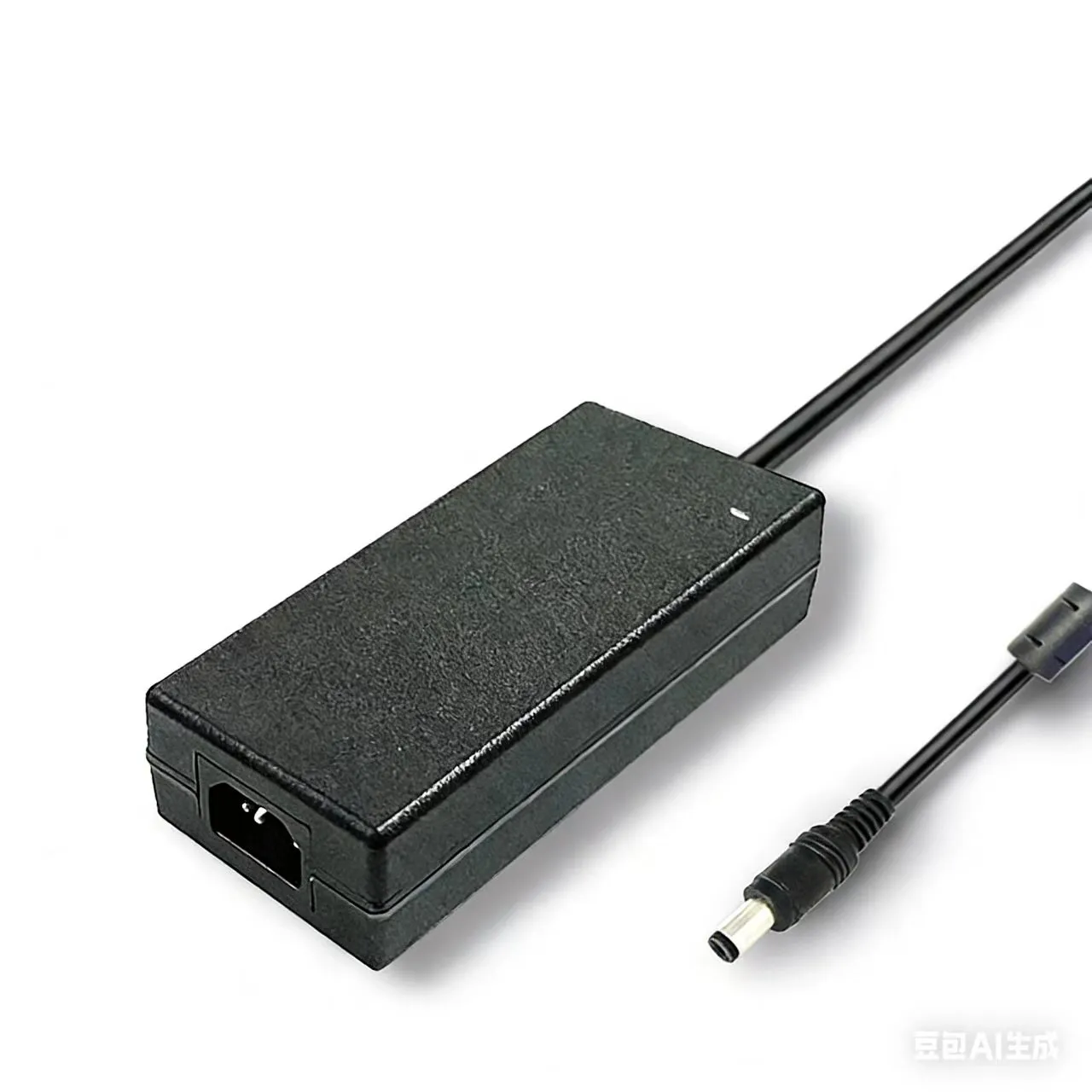
A generic switching brick does none of this thinking for you. A purpose-built access control PSU does.
Step 1 — Build the Per-Door Hardware Inventory
Before you size anything, list every powered device on every door. The table below shows the typical current draws you'll see on spec sheets — use the worst-case column for sizing math, not the steady-state.
| Device | 12 V steady | 12 V worst-case (inrush / actuation) | 24 V steady |
|---|---|---|---|
| Magnetic lock 600 lb (270 kg) | 450–500 mA | 550 mA | 220–250 mA |
| Magnetic lock 1200 lb (540 kg) | 700–800 mA | 900 mA | 350–400 mA |
| Electric strike, fail-secure (intermittent duty) | — | 600–1000 mA (spike) | — |
| Electric strike, continuous-duty | 180–250 mA | 700 mA (initial) | 90–120 mA |
| 1-door controller | 200–300 mA | 400 mA | — |
| 4-door controller | 600–900 mA | 1200 mA | — |
| Card reader (proximity, mullion) | 80–150 mA | 200 mA | — |
| Card reader (multi-tech, OSDP) | 150–250 mA | 350 mA | — |
| REX motion / PIR exit sensor | 25–40 mA | 50 mA | — |
| Door position switch (magnetic) | 0 (passive) | 0 | 0 |
| Auxiliary strobe / annunciator | 200–500 mA | 500 mA | — |
For each door, sum the worst-case currents of every device on the same DC bus. That's your per-door load. Add them all up across doors fed by one PSU to get the system load.
Then add 30% headroom. This buffer covers:
- Battery charging current (a discharged 12 V 7 Ah battery can pull 0.7–1.0 A while recharging)
- Capacitor aging over 3–5 years
- Future doors added to spare channels
- Simultaneous events — a fire alarm releases every fail-safe lock at once, but at handover the same loads run in parallel during the commissioning walk
Step 2 — Decide Fail-Safe vs Fail-Secure (It Changes Your Power Math)
This is the decision that catches installers out. The wrong choice is not just a sizing mistake — it can be a code violation.
- Fail-safe lock — energized to lock, releases on power loss. All magnetic locks are fail-safe. Some electric strikes are fail-safe variants. Used on doors that must allow free egress under any failure (most interior doors per NFPA 101 Life Safety Code). Implication: the battery backup is for security continuity, not life safety. The lock must release when the fire alarm trips, regardless of battery state.
- Fail-secure lock — energized to unlock, locks on power loss. Most electric strikes ship fail-secure by default. Used where security must be maintained during a power event and a separate egress device (panic bar, REX-to-unlock) handles life safety. Implication: the door is more dependent on power reaching the strike during the brief unlock pulse — and less dependent on long battery runtime.
Mag-lock systems pull continuous current, so PSU sizing is dominated by the steady load. Electric-strike systems pull near-zero steady current and big inrush spikes, so PSU sizing is dominated by simultaneous-actuation worst case (someone holding the door open while a delivery driver triggers a second strike). Don't size them the same way.
Step 3 — Choose 12 V or 24 V (or Both)
| 12 V DC | 24 V DC | |
|---|---|---|
| Cable length to a 600-lb mag lock (18 AWG, ≤5% drop) | ~25 m | ~100 m |
| Battery cost (7 Ah AGM) | Single battery | Two batteries in series, more $ |
| Controller / reader compatibility | Universal | Rare — needs step-down |
| Best for | Single-floor offices, retail, short runs | Long corridors, perimeter doors, parking garages |
Most small-to-medium installs (≤8 doors, building diameter under 50 m) are 12 V end-to-end. For anything bigger, plan a 24 V mag-lock bus and a separate 12 V controller bus, fed from a dual-output PSU or two single-output supplies sharing one enclosure.
Step 4 — Size the Battery Backup
Backup runtime requirements depend on the authority having jurisdiction. Common targets:
- Pure access control (no fire alarm interlock) — 4 hours standby, per most local building codes
- Combined access + fire alarm interlock — coordinate with NFPA 72: 24 hours standby plus 5–15 min in alarm state for the fire side
- High-security or government — 8 hours and up; verify the project spec
The math for standby capacity:
Required Ah = (Total continuous load A) × (Hours required) ÷ (Usable depth-of-discharge, typically 0.7 for AGM)
A 6-door fail-safe mag system pulling 3.5 A continuous for 4 hours needs:
3.5 × 4 ÷ 0.7 = 20 Ah
That's already past a single 7 Ah AGM. Either move to 12 V 12 Ah / 17 Ah, or split the load across two PSU/battery pairs. The dedicated Sanyi MJ Series access control power supply has an onboard 12 V 7 Ah battery port and reverse-polarity protection — a sensible match for 1–3 door systems; for 4+ doors, look at the larger access control power box with a 7 Ah battery slot, or specify two enclosures from the start.
A note on charging current: a 7 Ah AGM that's been deeply discharged will pull 0.7–1.4 A while recharging for the first hour. That charging current sits on top of your steady access-control load. Your continuous PSU rating must cover both.
Step 5 — Cable Voltage Drop: The Mag-Lock Killer
A 12 V 600-lb mag lock typically rates at 10.8–13.2 V. Drop below 10.8 V and the magnetic field weakens — the lock still feels engaged to a casual push, but a determined shove pops it. The IEEE-style drop math:
Vdrop = 2 × I × R_per_meter × L
For 18 AWG copper at 20 °C, R ≈ 0.021 Ω/m. A 600-lb mag at 0.5 A over a 30 m one-way run on 18 AWG drops:
2 × 0.5 × 0.021 × 30 = 0.63 V
That's 5.2% of 12 V — borderline. Add another 50 mV for the connector, plus a battery-on-discharge bus voltage of 11.5 V instead of 13.6 V, and you're at 10.8 V at the lock. One more meter of cable and the lock is unreliable in cold weather (battery sags more in cold).
Rules of thumb:
- Stay under 5% round-trip drop at the worst-case load and battery-low bus voltage
- Step up wire gauge before adding boost circuitry
- Or jump to 24 V — it's almost always cheaper than re-pulling cable
Step 6 — Pick the Topology: Per-Door PSU vs Centralized Box
| Per-Door PSU | Centralized Power Box | |
|---|---|---|
| Cable runs | Short (PSU near door) | Long (drops from a closet) |
| Fault containment | Excellent — one door fails alone | Whole zone affected if main fails |
| Battery management | One battery per door, hard to maintain | One battery bank, easy maintenance |
| Material cost | Higher (more enclosures) | Lower per door |
| Labor cost | Higher (more conduits) | Lower (single chase) |
| Typical use | Distributed sites, retail, parking gates | Office floors, schools, hospitals |
For a typical office floor with the door controller in a wiring closet, a centralized multi-output box is almost always the right answer — it shares the battery, simplifies inspection, and keeps the labor cost down. For sites where doors are 50+ m apart, per-door PSUs avoid voltage-drop heroics.
Step 7 — Specify the PSU: Five Things to Check
When you're comparing access-control PSUs on paper, look for:
- Battery port with reverse-polarity protection — generic switching bricks don't have one; specialized access PSUs do. Reverse a 7 Ah AGM and a generic supply is dead instantly.
- Battery-low cut-off — protects the battery from deep discharge that ruins capacity in 3–5 cycles.
- Multi-output channels — separate fused outputs for locks, controllers, readers. A short on a reader cable shouldn't drop the locks.
- Listed for the application — UL 294 (access control system equipment standard) for North American jobs; CE / 3C for EU and China respectively.
- Steel enclosure with tamper switch — the PSU is part of the security envelope. A plastic supply zip-tied to a strut isn't.
Common Mistakes to Avoid
- Sharing the access PSU with cameras. A PTZ pan or strike actuation drops the bus and the cameras reboot. Cameras get their own PSU. Always.
- Sizing only for steady-state. Forgetting battery charging current is the #1 reason a "perfectly sized" PSU runs hot and dies in year two.
- Wrong fail-safe direction on egress doors. Fail-secure on a stairwell door can violate fire egress code. Check NFPA 101 (US), BS 7273-4 (UK), or local equivalents before specifying.
- Generic 12 V brick on a mag lock. No battery port, no reverse-polarity protection, no multi-output fusing — and no one to call when the door drops at 3 a.m.
- Skipping the battery test. Install date + 5 years and the battery is dead. Add it to the maintenance schedule from day one.
FAQ
Do I need a UL 294 listed power supply for access control?
For commercial access control installs in the US and Canada, UL 294 is the relevant listing for the access control system equipment, including the dedicated power supply. Many AHJs (authorities having jurisdiction) require UL 294 for life-safety-coupled installs and for projects bid as commercial-grade. For residential or non-life-safety retrofits the requirement is softer, but specifying a UL 294 (or equivalent UL 603 / UL 1481 for the supply portion) PSU is good practice — it forces inrush, stand-by, and battery handling tests that a generic switching brick has not passed.
How long should the battery backup last for an access control system?
Most local building codes call for a minimum of 4 hours standby for stand-alone access control. If the access system is interlocked with the fire alarm panel, NFPA 72 dictates 24 hours standby plus 5–15 minutes in alarm state for the combined system. High-security and government projects often spec 8 hours or more. Always confirm the requirement with the project AHJ before sizing — it's the single biggest driver of battery (and therefore PSU) cost.
Can I use the same power supply for door locks and security cameras?
No, and this is one of the most common installer mistakes. Cameras have their own inrush behaviors (IR LED kick-on, PTZ motor spike) and their own voltage tolerance. Strike actuations on a shared bus dip the camera supply below its brown-out threshold and force a reboot. The cleaner architecture is one PSU per subsystem — access control on its own dedicated supply with its own battery, cameras on a separate PSU sized per the CCTV power supply sizing guide.
Do magnetic locks need DC or AC power?
DC, always. Magnetic locks are essentially large electromagnets with a steel armature plate; they are designed for a steady DC field. AC produces a buzzing 100/120 Hz field that reduces holding force and creates audible noise. If the spec sheet for a "mag lock" allows AC input, it has an internal rectifier — but the lock itself is still DC-driven. Specify a DC PSU rated for the continuous current of the locks, with a battery port for backup.
What size battery do I need for a 12V 600-lb magnetic lock?
A single 600-lb (270 kg) mag lock at 12 V draws roughly 0.5 A continuously. For 4 hours of standby at a usable depth-of-discharge of 0.7, you need (0.5 × 4) ÷ 0.7 ≈ 2.9 Ah. A standard 12 V 7 Ah AGM gives you ~10 hours of single-lock runtime, which is comfortable headroom. For a multi-door system, sum the continuous current of all locks on the bus and apply the same formula — and remember to add the controller and reader currents, plus the charging current the PSU has to source while running.
Bottom Line
A correctly sized access control power supply is not just a 12 V brick — it's an inventory of door hardware loads, a topology decision (centralized vs per-door), a battery sizing exercise constrained by code, and a cable voltage-drop check at the worst-case battery-low bus voltage. Get any one of those wrong and the door behaves correctly at handover but fails on a cold morning two years in.
Sanyi's dedicated access control power supplies — the MJ Series for 1–3 door installs and the 60W/75W access control power box with onboard 7 Ah battery slot for larger systems — are designed around exactly these constraints: multi-output channels, battery port with reverse-polarity protection, steel enclosure suitable for a wiring closet. If you're scoping a job and want a second pair of eyes on the load math or topology choice, contact us with the door schedule and we'll respond with a sizing recommendation.
.webp)