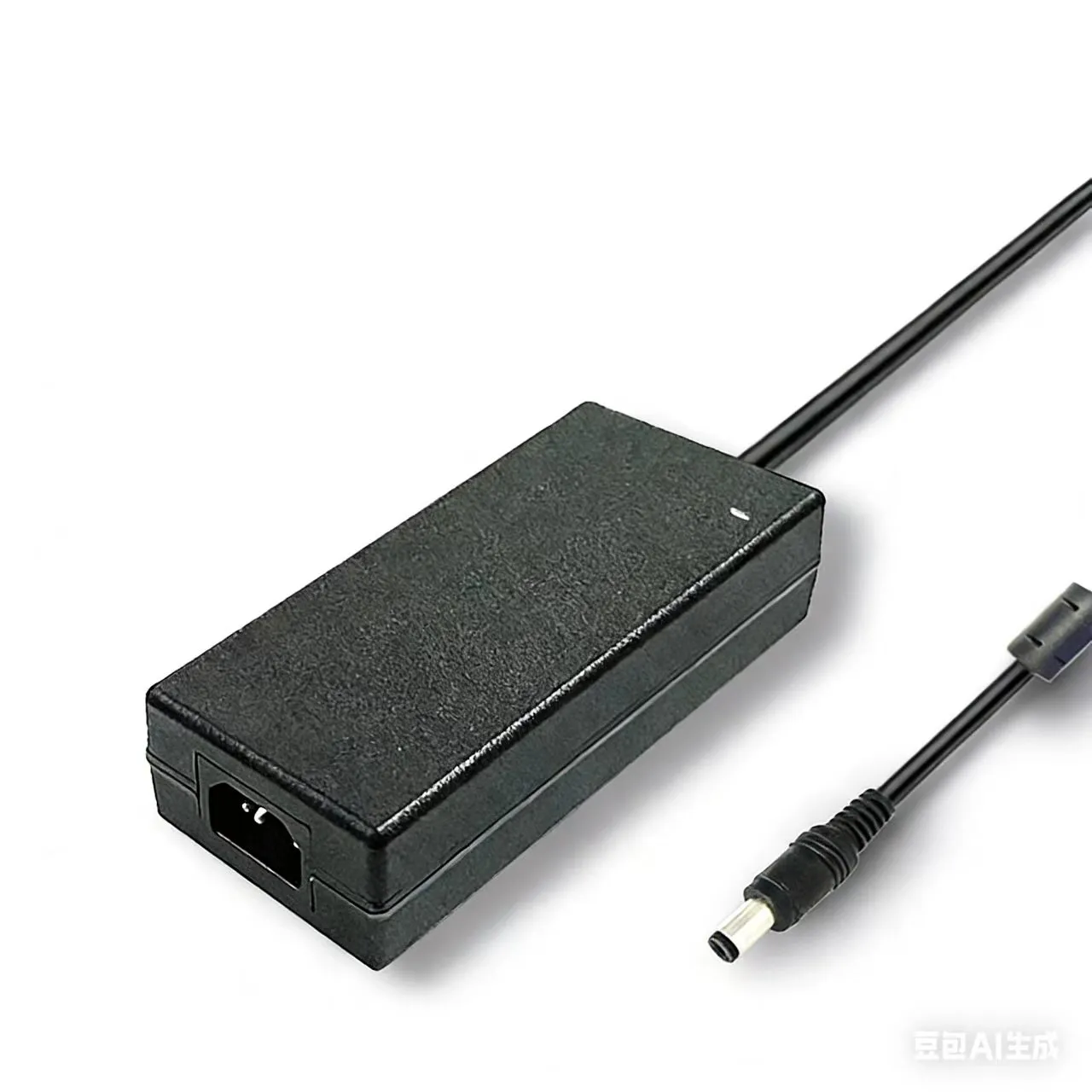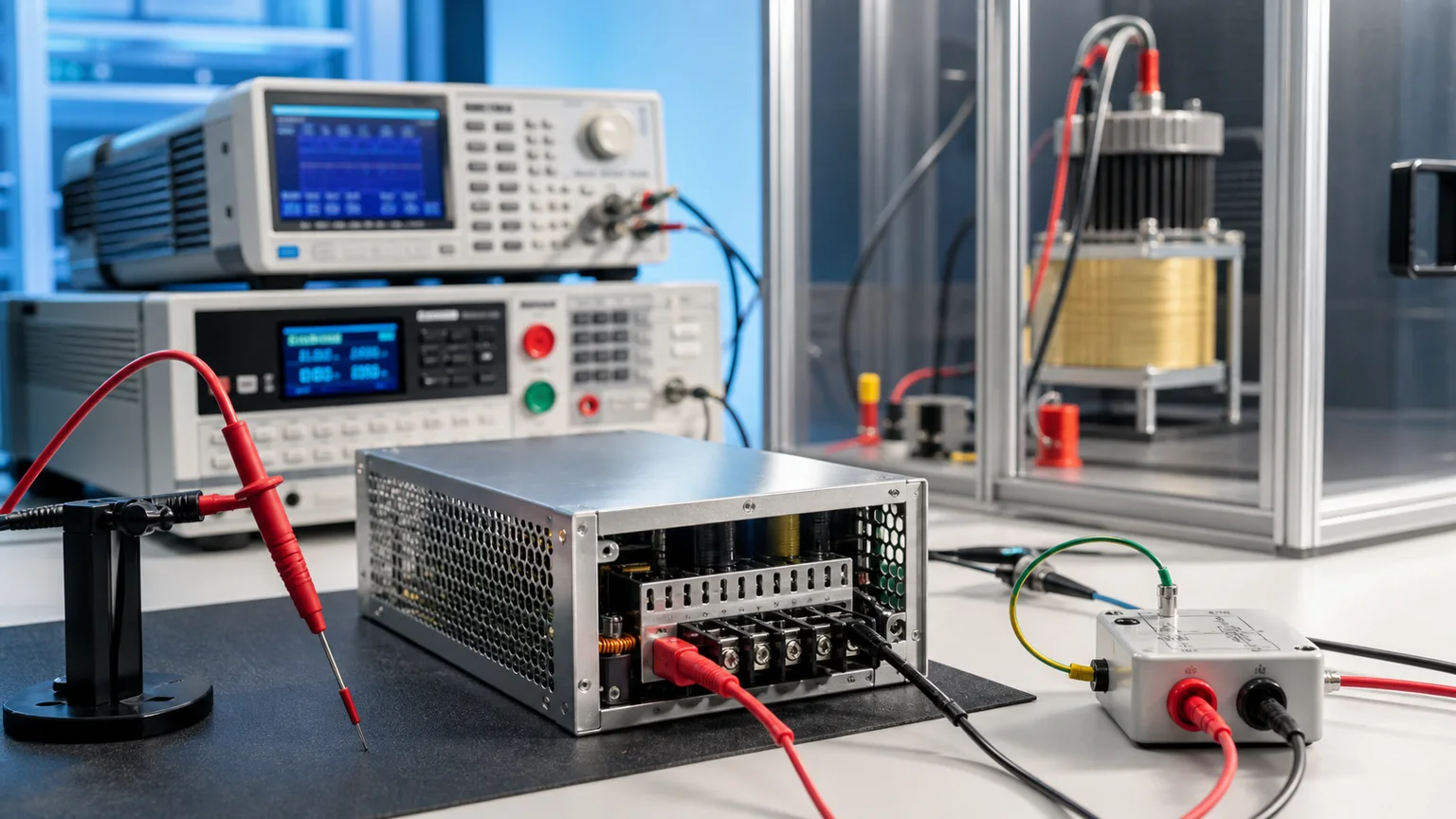

Key Takeaways: Selling an e-bike charger in the European Union is not a single test — it is a stack of four obligations layered on top of CE marking. The charger itself must pass EN 60335-2-29 (battery charger safety) and EN 55014-1/-2 (EMC). The battery pack the charger talks to must hold a EN 50604-1 report. The complete e-bike has to clear EN 15194 (the EPAC safety standard). Get one layer wrong and customs holds the container, regardless of how many test reports you already paid for.
TL;DR: From 2026 onward, EU customs and market surveillance authorities are tightening checks on e-bike charger imports under the Low Voltage Directive 2014/35/EU and EMC Directive 2014/30/EU. The harmonised standard for charger safety is EN 60335-2-29; EMC is covered by EN 55014. The battery side requires EN 50604-1, and the whole electrically power-assisted cycle is governed by EN 15194 (current edition: EN 15194:2017+A1:2023). Adjacent personal light electric vehicles (e-scooters, hoverboards) fall under EN 17128 instead. UL 2849 from the US market is not accepted as a substitute.
Why EU E-Bike Charger Compliance Got Harder in 2026
Europe became the world's largest e-bike retail market in 2023 (CONEBI, "European Bicycle Industry & Market Profile") and the policy mood has matched the volume. Several Member State surveillance bodies — notably the German BNetzA, the Dutch ILT, and France's DGCCRF — issued public recall lists during 2024 and 2025 covering imported e-bike chargers that failed EMC or insulation tests. The European Commission's 2024 progress report on the Machinery Regulation (EU) 2023/1230 explicitly flagged battery chargers paired with light EVs as a higher-risk category, and the new Machinery Regulation becomes applicable on 20 January 2027, replacing Directive 2006/42/EC.
For the 2026–2027 transition window, three things matter to OEMs:
- CE marking is self-declaration, but the underlying technical file must include test reports against the harmonised standards listed in the OJEU (Official Journal of the European Union).
- Each layer is testable: a customs inspector can pull a charger off a pallet, scan the QR-coded Declaration of Conformity, and request the EN 60335-2-29 report on the spot.
- A US UL 2849 report does not satisfy EU obligations — it is a different test scope under a different regulator. If you are dual-shipping, you need both, as our California SB 1271 / UL 2849 guide explains.
The Four-Layer EU E-Bike Charger Compliance Stack
EU compliance is not "one certificate". It is a stack, and each layer answers a different regulator's question.
Layer 1 — Charger Safety: EN 60335-2-29
EN 60335-2-29 is the harmonised standard for battery chargers as household and similar appliances, derived from IEC 60335-2-29. It is the safety backbone of the Low Voltage Directive 2014/35/EU for any AC-mains-powered charger up to 1 000 V AC / 1 500 V DC. Test items include:
- Mains insulation, dielectric strength, creepage and clearance
- Touch-current and protective-conductor current limits
- Abnormal-operation tests (output short circuit, fan failure, blocked vents)
- Glow-wire and flammability of enclosure plastics
- Operating-temperature rise on the AC inlet, mains transformer, output connector
- Marking, instructions and user-facing warnings in the destination language(s)
Most failures we see on lab returns are mundane: undersized creepage on the secondary side, inadequate Y-capacitor rating, or a non-VDE-listed AC inlet. None of that is exotic — it is procurement discipline.
Layer 2 — Charger EMC: EN 55014-1 and EN 55014-2
The EMC Directive 2014/30/EU is satisfied through EN 55014-1 (emissions) and EN 55014-2 (immunity). For a switch-mode charger this means:
- Conducted emissions on AC mains: 150 kHz – 30 MHz, Class B limits
- Radiated emissions: 30 MHz – 1 GHz (and up to 6 GHz for chargers with wireless features)
- ESD immunity per IEC 61000-4-2 (±8 kV contact, ±15 kV air)
- Surge immunity per IEC 61000-4-5 (±2 kV line-to-earth on AC mains)
- Voltage dips and short interruptions per IEC 61000-4-11
Higher-power chargers — anything above ~250 W — usually need active PFC to pass harmonics under EN 61000-3-2 Class A. A passive-PFC 500 W charger that "just barely" passed in the lab will fail on a noisy European single-phase grid.
Layer 3 — Battery Pack: EN 50604-1
EN 50604-1:2016+A1:2021 is the safety standard for secondary lithium batteries used in light electric vehicles. It covers e-bike packs from the cell up to the BMS and connector. Although the charger is not directly tested against EN 50604-1, the charger output profile is referenced in the battery report — the charger's CV voltage, end-of-charge cutoff and communication handshake are part of the battery pack's stated compatibility.
Practical implication: if the battery pack changes BMS firmware or rebadges to a new cell vendor, the matched charger's part number should be re-validated against the new EN 50604-1 report. A mismatch here is the most common reason a "previously certified" charger gets rejected in a re-import audit.
Layer 4 — The Whole E-Bike: EN 15194
EN 15194:2017+A1:2023 is the EPAC standard. It defines what makes a bicycle a legal pedelec in the EU: motor cuts at 25 km/h, peak motor power ≤ 250 W continuous, pedal-assist only (no throttle-only above walking speed). Crucially, EN 15194 includes electrical safety, EMC and battery-charger interface clauses for the bike as a finished product. The charger does not get its own EN 15194 report, but the bike OEM cannot pass EN 15194 without:
- A charger that already holds an EN 60335-2-29 + EN 55014 dossier
- A battery that already holds an EN 50604-1 dossier
- Documented compatibility (IEC 62196 / proprietary connector pin map, voltage / current envelope, signaling)
This is why responsible suppliers ship the charger and battery as a matched-pair kit with a single technical file — splitting them invites audit failure.
Where EN 17128 Fits (and Why It Doesn't Apply to E-Bikes)
EN 17128:2020 is often confused with EN 15194 because both came out of the same CEN working group on light electric vehicles. EN 17128 actually covers personal light electric vehicles (PLEVs) that are not bicycles — e-scooters, self-balancing boards, e-skateboards. If you are exporting an e-scooter charger or a hoverboard adapter, EN 17128 (and the dedicated battery standard EN 17404 in some Member States) is your scope, not EN 15194.
The charger-side electrical safety obligation is essentially the same — EN 60335-2-29 plus EN 55014 — but the labelling, age-restriction warnings and end-user manual content required by EN 17128 differ from the EPAC bike requirements. We see OEMs with a single charger SKU sold into both bikes and scooters miss this on the user manual side and trigger a Member State recall.
How EU Differs from US: A Side-by-Side for OEMs
| Topic | EU | US (California) |
|---|---|---|
| Charger safety standard | EN 60335-2-29 | UL 2849 (charger clauses) + UL 1310/1012 |
| Battery standard | EN 50604-1 | UL 2271 / UL 2849 battery clauses |
| Whole e-bike standard | EN 15194 | UL 2849 |
| EMC | EN 55014-1/-2 (mandatory) | FCC Part 15 Class B |
| Mark of conformity | CE | UL Listed / Recognized |
| Conformity model | Self-declaration with technical file | Third-party listing by NRTL |
| Mutual recognition | None — UL 2849 is not accepted in EU | EN reports not accepted in US |
If you have already shipped North American volume, much of the underlying engineering — flame-retardant plastics, double-insulated transformer, OCP/OVP/SCP/OTP layered protection — carries over. What does not carry over is the test report itself. Plan on a parallel EU test track at a CB-Scheme-recognised lab if EU is a target.
For a deeper treatment of the chemistry side that drives the charger profile, see our LiFePO4 vs lead acid charger selection guide. For high-current applications above 1 kW (cargo bikes, last-mile delivery fleets) there is overlap with our forklift charger sizing guide on opportunity charging and CC/CV behaviour.
Specifying a Compliance-Ready Charger: What to Ask Your Supplier
When sourcing chargers for an EU launch, the request-for-quote should explicitly demand the following dossier, not just a CE logo on the artwork:
- EN 60335-2-29 test report issued by a CB-Scheme NCB or an EU-notified body
- EN 55014-1 / EN 55014-2 EMC report covering both conducted and radiated emissions
- EN 61000-3-2 harmonics + EN 61000-3-3 flicker for chargers > 75 W
- Declaration of Conformity (DoC) signed by the EU Authorised Representative, listing the harmonised standards
- RoHS 2 (2011/65/EU) and REACH SVHC declarations
- Charger-battery compatibility matrix referencing the matched pack's EN 50604-1 report number
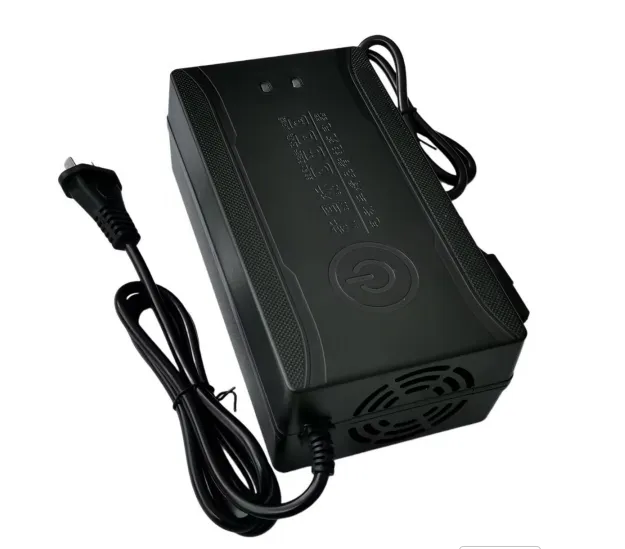 SY-C500W-10A — a typical 500W class match for 36V / 48V e-bike packs
For practical sizing across the EU e-bike segment:
- Urban pedelec, 36 V / 10–15 Ah — match a 2–4 A charger; the SY-C260W-5A 260W charger is a typical fit
- Cargo bike or speed-pedelec (S-pedelec), 48 V / 17–21 Ah — opportunity charging at 6–10 A; the SY-C500W-10A 500W charger covers this band
- Fleet / last-mile delivery, 48 V / 30 Ah+ — fast charging at 15–25 A; the SY-C1000/1200/1600W ultra-high-power charger family is sized for this duty cycle
Each of these is shipped with the EN 60335-2-29 + EN 55014 + EN 61000 test report bundle and a matched-pair compatibility statement, so the bike OEM's EN 15194 technical file slots in directly.
Frequently Asked Questions
1. Does CE self-declaration mean I can skip third-party testing?
No. CE marking is self-declared, but the technical file behind it must contain test reports against harmonised standards. EU market surveillance authorities can demand the file at any time, and absent reports trigger immediate withdrawal from market. Use a CB-Scheme NCB or EU-notified body for the EN 60335-2-29 and EN 55014 reports.
2. My charger has UL 2849. Can I sell it in Germany?
Not on the UL report alone. Germany (and every EU Member State) requires CE marking under LVD 2014/35/EU and EMC 2014/30/EU. The underlying harmonised standards are EN 60335-2-29 and EN 55014, not UL 2849. You will need parallel EU testing — though much of the design work transfers across, as the underlying IEC publication is shared.
3. Where does the new Machinery Regulation (EU) 2023/1230 leave e-bike chargers?
Stand-alone chargers remain primarily under LVD + EMC. The Machinery Regulation, applicable from 20 January 2027, governs the complete e-bike as machinery; the charger interface is referenced indirectly via EN 15194. OEMs assembling complete pedelecs need to update their EU declaration template and risk assessment by Q3 2026 to be ready.
4. Is EN 17128 the same as EN 15194?
No. EN 15194 is the EPAC (e-bike) standard, EN 17128 covers other personal light electric vehicles (e-scooters, self-balancing boards). Charger electrical-safety obligations are similar, but labelling, manuals and age-restriction warnings differ. A single charger SKU sold into both segments needs two packaging variants and two manuals.
5. Do I need a separate test for the AC plug type per country?
Yes — UK plug (BS 1363, post-Brexit UKCA), Schuko (CEE 7/4 for Germany / Netherlands), Type E (France), Type J (Switzerland). The charger body certification under EN 60335-2-29 covers the electronics, but the AC inlet, cordset and country-specific plug each need their own ENEC or VDE listing. Plan inventory by region accordingly.
Ready to Ship into the EU?
Sanyi has been supplying e-bike chargers to European bike OEMs since 2014, with active EN 60335-2-29, EN 55014 and EN 61000 dossiers across the 260W charger, 500W charger and 1000W–1600W high-power charger series. If you are launching a new EPAC SKU into Germany, the Netherlands, France or any EU Member State, contact our engineering team for a matched charger-battery dossier sized to your launch volume and timeline.
.webp)