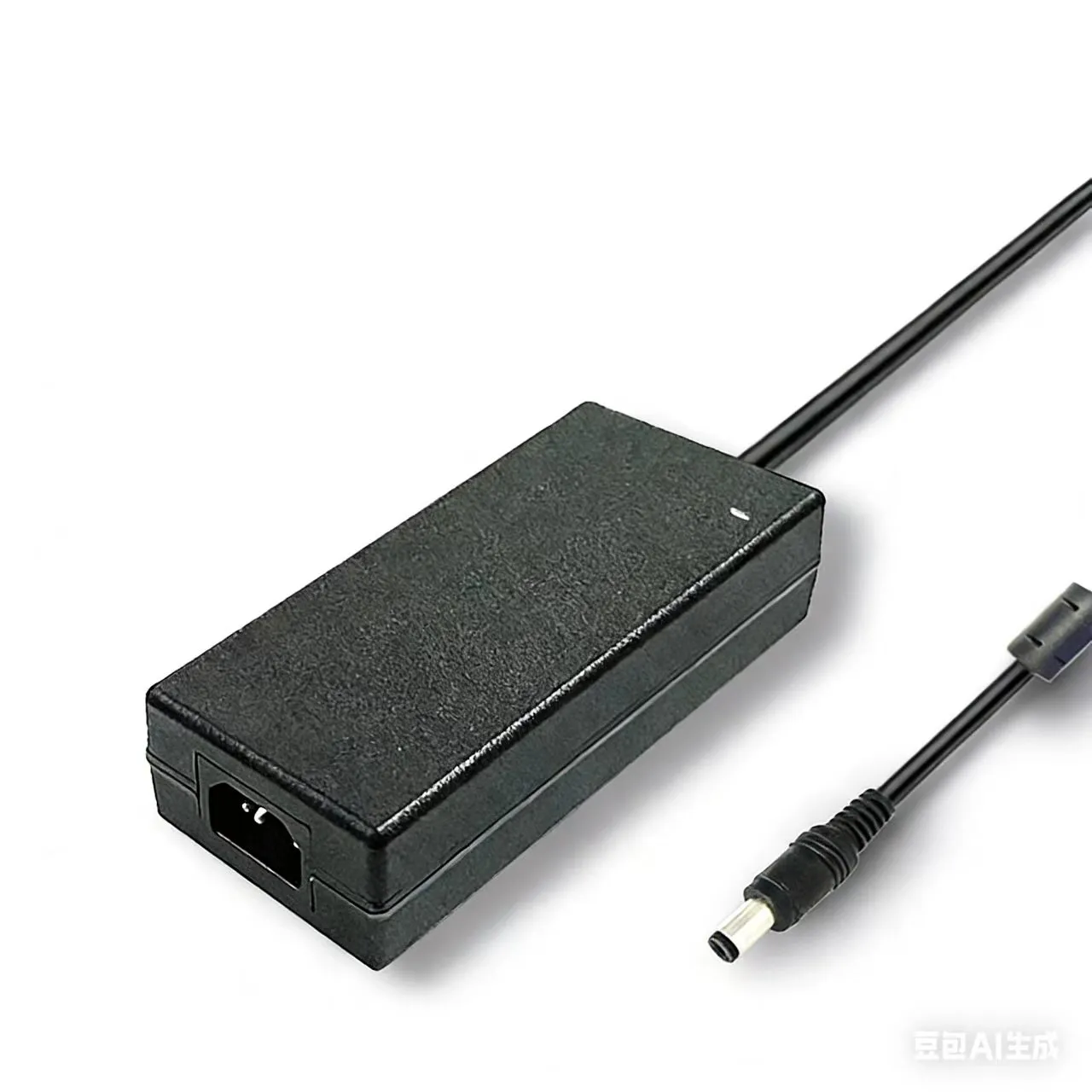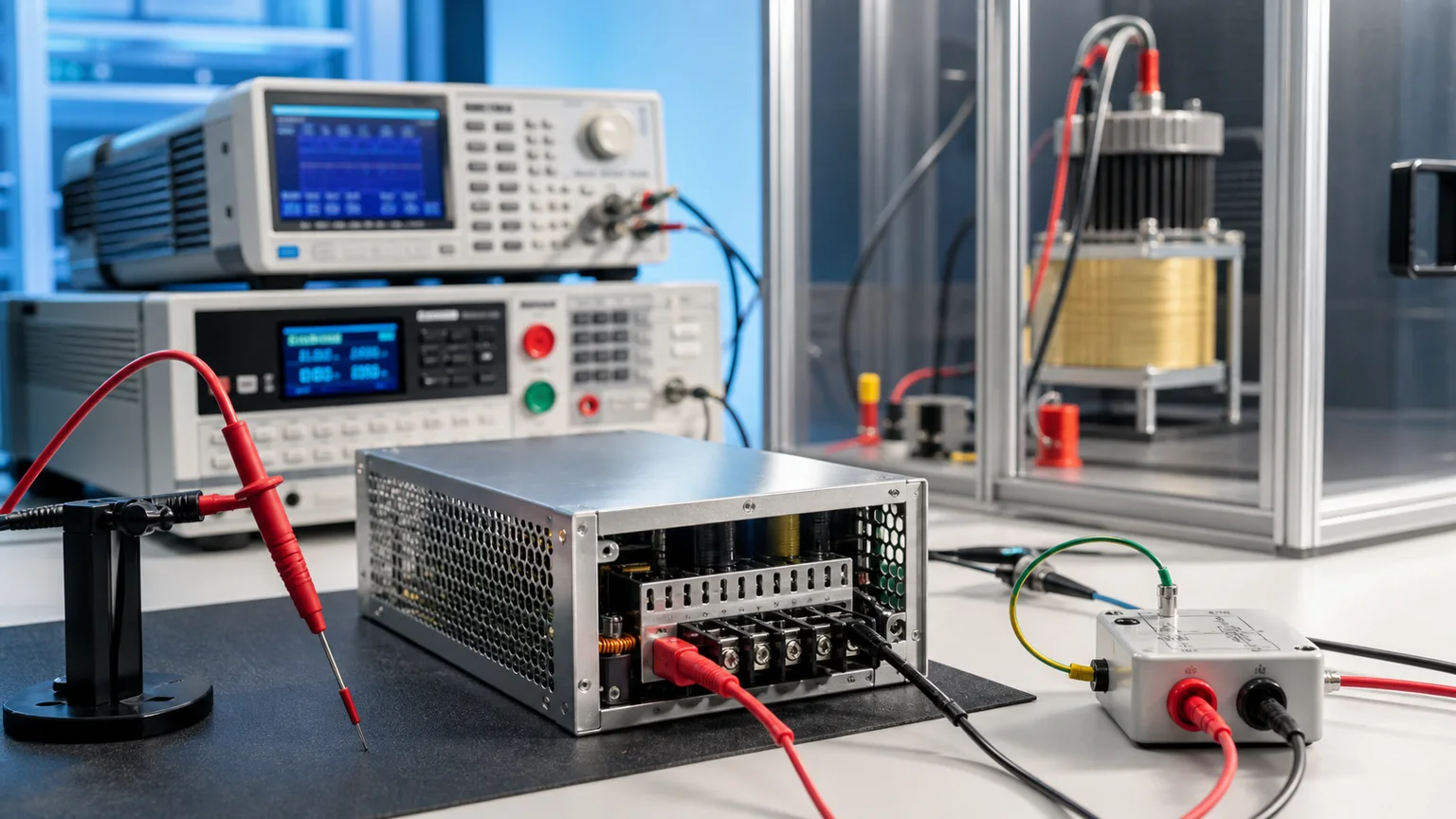

A purchasing manager at a North American sign-fabrication shop sends a routine RFQ for a 96-watt 24V LED driver. The Asian factory replies: "Yes, our model is Class II certified." Twelve weeks later the shipment lands at the warehouse. On the first jobsite, the local AHJ — the Authority Having Jurisdiction, usually a city electrical inspector — pulls the cover, looks at the driver, and red-tags the install. The contractor is told the wiring on the secondary side has to be rerun in conduit because the driver is not a Class 2 source.
The driver's nameplate is correct. It really is Class II. The problem is that "Class II" and "Class 2" are two completely different things, and the factory salesperson — and arguably the buyer — confused them. By the time the engineering team unpicks the mess, the rework, expedited freight, and lost installation hours easily exceed 10× the price difference between a Class II adapter and a properly listed UL 1310 / UL 60950-1 LPS Class 2 supply.
This is the most common safety-classification confusion in low-voltage power supply procurement, and it costs OEMs money every quarter. This guide breaks down what each term actually means, where each is mandatory, and how to read a nameplate so the next inspector visit is uneventful.
Why "Class 2" and "Class II" Confuse Even Experienced Engineers
The two terms collide for three reasons. First, they sound identical when spoken — Arabic numeral 2 vs Roman numeral II — and most spec sheets do not bold or color the distinction. Second, both classifications appear on the same kinds of low-voltage products: LED drivers, CCTV PSUs, access-control supplies, signage adapters. Third, a single power supply can legitimately be both at the same time, which means the markings often coexist on one nameplate.
But the underlying standards are unrelated:
- Class 2 is a North American circuit-output classification governed by the National Electrical Code (NEC) Article 725 and listed under UL 1310, UL 60950-1, UL 62368-1, or UL 1012 with a Class 2 designation. It limits the energy that can leave the supply's secondary terminals. It is about what comes out of the supply.
- Class II (Roman two) is an equipment construction class defined by IEC 61140 and harmonized into UL 60335, UL 62368-1, and similar product safety standards. It describes how the supply is insulated. It is about what is built inside the supply.
A Class 2 source can be Class I (earthed) or Class II (double-insulated) construction. A Class II–constructed supply may or may not be a Class 2 source. The two axes are independent. Once that mental model clicks, the rest of this guide is easy.
What Is a UL Class 2 Power Supply? (NEC Article 725 Defined)
NEC Article 725 categorizes remote-control, signaling, and power-limited circuits into Class 1, Class 2, and Class 3. Class 2 is by far the most common — it is the legal basis for low-voltage wiring practices that contractors think of as "doorbell wiring" or "thermostat wiring": small-gauge conductors, no conduit required in many indoor scenarios, fewer fire-stop requirements, and a much shorter installation labor bill.
The trade-off is that Class 2 status is granted only to circuits that are inherently incapable of starting a fire or causing a serious electric shock, even under a fault. To enforce that, UL's listing of a Class 2 power source caps the energy at the output terminals.
Power and Voltage Limits
The headline limits, simplified for inherently-limited supplies (the most common case for switching adapters):
| Output Voltage Range | Maximum Continuous Power |
|---|---|
| 0–20 Vac / 0–30 Vdc | 100 VA |
| 20–30 Vac / 30–60 Vdc | Power × Voltage ≤ 100 VA, current limits apply |
| Above 30 Vac / 60 Vdc | Class 2 generally not available |
For a 24 Vdc supply, the practical ceiling is ~100 W per output. A "150 W Class 2 LED driver" cannot legally exist on a single output — it must be split into two or more independently-limited 24 V / ~4 A outputs, each separately listed as Class 2. This is why so many high-output LED drivers in North American signage are dual-output 60 W + 60 W or quad-output 24 W × 4 designs.
The fault behavior matters too. UL tests the supply with a short, an overload, and abnormal-condition heating. A genuine Class 2 source cannot exceed its rated output regardless of fault — either through inherent transformer impedance, electronic current limit, or an integral non-resettable fuse listed with the supply.
Where Class 2 Is Mandatory
Whenever a North American install relies on the relaxed wiring rules of NEC Article 725 — no conduit on the secondary side, smaller conductor gauges, simplified penetration of fire-rated walls — the source must be a listed Class 2 supply. In practice that includes:
- Indoor LED sign and channel-letter installations (the secondary low-voltage runs to each module)
- CCTV camera power runs from a centralized PSU box
- Access-control door strikes, magnetic locks, REX sensors, and request-to-exit buttons
- Audio/visual distribution: speakers, intercoms, doorbells
- Most thermostats and HVAC zone controllers
- Landscape lighting using NEC Article 411 listed systems
If any of these projects are wired without conduit and the source is not Class 2, the installation is a code violation regardless of how good the equipment is. A Class II–marked but non–Class 2 supply will not save you.
What Is a Class II Power Supply? (IEC 61140 Double Insulation)
Class II is the European-rooted construction safety class. IEC 61140 defines four equipment classes (0, I, II, III) by how they protect users from electric shock:
- Class I — protected by basic insulation plus a protective earth bond. Most desktop computers, washing machines, refrigerators.
- Class II — protected by double or reinforced insulation. No reliance on protective earth. Marked with the concentric-square symbol (▢ inside ▢).
- Class III — operates at SELV only; no insulation required because the source itself is already safe.
A Class II power supply has two independent layers of insulation between the live mains and any user-touchable surface. If one layer fails, the second still keeps the user safe — without any earth connection. That is why most consumer adapters with two-prong (non-earthed) plugs are Class II: they cannot rely on a ground pin that may not even be there.
Construction Requirements
To carry the Class II symbol, a power supply must meet several specific construction tests in UL 62368-1, UL 60335-1, or the relevant product standard. Without giving away vendor-specific implementation details, the core requirements are:
- Double or reinforced insulation between primary and any accessible secondary or chassis surface, verified by dielectric strength testing (typically several thousand volts AC for one minute).
- No protective earthing conductor is allowed to substitute for the second insulation layer. The earth pin, if present at all, is not a safety feature.
- All accessible metal parts — heatsinks, screws, mounting tabs — must be separated from the primary by the same double-insulation distances as the plastic enclosure surface.
- Markings include the double-square symbol and a statement that the equipment is "for use only with the double-insulated barrier intact."
Where Class II Is Mandatory
Class II construction is mandatory or strongly preferred whenever the install environment cannot guarantee a reliable protective earth, or whenever the appliance is hand-held and may be used outdoors:
- Most plug-top wall adapters and desktop adapters for consumer electronics
- Hand-held power tools, hairdryers, kitchen appliances
- LED drivers integrated into IP-rated outdoor luminaires
- Equipment shipped into European, Australian, or other markets where two-pin plugs are common
- Any device that must comply with EN 60335 or EN 62368-1 without a protective earth path
Class II is enforced by product-safety standards (UL/EN 62368-1, EN 60335-1) and is what your CB Test Certificate documents, regardless of geography. Class 2, by contrast, is enforced only in North America and only when the install relies on NEC 725 wiring relaxations.
Class 2 vs Class II — Side-by-Side Comparison Table
| Aspect | UL Class 2 (NEC 725) | Class II (IEC 61140) |
|---|---|---|
| What it describes | Output circuit energy limit | Insulation construction class |
| Governing standard | NEC Article 725 + UL 1310 / UL 62368-1 LPS | IEC 61140, harmonized into UL/EN 62368-1, 60335-1 |
| Geography | North America (US, Canada, Mexico) | Global, especially EU/UK/AU |
| Power ceiling | ≤100 VA per output (typical) | No power ceiling — depends on product family |
| Voltage ceiling | ≤30 Vac / ≤60 Vdc (typical) | None directly imposed by Class II |
| Earth pin | Independent of Class 2 status | Forbidden as a safety means; usually absent |
| Marking on nameplate | "Class 2" or "LPS" or "NEC Class 2" | Concentric squares ▢ ▢ |
| Allows NEC 725 relaxed wiring? | Yes | No (not by itself) |
| Required for North American AHJ sign-off? | Yes, when relying on Article 725 | Only if specified by the product standard |
| Compatible with the other? | Yes, can be both at once | Yes, can be both at once |
How to Read the Markings on Your Power Supply
Pull a nameplate and look for these strings, in this order:
- "Class 2" as a literal text string, or "NEC Class 2", or "LPS" (Limited Power Source — closely related concept used in UL 62368-1 / UL 60950-1, with similar but not identical limits). If you see these, you have a Class 2 source — but verify it is the listed model number and check whether each output is individually Class 2 (multi-output supplies often list each).
- Concentric-squares symbol ▢▢ — this signals Class II construction. The text "double insulation" or "doppelt isoliert" sometimes appears alongside it.
- UL/cUL listing mark with the file number — cross-reference at the UL Product iQ database to confirm the listing standard (UL 1310, UL 62368-1, UL 60950-1) and any limitations on output ratings.
- Output specifications per output, with VA or watt rating. For multi-output Class 2 supplies, the per-output rating must individually fall within the 100 VA cap.
- Country marks — CCC for China, PSE for Japan, KC for Korea, RCM for Australia, CE/UKCA for Europe. None of these are equivalent to Class 2 status.
If a supplier says "Class 2 certified" but the nameplate only shows the concentric squares and a UL listing under UL 60335 with no per-output Class 2 statement, the supply is Class II construction, not Class 2 output. Insist on a listing report or NRTL test certificate that explicitly names the Class 2 designation.
Common Application Scenarios
LED Lighting Installations (Class 2 + Class II)
Indoor channel-letter signs, cove lighting, and architectural strip lighting in North America are almost universally wired as Class 2 secondary circuits — that is the whole reason 24V LED lighting is so cheap to install relative to line-voltage track lighting. The driver must be a listed Class 2 source, and most also need to be Class II construction because they are housed in plastic enclosures with no chassis earth.
For mid-power LED projects (150–400 W signs split across multiple modules), a multi-output Class 2 LED driver — for example our LA series 150W–200W LED driver — is the typical choice. Each output is independently current-limited so the per-output Class 2 ceiling is preserved, and the constant-voltage design keeps strip color consistent across long runs.
For outdoor LED signage exposed to rain, the driver must additionally meet the relevant IP rating (typically IP65 or IP67). See our companion article on IP65/IP67/IP68 selection for the wet-location decision tree.
Access Control & CCTV (Class 2 typically required)
Door-strike supplies, mag-lock controllers, REX buttons, and IP-camera PoE injectors in North American buildings are almost always wired under NEC Article 725 — meaning the secondary supply must be a listed Class 2 source. The 100 VA ceiling is comfortably above what a single 12 V / 24 V door-strike circuit needs, so most off-the-shelf access-control panels include integrated Class 2 outputs.
For larger CCTV installations where the centralized PSU box feeds multiple cameras through 18-AWG twisted pair without conduit, a high-power Class 2-listed supply is required. Sanyi's SFY-Z series 240W–480W switching supply is configured as multi-output and is intended for this exact application — security, surveillance, and access-control panels in North America. Make sure the configuration on your purchase order specifies the Class 2 listing if the project is in a jurisdiction enforcing NEC Article 725.
Digital Signage & Slim Displays
Slim LED light boxes, edge-lit displays, and interior signage panels usually demand a power supply that is both physically thin (so it fits behind the display) and Class II (so the plastic enclosure is safe without an earth connection). If the cabinet is going into a North American install with secondary-side wiring routed inside the fixture without conduit, the supply must additionally be a Class 2 listed source — meaning each output cannot exceed roughly 100 VA.
A thin-form-factor, multi-rail design — for example the SL series ultra-slim 120W–200W supply at only 30 mm thick — fits this profile when configured for Class 2 output. Always confirm with your supplier that your chosen variant carries the explicit Class 2 listing for the specific output configuration you are ordering, since the same chassis can sometimes be sold in non–Class 2 industrial variants too.
Procurement Checklist: 7 Questions to Ask Your Supplier
Before you sign the PO, send these questions to the supplier in writing. The answers should arrive on factory letterhead or in the formal datasheet, not as a WeChat message.
- Is the supply listed by an OSHA-recognized NRTL (UL, ETL/Intertek, CSA, TÜV) for the specific model number on my purchase order — or only for a "platform" or "family"?
- Under which UL standard is it listed — UL 1310, UL 62368-1, UL 60950-1, UL 60335 — and does that listing carry a Class 2 designation?
- Is each output individually Class 2, or only the total? Send the listing report page that names the outputs.
- Is the equipment Class II constructed (concentric squares symbol)? Provide the dielectric test voltage between primary and accessible parts.
- What is the Limited Power Source (LPS) status under UL 62368-1, if applicable? LPS and Class 2 limits are similar but not interchangeable.
- Is the model on the UL Product iQ database under the file number on the nameplate, and can you send the listing PDF?
- For the country of installation, are there additional listings required (CSA for Canada, NOM for Mexico)? A US-only UL listing does not automatically clear Canada.
If the supplier cannot answer items 1–4 the same business day, that is itself a procurement signal. Genuine Class 2 listings come with paperwork — and the paperwork is what the AHJ will ask for when they show up at the site.
FAQ
Q1: Can a power supply be both Class 2 and Class II at the same time?
Yes — and most low-voltage adapters under 100 VA sold into the North American market are exactly that. Class II describes how the supply is built (double-insulated, no earth required), while Class 2 describes how its output is energy-limited. The two markings will appear together on the nameplate. Buying a supply that is only one of the two is the most common procurement error.
Q2: Is a 60W LED driver always Class 2?
Not automatically. A 60 W / 24 V driver is eligible to be Class 2 — it sits below the ~100 VA ceiling — but only if the manufacturer has had it tested and listed with a Class 2 designation under UL 1310 or UL 62368-1. Many industrial-grade drivers in the same wattage range are listed only as general-purpose UL 62368-1 supplies without Class 2 status. Always check the listing, not just the wattage.
Q3: Does CE certification cover the same things as UL Class 2?
No. CE (and the closely related UKCA) covers compliance with EU low-voltage and EMC directives, primarily through harmonized standards like EN 62368-1. Those standards do address insulation construction (i.e. Class II) and Limited Power Source concepts, but they do not map to NEC Article 725 Class 2 wiring rules. A CE-marked driver may or may not be Class 2 — that is decided in North America, not in Europe.
Q4: What happens if I install a non–Class 2 supply where Class 2 is required?
The local AHJ can — and routinely does — red-tag the installation. The contractor must rip out the secondary-side wiring and either replace the supply with a Class 2 listed model or rerun every secondary conductor inside conduit, in higher-gauge wire, with all the fire-stop and penetration requirements that Class 1 wiring imposes. Insurance coverage on the building can also be voided in the event of a fire that traces back to a non–Class 2 violation. The cost of getting this wrong dwarfs the price difference between a Class 2 and a non–Class 2 supply.
If you are scoping a North American LED, CCTV, access-control, or signage project and want help matching the right Class 2 / Class II configuration to your bill of materials, reach out to our engineering team with your output voltages, per-output wattage targets, and the AHJ jurisdiction. We will come back with the listed model numbers, a copy of the relevant UL listing report, and a CAD drawing if you need one for the cabinet integration.
.webp)