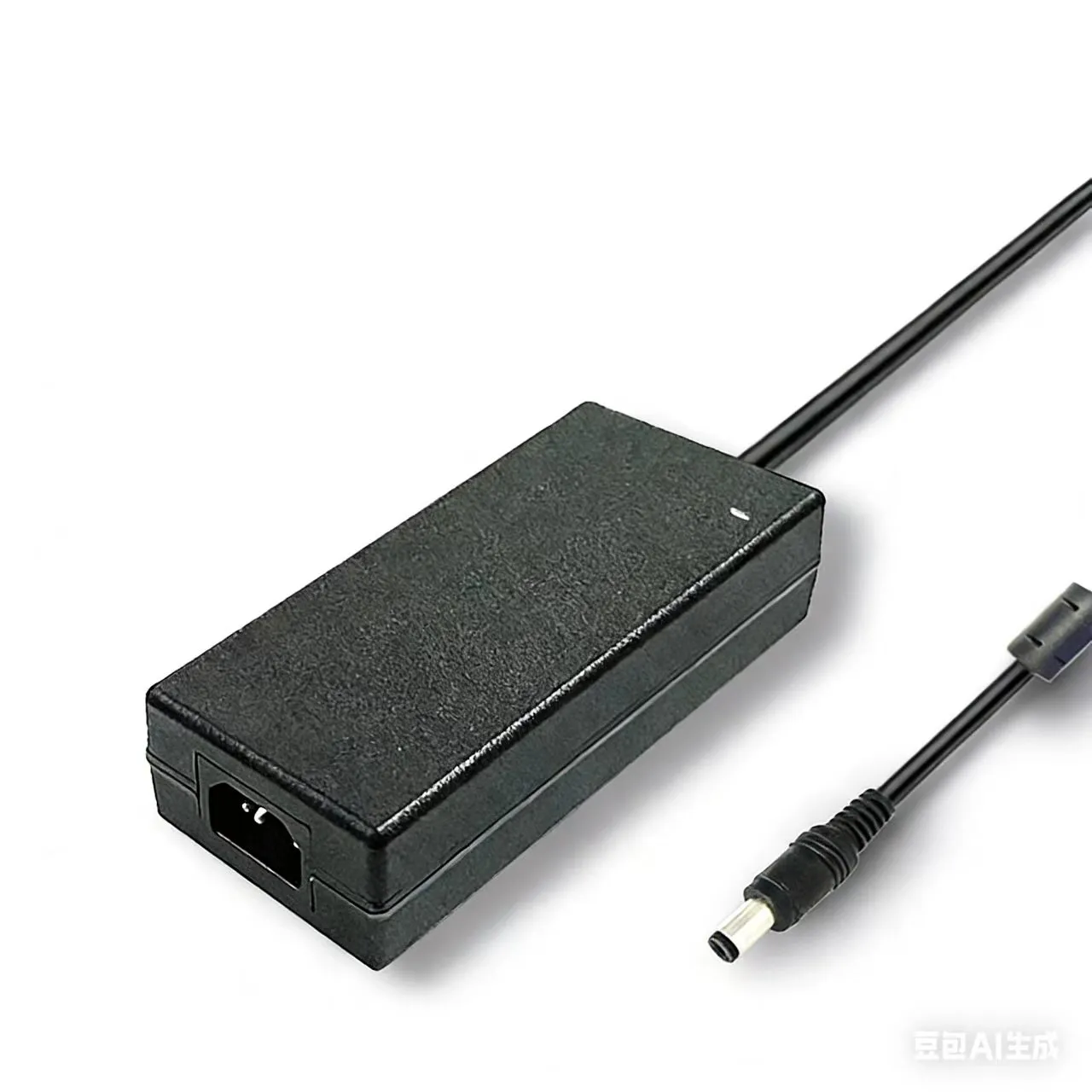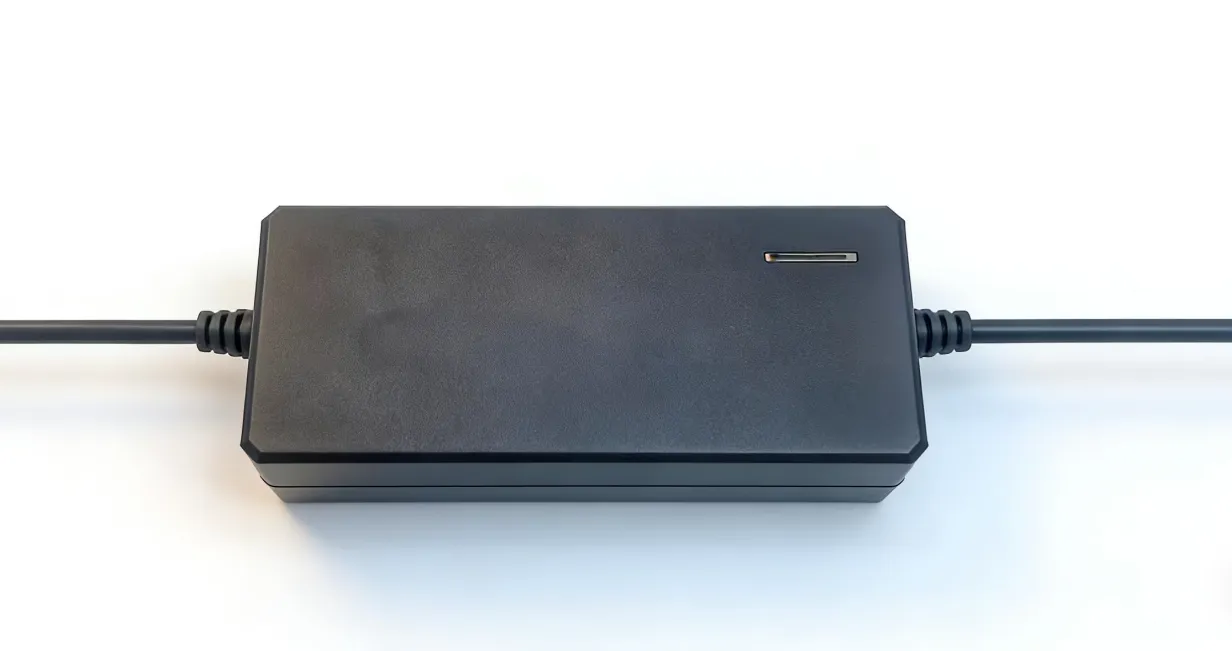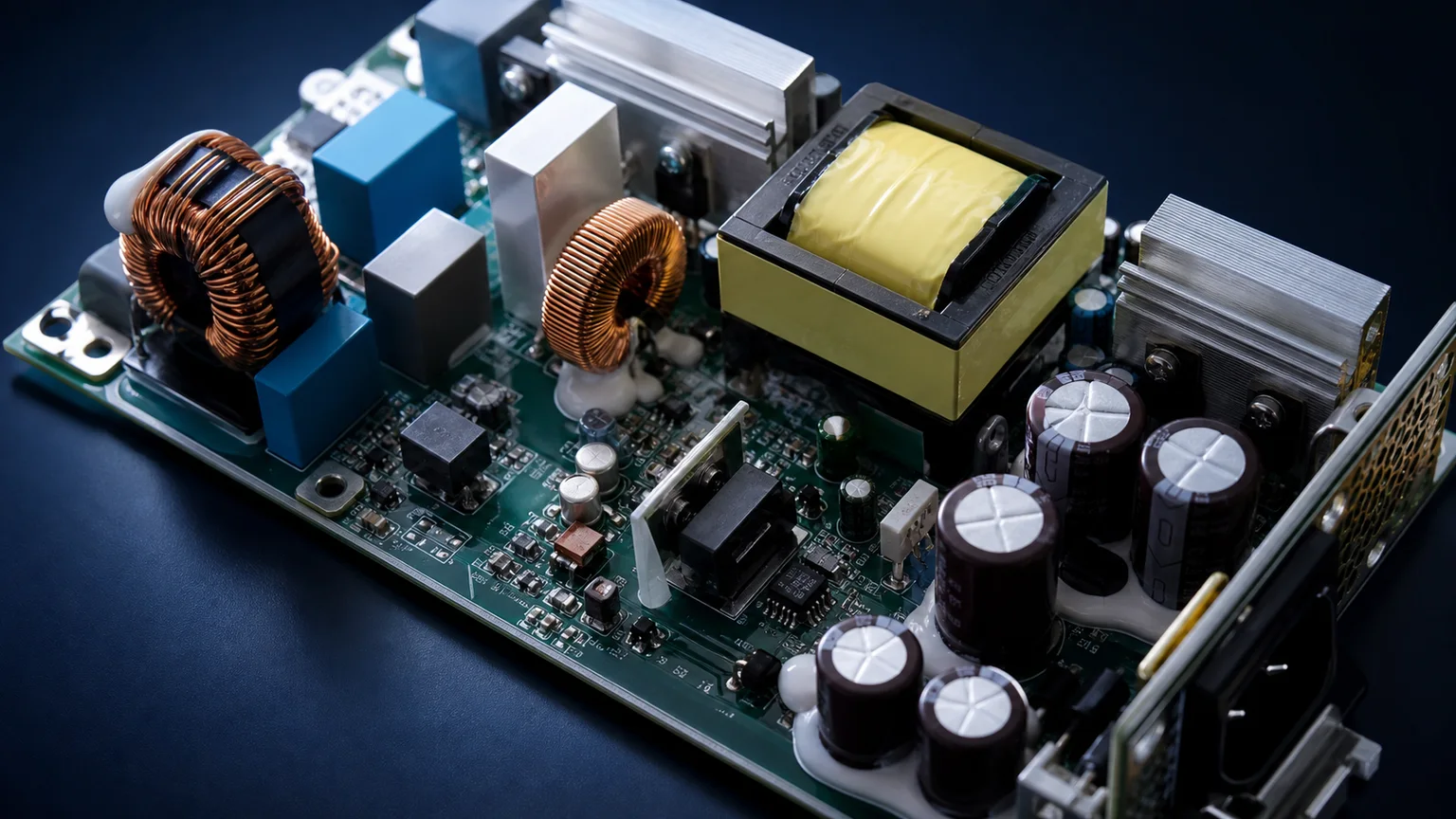

A power supply ships to a coastal seafood-processing plant rated IP65. The enclosure is sealed, the gasket is intact, the label is honest. Six months later the unit fails. The technician opens it expecting water damage — but the housing is dry. Instead, the PCB is furred with green copper salts, the pin headers are corroded, and a fine conductive film bridges two traces near the optocoupler. The enclosure kept liquid water out. It did nothing to stop humid, salt-laden air from condensing on cold copper every night and slowly eating the board alive.
This is the failure mode that surprises buyers most: an IP-rated enclosure protects the box, not the board. Sealed housings still breathe through micro-gaps, and trapped humid air condenses on the coldest surfaces inside. For genuinely harsh environments — coastal, tropical, chemical, automotive, marine — you need a second, internal layer of defense applied directly to the PCB and its components. That layer is conformal coating, potting, or tropicalization. This guide compares all three, decodes the IPC-CC-830C standard, and shows where each belongs.
Why Internal Protection Exists
Corrosion, dendrite growth, and surface leakage do not need standing water. They need a thin film of moisture plus airborne contaminants — sulfur, chlorides, fluxes, dust. A "waterproof" enclosure slows bulk water ingress but cannot prevent the daily thermal cycling that pulls humid air in and condenses it on the PCB. Internal protection coats the copper and components directly, so even when moisture reaches the board surface, it cannot form a continuous conductive or corrosive path. This is environmental isolation — sealing the electronics from the environment — which is a different discipline from environmental derating, where the supply is simply specified to tolerate the stress. The two are complementary, as covered in our power supply derating curve guide.
Three Protection Processes at a Glance
There are three families of internal protection, and they sit on a spectrum from light to total:
- Conformal coating — a thin polymer film, typically 25–250 µm, brushed, sprayed, dipped, or selectively applied over the assembled PCB. It "conforms" to the topography of the board, sealing copper and component leads while adding almost no mass. Reworkable to varying degrees.
- Potting / encapsulation — a thick resin (epoxy, polyurethane, or silicone) poured into a cavity or shell so the entire assembly is embedded in a solid block. Maximum protection against moisture, vibration, and tampering; usually not reworkable.
- Tropicalization — not a single material but a qualification regime: a combined treatment (usually coating plus material selection) certified against humidity, fungus, and salt-fog so the unit survives tropical, coastal, and chemical atmospheres.
Coating defends the surface, potting entombs the whole assembly, and tropicalization is the test pedigree that proves either one survives the worst climates.
The IPC-CC-830C Standard Decoded
IPC-CC-830C (the current 2019 revision) is the industry benchmark for qualification and performance of electrical insulating compounds over assembled printed boards. It defines test methods — appearance, thickness, dielectric withstand, insulation resistance, thermal shock, moisture and insulation resistance, fungus resistance, flexibility — and the pass criteria a coating must meet. Crucially, IPC-CC-830 does not approve specific brands; it specifies how to test, and a coating that passes is described as "IPC-CC-830 qualified." We reference it strictly as a public standard; Sanyi is neither an IPC member laboratory nor an authority that certifies on IPC's behalf.
The standard recognizes five coating chemistry classes, each with a two-letter designation:
- AR — Acrylic: easy to apply and remove, fast curing, excellent dielectric properties; poor resistance to solvents and abrasion.
- UR — Urethane (polyurethane): outstanding chemical and abrasion resistance, great moisture barrier; harder to rework, moderate glass-transition temperature.
- SR — Silicone: the widest service temperature window, stays flexible from deep cold to high heat; softer film, can attract dust.
- ER — Epoxy: extremely tough and chemically inert, superb moisture barrier; essentially not reworkable and can stress fine components on thermal cycling.
- XY — Parylene (poly-para-xylylene): applied by vacuum chemical vapor deposition (CVD), producing a pinhole-free, perfectly uniform ~25 µm film that penetrates under components; the best barrier available, at 5–10× the cost and requiring specialized equipment.
Application methods range from manual brushing and dip coating to automated selective spray (which masks connectors and test pads) and parylene CVD.
Conformal Coating Five-Chemistry Comparison
The chemistry choice is a trade-off between barrier strength, temperature range, and how easily a field technician can repair the board later.
| Property | AR Acrylic | UR Urethane | SR Silicone | ER Epoxy | XY Parylene |
|---|---|---|---|---|---|
| Glass transition Tg | ~70–100 °C | ~60–90 °C | very low (rubbery) | ~120–150 °C | high / stable |
| Service temperature | −55…+125 °C | −65…+125 °C | −65…+200 °C | −55…+150 °C | −200…+150 °C |
| Dielectric constant | ~2.7–3.5 | ~4–7 | ~2.7–3.3 | ~3.3–4.5 | ~2.6–3.2 |
| Moisture barrier | Moderate | Good | Good | Excellent | Outstanding |
| Reworkability | Easiest (solvent) | Hard | Moderate | Very hard | Hardest |
| Relative cost | Low | Low–Medium | Medium | Medium | High (5–10×) |
| Best fit | General electronics, easy rework | Chemical/abrasion exposure | Wide-temperature, flexible | Maximum chemical seal | Aerospace, medical, micro-clearance |
For most industrial power supplies, urethane is the pragmatic default: a strong moisture and chemical barrier at modest cost. Acrylic wins when field reworkability matters most. Silicone is the choice for extreme temperature swings, and parylene is reserved for the highest-reliability, smallest-clearance designs where cost is secondary.
Potting and Encapsulation: Three Resin Systems
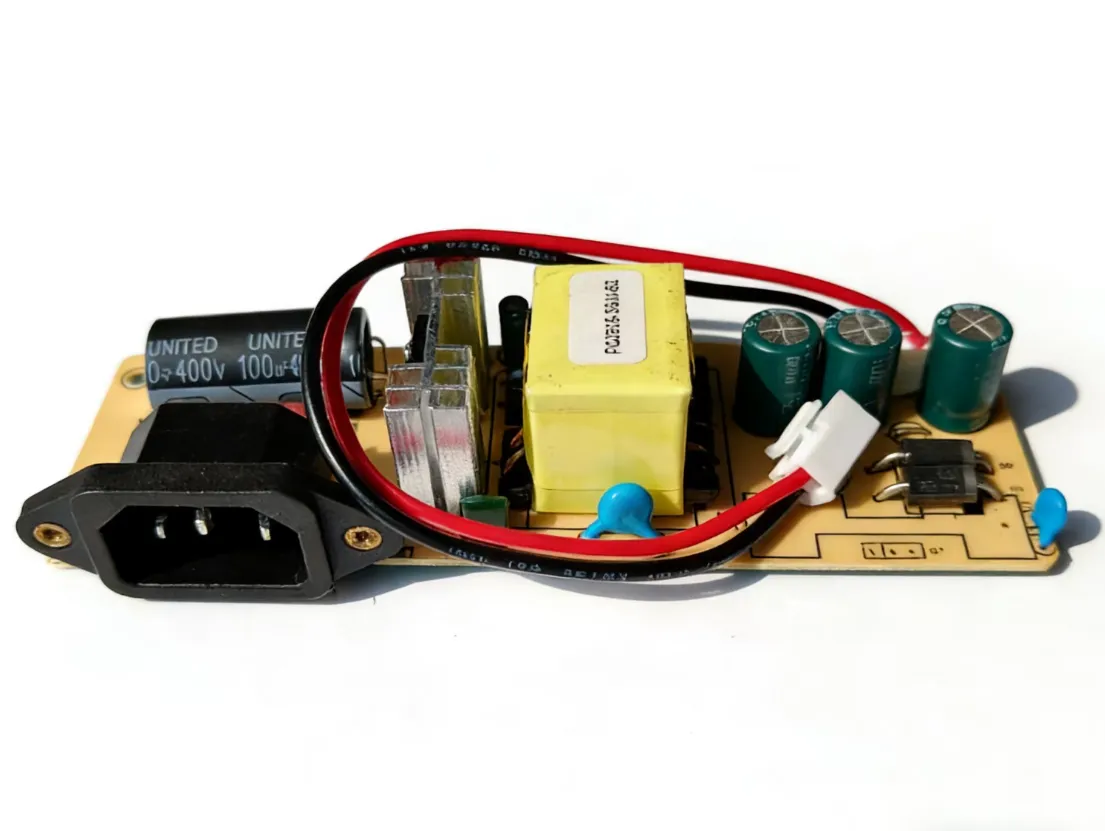
Potting goes further than coating: the assembly is embedded in a solid block, which adds mechanical strength, vibration damping, thermal conduction, and tamper resistance. The three resin families behave very differently, and the selection hinges on CTE (coefficient of thermal expansion) matching, glass-transition temperature, and thermal conductivity (0.5–2.0 W/mK).
| Property | Epoxy | Polyurethane | Silicone |
|---|---|---|---|
| Hardness | Hard (Shore D) | Medium (Shore A 60–90) | Soft/elastic (Shore A 20–60) |
| Thermal conductivity | 0.5–1.5 W/mK (filled to ~2.0) | 0.4–1.0 W/mK | 0.5–2.0 W/mK (filled) |
| CTE | High → thermal stress risk | Moderate | Low effective stress (elastic) |
| Tg | High, rigid | Moderate | Effectively none (stays rubbery) |
| Adhesion | Very strong | Strong | Moderate (needs primer) |
| Best fit | Maximum bond/seal, stable temp | Balanced toughness + flexibility | Wide thermal cycling, stress-sensitive parts |
The classic mistake is potting a transformer or large electrolytic in rigid epoxy: on every thermal cycle, the mismatch between the resin's CTE and the component's expansion shears the part — cracking ferrite cores or tearing fine PCB traces. Silicone absorbs that movement, which is why it dominates in designs that see wide temperature swings, even though its raw adhesion is lower. Polyurethane sits in the middle: tougher than silicone, more forgiving than epoxy.
MIL-I-46058C Heritage
Long before IPC-CC-830 dominated, the U.S. military specification MIL-I-46058C governed insulating compounds for printed-circuit assemblies. It is formally cancelled (superseded by the IPC document), yet it is still widely referenced in legacy and defense procurement because its qualification battery is rigorous: appearance, curing, fungus resistance, thermal shock, humidity (moisture resistance), dielectric withstand, insulation resistance, and more. When a buyer's specification still calls out MIL-I-46058C, the practical path today is to demonstrate compliance to the equivalent IPC-CC-830 tests, which inherited and modernized the same method set. We cite both as public engineering references only.
Tropicalization Explained
Tropicalization is the qualification that proves a unit will survive the trifecta of tropical and coastal abuse:
- Humidity / moisture — typically the double-85 accelerated test: 85 °C at 85% RH for 1000 hours, a brutal soak that drives moisture into any weak point.
- Fungus resistance — per ASTM G21, confirming the coating and substrate do not nourish mold growth in warm, damp air.
- Salt fog — per ASTM B117, a continuous neutral salt-spray exposure that reproduces years of coastal corrosion in days.
Any power supply destined for a coastal, tropical, marine, or chemical-plant atmosphere should carry tropicalization evidence — a sealed enclosure alone will not survive double-85 and B117. These are public ASTM and industry test standards; Sanyi conducts protection treatment to these methods but does not act as an accredited test house.
Three-Process Head-to-Head
| Criterion | Conformal Coating | Potting | Tropicalization |
|---|---|---|---|
| Layer / thickness | 25–250 µm film | Full cavity fill | Coating + qualified materials |
| Protection strength | Medium–High | Highest | High (climate-targeted) |
| Thermal impact | Negligible | Improves heat path (if filled) | Negligible |
| Reworkability | Possible (AR easiest) | Essentially none | Depends on base process |
| Added mass | Minimal | Significant | Minimal |
| Relative cost index | 1× | 2–4× | 1.5–2× |
| Typical application | General industrial, humidity | Vibration, marine, tamper-proof | Coastal, tropical, chemical |
How It Complements IP65/IP67/IP68
This is the point buyers most often miss. IP ratings and internal protection answer different questions. An IP rating (per IEC 60529) describes how well the enclosure as a whole blocks solids and liquids from entering — it is an external, housing-level barrier. Conformal coating, potting, and tropicalization protect the PCB and components directly — an internal, board-level barrier. Neither replaces the other.
A truly robust industrial unit uses both: an IP67 sealed enclosure to keep bulk water and dust out, plus a tropicalized PCB to defend against the humid air and corrosive vapor that still get in through breathing and condensation. For the external side of this dual-layer defense, see our companion IP65/IP67/IP68 waterproof power supply selection guide. And because physical protection extends service life, it pairs naturally with reliability modeling — see the MTBF reliability calculation guide.
Power Density vs Thermal Design Trade-off
Potting is also a thermal decision. Still air conducts heat at roughly 0.03 W/mK; a filled silicone potting compound moves it at 0.8 W/mK or more — over 20× better — pulling heat from hot components into the enclosure wall. That makes potting almost mandatory once power density climbs above roughly 5 W/in³, where natural convection alone cannot cope.
But the same potting that helps thermally can hurt mechanically. Rigid epoxy with mismatched CTE will crack a potted transformer on thermal cycling; the cure exotherm of a thick pour can itself damage temperature-sensitive parts; and any trapped air becomes a void where partial discharge can ignite. The right answer balances thermal conductivity against CTE compliance — usually a thermally-filled silicone for high-density designs.
Five Common Protection Pitfalls
- Coating over test pads and connectors — an unmasked film insulates ICT/flying-probe contacts and bed-of-nails pins, causing false production-line test failures. Always mask test points and mating connectors.
- Burying surge components — potting over an MOV or gas-discharge tube can block its energy-venting path and alter its thermal behavior, defeating the surge protection it was meant to provide.
- Covering safety-ground references — coating a Y-capacitor ground or a touch-current reference path can shift leakage-current measurements and skew compliance readings.
- Voids and partial discharge — air bubbles trapped during potting create high-field cavities where partial discharge (PD) erodes the resin over time, eventually shorting.
- Incomplete cure / outgassing — under-cured resin releases volatiles that contaminate nearby optics, relay contacts, or sensors; thick pours also shear fine PCB traces if the CTE is wrong. Flammability matters too — protection materials should meet UL94 V-0 where the safety standard requires it.
Sanyi Protection-Ready Product Ecosystem
Sanyi's industrial, desktop, and high-power adapter lines can be specified with conformal coating or potting for demanding environments, so the protection process is matched to the deployment rather than bolted on afterward:
- HP Series Ultra High-Power Desktop Adapter 120W-480W — high-density industrial supply where thermally-filled potting aids both protection and heat spreading.
- APN Series High-Power Desktop Adapter 48W-144W — mid-power desktop unit well suited to urethane or acrylic conformal coating for humid indoor/outdoor use.
- SY-C260W High-Power Charger 260W — high-current charging platform for vibration-prone and mobile applications.
- SY-C500W High-Power Charger 500W — top-tier power node where coastal and industrial deployments benefit from tropicalization.
For DIN-rail form factors that frequently live in humid cabinets and enclosures, see the industrial DIN-rail power supply selection guide.
FAQ
Q: What is the difference between conformal coating and potting? Conformal coating is a thin 25–250 µm polymer film that follows the contours of the PCB and remains relatively light and (sometimes) reworkable, while potting fully embeds the assembly in a solid resin block for maximum moisture, vibration, and tamper protection at the cost of reworkability and added mass.
Q: If my power supply has an IP65 enclosure, do I still need tropicalization? Often yes. IP65 stops bulk water and dust at the housing, but humid, salt-laden air still enters through breathing and condenses on the cold PCB. In coastal, tropical, or chemical environments you need internal protection (tropicalization) on top of the IP rating — the two layers solve different problems.
Q: Does potting hurt heat dissipation? A thermally-filled potting compound actually improves it — silicone filled to ~0.8–2.0 W/mK conducts heat over 20× better than still air, pulling it into the enclosure. Unfilled or poorly chosen resin can trap heat, so thermal conductivity and CTE matching must be specified for high-density designs.
Q: Which conformal coating is easiest to rework in the field? Acrylic (AR). It softens and removes with common solvents, making spot repairs straightforward — unlike epoxy (ER) or parylene (XY), which are essentially permanent and require aggressive mechanical or plasma removal.
Q: What is the double-85 test? "Double-85" is an accelerated humidity test that holds the unit at 85 °C and 85% relative humidity, commonly for 1000 hours, to force moisture into any weak point. It is paired with ASTM G21 fungus and ASTM B117 salt-fog testing as the core of a tropicalization qualification.
.webp)