


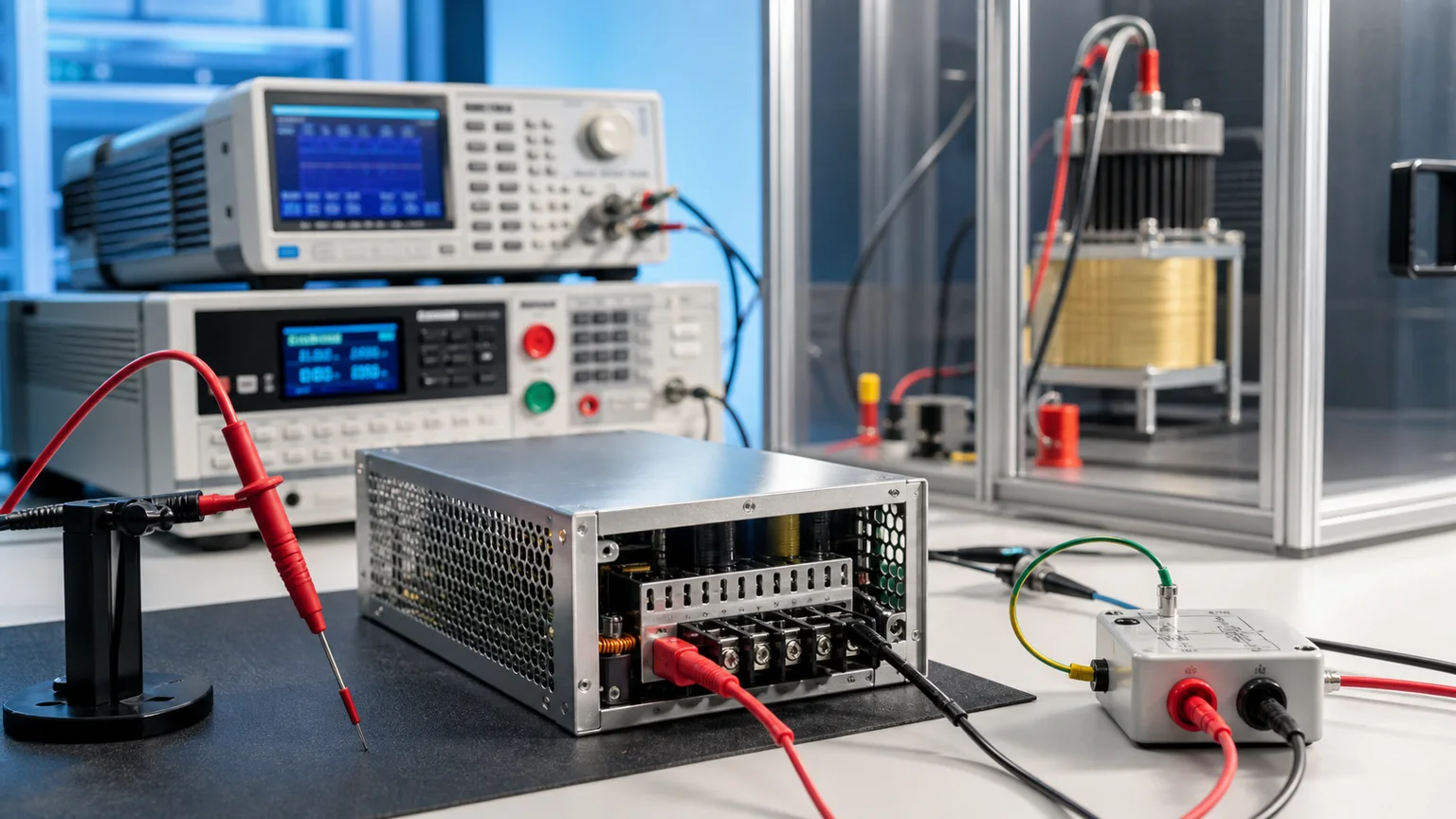

If you buy, design or certify power adapters, chargers or UPS systems, IEC 62368-1 is the single safety standard you can no longer ignore. It is not a cosmetic rename of the old IEC 60950-1. It is a fundamentally different way of thinking about safety — one that swaps the old rulebook of "this is an IT product, so apply these clauses" for a methodology that asks "what energy sources live inside this product, and how badly could they hurt someone?" That shift trips up engineers, procurement managers and compliance leads alike, because a report that passed under IEC 60950-1 cannot simply be relabelled.
This guide explains the IEC 62368-1 migration from the ground up: where the standard came from, what Hazard-Based Safety Engineering (HBSE) actually means, how energy sources and persons are classified, how it differs technically from IEC 60950-1, the mandatory compliance dates by region, and the global certification routes that get a power supply legally sold in every major market.
What Is IEC 62368-1 — A Brief History and Why It Replaced IEC 60950-1 / IEC 60065
For decades, two separate standards governed most low-voltage electronics. IEC 60950-1 covered Information Technology Equipment (ITE) — computers, networking gear, power supplies. IEC 60065 covered Audio/Video (AV) equipment — TVs, amplifiers, receivers. As products converged (a smart TV is both an AV device and a networked computer), maintaining two prescriptive standards became untenable.
IEC 62368-1 merges and replaces both. The first edition appeared in 2014, Edition 3 (2018) is the mainstream version certified worldwide today, and Edition 4 (2023) adds refinements including explicit clauses for USB-C and outdoor equipment. Rather than listing rules by product type, it provides one hazard-based framework that scales to anything from a 5W phone charger to a 480W desktop adapter.
Hazard-Based Safety Engineering (HBSE) — The Methodology Shift
The heart of IEC 62368-1 is HBSE. The old standards were rule-driven: they told you the required creepage distance or insulation thickness for a given product class, and you complied. HBSE is hazard-driven: it asks you to identify every energy source capable of causing pain or injury, classify how dangerous each one is, and then place safeguards between that energy and the person who might be exposed.
The mental model is a simple chain: energy source → transfer mechanism → body part. A safeguard is anything that interrupts that chain — insulation, an enclosure, a protective earth, a warning marking, or instructions. The designer's job is no longer to look up a clause but to prove that every hazardous energy source is contained by adequate safeguards for the type of person who could come into contact with it. This is why HBSE is more flexible for novel products, and also why it forces a genuine re-engineering review rather than a paperwork swap.
Energy Source Classification — ES, PS, TS, MS, RS and Their 1/2/3 Levels
IEC 62368-1 defines five classes of energy source, each graded into three levels:
- ES — Electrical energy source (electric shock): ES1 / ES2 / ES3
- PS — Power source (energy causing fire/ignition): PS1 / PS2 / PS3
- TS — Thermal energy source (burns): TS1 / TS2 / TS3
- MS — Mechanical energy source (cuts, crushing): MS1 / MS2 / MS3
- RS — Radiation energy source (lasers, RF, optical): RS1 / RS2 / RS3
The level scale is intuitive:
| Level | Meaning | Safeguard requirement |
|---|---|---|
| Class 1 | Not painful, not capable of ignition | No safeguard needed |
| Class 2 | Painful but not an injury hazard | Basic safeguard; accessible only to instructed persons |
| Class 3 | Capable of injury or fire | Reinforced/double safeguard; accessible only to skilled persons |
For a power supply, the two classes that matter most are ES (shock from mains and internal high-voltage rails) and PS (fire risk from the energy a fault could release).
Person Classification — Ordinary, Instructed, Skilled
Safeguard requirements depend on who could be exposed. IEC 62368-1 recognises three categories:
- Ordinary person — the general public; no training, may include children. Gets the most protection.
- Instructed person — trained or supervised to recognise specific hazards (e.g. an IT technician).
- Skilled person — qualified by training and experience to work on energy sources (e.g. a service engineer).
A Class 2 or Class 3 energy source that would be unacceptable for an ordinary person can be permissible if it is only accessible to a skilled person behind a tool-secured panel. This person/energy matrix is the engine that drives every design decision.
Safeguards — Basic, Supplementary, Reinforced, Double Insulation
Safeguards are layered exactly as engineers expect from the old standards, but the vocabulary is now formalised:
- Basic safeguard — the first line of protection under normal conditions.
- Supplementary safeguard — a second, independent layer that takes over if the basic one fails.
- Double insulation — basic plus supplementary used together.
- Reinforced safeguard — a single safeguard equivalent in protection to double insulation.
The principle: a single fault should never expose a person to a Class 2 or Class 3 energy source. For an external power adapter, that typically means reinforced insulation between the mains side and the user-accessible output.
Key Technical Differences vs IEC 60950-1 — Creepage, Dielectric Strength, Touch Current, Temperature Limits
Most clause values are similar, but the philosophy and several limits differ enough that a 60950-1 report cannot be reused directly. The table below summarises the practical contrasts:
| Parameter | IEC 60950-1 (legacy) | IEC 62368-1 (current) |
|---|---|---|
| Core philosophy | Rule/product-class driven | Hazard/energy-source driven (HBSE) |
| Shock protection | SELV / TNV / hazardous voltage | ES1 / ES2 / ES3 energy classes |
| Fire/ignition | Limited power source rules | PS1 / PS2 / PS3 power classes |
| Creepage & clearance | Fixed tables by voltage/category | Tables retained, applied per energy class |
| Dielectric strength | Hi-pot by working voltage | Hi-pot tied to safeguard requirement |
| Touch current limits | ~0.25 / 3.5 mA limits | Aligned to ES1/ES2 thresholds |
| Temperature limits | Material/touch tables | TS1/TS2/TS3 burn-based limits |
| Scope | ITE only | ITE + AV + many ICT/consumer products |
The takeaway for procurement: ask suppliers for a current IEC 62368-1 (Ed.3 or Ed.4) certificate, not a converted 60950-1 document.
How Power Adapters, Chargers, and UPS Are Classified Under IEC 62368-1
For typical power products, classification usually lands like this:
- Low-power USB and phone chargers (≤15W): mains input is ES3, but the isolated output is ES1 + PS1 — safe to touch, low fire risk.
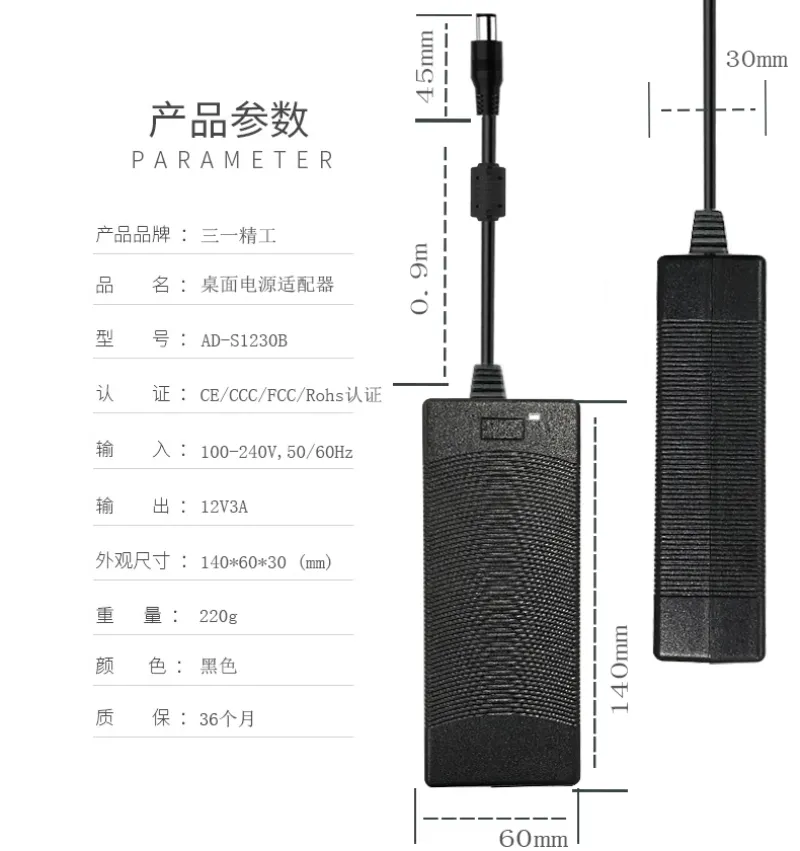
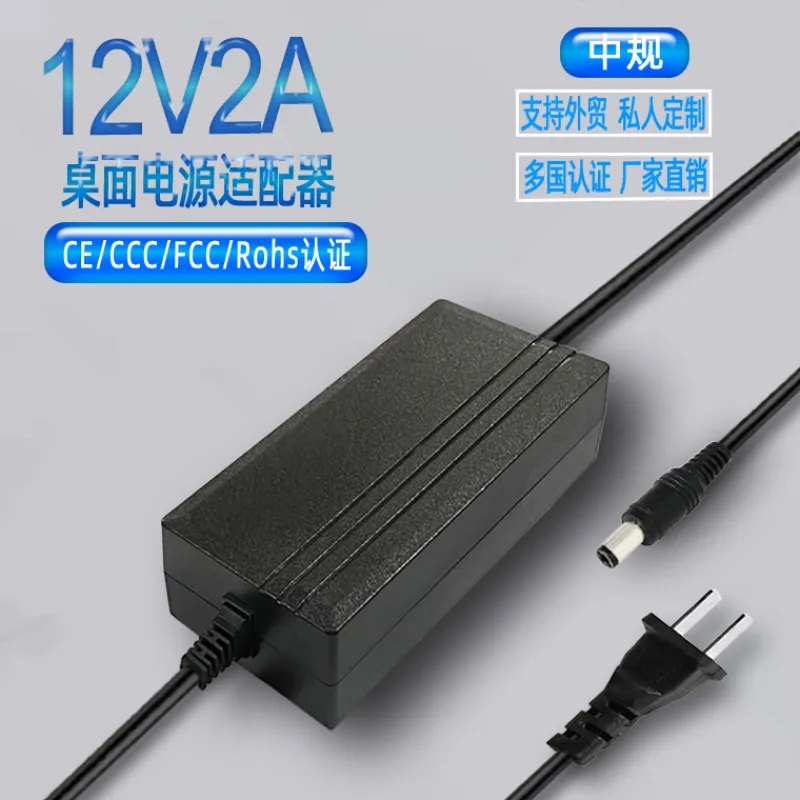
- Mid-power desktop adapters (48W–144W): outputs commonly ES1 + PS2, requiring controlled fault energy. Our APN desktop adapter series is built and certified for this band.
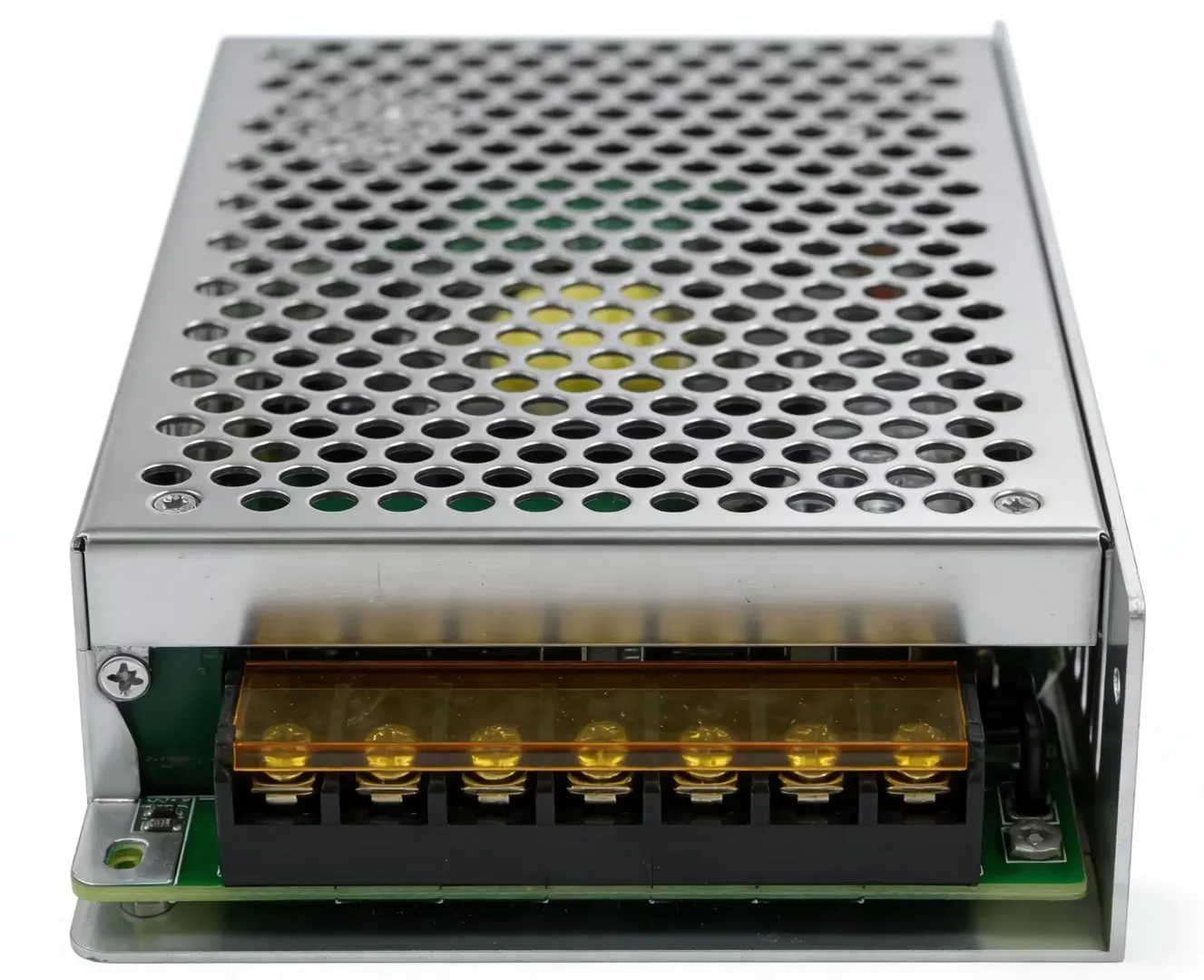
- High-power desktop adapters (120W–480W): can reach PS3 internally, demanding reinforced safeguards and stricter enclosure/temperature control. The HP high-power adapter series is engineered and certified for this tier with dual IEC 62368-1 / UL 62368-1 listings.
- Smart chargers and workstation chargers: the SY-C260W smart charger and the higher-output SY-C500W workstation charger combine IEC 62368-1 with the relevant battery-charging annex requirements.
Correctly judging the PS level early is the most common make-or-break decision, because it dictates the whole safeguard architecture.
Global Certification Routes — CB Scheme, EN 62368-1, UL 62368-1, GB 4943.1, AS/NZS 62368.1
IEC 62368-1 is the international base, but each market adopts it with national differences. The efficient path is the CB Scheme (run by IECEE): one test report from a recognised lab, then national certificates issued on top of it.
- CB Scheme (IECEE) — one report, multiple-country recognition; the global starting point.
- EN 62368-1 (CE) — European Union; differences captured in the "Z" national-difference annexes.
- UL 62368-1 (US / Canada) — North America; US and CA national differences.
- GB 4943.1-2022 (China) — Chinese adoption with enhanced national requirements.
- AS/NZS 62368.1 (Australia / New Zealand) — fully replaced the old AV/ITE standards in 2022.
- PSE (Japan), KC (Korea), VCCI — additional regional schemes built on the same base.
Certification bodies such as UL, TÜV SÜD, TÜV Rheinland, Intertek, SGS, CSA and Nemko issue these marks; we reference them here only to describe the market landscape, not as our own affiliations.
Mandatory Compliance Dates by Region — EU 2020, North America 2020, China 2023, Asia-Pacific
The migration deadlines have already passed in every major market, so legacy 60950-1 certificates are no longer accepted for new products:
| Region | Standard | Mandatory date |
|---|---|---|
| European Union | EN 62368-1 | 2020-12-20 |
| US / Canada | UL 62368-1 | 2020-12-20 |
| Australia / New Zealand | AS/NZS 62368.1 | 2022 (full replacement) |
| China | GB 4943.1-2022 | 2023-08-01 (mandatory) |
If a supplier still offers only IEC 60950-1 documentation in 2026, the product is not legally compliant for sale into these markets.
Relationship with EMC, Energy Efficiency (DOE Level VI / ErP Lot 6), and Other Standards
IEC 62368-1 covers safety only. It does not replace — and is not replaced by — the other mandatory regimes a power supply must also satisfy:
- EMC — emissions and immunity (e.g. EN 55032 / EN 55035, FCC Part 15). Separate testing.
- Energy efficiency — DOE Level VI (US), ErP Lot 6 (EU) and CoC Tier 2 (voluntary) set minimum active-mode efficiency and no-load power. A unit can be perfectly safe yet fail efficiency, and vice versa.
These are complementary axes. A compliant adapter needs all three: a safety certificate (IEC 62368-1), an EMC report, and an efficiency mark. Our adapters are designed to clear all three together — the same way an active-PFC, 80 PLUS efficient supply must meet both harmonic and efficiency rules simultaneously.
Common Migration Pitfalls
- Reusing a 60950-1 report. A legacy report cannot be directly converted; the energy-source classification and HBSE rationale must be redone. Plan for fresh evaluation, not a relabel.
- Misjudging the energy level. Calling a high-power adapter "PS2" when fault energy actually reaches PS3 invalidates the entire safeguard design — and the certificate.
- Ignoring Edition 4 (2023) clauses. New USB-C and outdoor-equipment provisions mean an Ed.3 certificate may need supplementing for certain product types entering the market now.
- Forgetting national differences. A CB report alone does not sell anything; you still need EN, UL, GB or AS/NZS certificates with their specific national deviations and markings.
- Skipping factory surveillance and markings. Ongoing FUS/IPI factory inspections and correct safety markings (ratings, symbols, warnings) are part of staying certified, not a one-time hurdle.
Sanyi Power Supply Ecosystem — IEC 62368-1 Certified Adapters and Chargers
Sanyi engineers and certifies its power products to the current IEC 62368-1 framework, with national listings for the markets each customer ships to. For mid-power applications, the APN desktop adapter series (48W–144W) covers the ES1 + PS2 band. For demanding high-power designs, the HP adapter series (120W–480W) carries dual IEC 62368-1 / UL 62368-1 listings for PS3-class energy management. For battery and workstation charging, the SY-C260W smart charger and SY-C500W workstation charger add the relevant charging-annex compliance on top of the core safety standard.
Need a power adapter, charger or UPS certified to IEC 62368-1, UL 62368-1, EN 62368-1, GB 4943.1 and AS/NZS 62368.1 for your target markets? Contact our power engineering team with your power, output and destination-country requirements, and we will recommend a certified solution and supply the matching test reports.
FAQ
Is IEC 62368-1 still mandatory, or can I keep using IEC 60950-1? IEC 60950-1 is withdrawn for new products. EN 62368-1 and UL 62368-1 became mandatory on 2020-12-20, AS/NZS 62368.1 in 2022, and GB 4943.1-2022 in China on 2023-08-01. Any new power supply sold into these markets must hold a current IEC 62368-1-based certificate; a legacy 60950-1 report is no longer accepted.
Does a CB Scheme certificate let me sell in every country? Not by itself. A CB report from an IECEE-recognised lab is the efficient starting point, but each market still issues its own certificate on top of it — EN 62368-1 for CE, UL 62368-1 for the US/Canada, GB 4943.1 for China, AS/NZS 62368.1 for Australia/New Zealand — each applying its own national differences and markings.
What is new in Edition 4 (2023) compared with Edition 3? Edition 4 keeps the same HBSE framework but adds and clarifies clauses, notably explicit provisions for USB-C power delivery and outdoor equipment. Edition 3 (2018) remains widely certified, but products with USB-C or outdoor use may need Edition 4 evaluation as markets transition.
How is IEC 62368-1 different from medical IEC 60601? IEC 62368-1 is the general safety standard for ITE, AV and most consumer/office power supplies. Medical devices that contact patients require IEC 60601-1, with stricter leakage-current limits and Means of Patient Protection (MOPP). Use IEC 62368-1 for office/industrial adapters; see our medical-grade power supply IEC 60601 selection guide when patient contact is involved. For US output-energy limits specifically, IEC 62368-1 also works alongside the UL Class 2 vs Class II safety framework.
.webp)