
A cordless power tool battery charger is not a scaled-up phone charger, and it is not a repurposed e-bike charger with a different plug. It sits in a category of its own — one defined by high C-rate rapid charging into small, dense lithium packs; platform-locked connectors that change with every brand; and the expectation that the charger will survive a summer on an open framing deck or a Minnesota winter inside an unheated job trailer. Get the charger wrong and you either wait 90 minutes for a 2.0 Ah pack that should be ready in 25, or you void the warranty on a $400 battery by feeding it current through a third-party charger that skips the BMS handshake entirely.
This guide covers cordless power tool charger selection in 2026 — the 18V / 20V MAX / 40V / 60V voltage landscape across DeWalt, Milwaukee, Makita, Bosch, Ryobi, Metabo HPT, Festool, Hilti and Worx platforms; how battery packs are actually built (5s, 10s, 15s cell strings); why multi-bay rapid chargers justify the cost for contractors; the real risks of mixing OEM and aftermarket batteries and chargers; and the safety certifications that separate a professional-grade charger from a fire waiting to happen.
Why Cordless Power Tool Chargers Are a Distinct Category
If you have already read our guides on e-bike chargers or golf cart chargers, the power tool charger world will feel both familiar and alien. The electrochemistry is the same — lithium-ion cells, CC/CV charge profiles, BMS-supervised protection — but every other parameter diverges.
High C-rate charging. A typical 18V / 5.0 Ah power tool pack stores roughly 90 Wh. An OEM rapid charger pushes that pack from empty to full in 30–45 minutes, which means sustained charge rates of 1.5C to 2C. Compare that to e-bike chargers that typically charge at 0.3C–0.5C into 500–700 Wh packs over 4–6 hours. The thermal load per cell is dramatically higher in the power tool case, and the charger must monitor cell temperature in real time through the BMS communication bus.
Platform lock-in. Every major tool brand uses a proprietary battery connector, a proprietary BMS communication protocol, and proprietary firmware that pairs charger to pack. There is no universal "18V tool battery plug" the way there is a near-universal XT60 in the hobby world or Anderson SB in the forklift world. Buying into a tool platform is a commitment, and the charger is part of that commitment.
Multi-battery workflow. A framing crew on a residential site may rotate through 8–12 batteries per day across a circular saw, an impact driver, a reciprocating saw and a radio. The charger is not a "plug it in overnight" device — it is a logistics hub that needs to turn batteries around continuously during the workday.
Jobsite environment. Sawdust, concrete dust, rain, sub-zero cold starts, 60°C surface temperatures inside a metal gang box in direct sun. OEM chargers are tested against vibration, drop impact and temperature cycling that consumer electronics chargers never see.
18V vs 20V MAX — Decoding the Voltage Naming Convention
Walk into any hardware store and you will see DeWalt advertising 20V MAX while Makita and Bosch label their equivalent tools 18V. This is not a performance difference — it is a marketing difference rooted in how lithium-ion voltage is measured.
A standard lithium-ion cell has a nominal voltage of 3.6V (the average voltage across the discharge curve) and a maximum charged voltage of 4.2V. A 5-cell series string (5s) therefore has:
- Nominal voltage: 5 × 3.6V = 18.0V
- Maximum voltage: 5 × 4.2V = 21.0V (marketed as "20V MAX")
Makita, Bosch and Metabo HPT label their packs by nominal voltage: 18V. DeWalt, Ryobi, Worx and most North American brands label by maximum voltage: 20V MAX. The IEC and most of the professional world use nominal voltage, but North American marketing departments learned that "20V" outsells "18V" on the shelf, so the naming stuck. DeWalt's own fine print reads: "Maximum initial battery voltage (measured without a workload) is 20 volts. Nominal voltage is 18."
For charger selection purposes, treat 18V and 20V MAX as the same thing: a 5s lithium-ion pack requiring a charge termination voltage of 21.0V (4.2V per cell).
The same pattern scales up:
| Marketing Label | Nominal | Max (Charged) | Cell Config |
|---|---|---|---|
| 18V / 20V MAX | 18.0V | 21.0V | 5s |
| 36V / 40V MAX | 36.0V | 42.0V | 10s |
| 54V / 60V MAX (FlexVolt) | 54.0V | 63.0V | 15s |
DeWalt's FlexVolt packs are the most interesting case — they physically reconfigure between 20V MAX (5s parallel groups) and 60V MAX (15s series) depending on which tool they are inserted into, using a mechanical switching mechanism inside the pack. The charger always charges them in the 60V (15s) configuration.
Major Cordless Tool Platforms — Compatibility Matrix
There is no cross-brand compatibility in the cordless power tool world. Each platform is a walled garden with its own battery format, charger connector, and BMS protocol. Below is the 2026 landscape:
| Platform | Voltage Tiers | Pack Config | Charger Port | Notes |
|---|---|---|---|---|
| DeWalt 20V MAX / FlexVolt | 20V / 60V | 5s / 15s | Rail slide | FlexVolt packs auto-switch between 20V and 60V |
| Milwaukee M12 / M18 / MX FUEL | 12V / 18V / 72V | 3s / 5s / 20s | Rail slide (different per tier) | M18 is the dominant pro platform |
| Makita LXT / XGT | 18V / 40V | 5s / 10s | Star connector (LXT) / rail (XGT) | LXT and XGT are NOT cross-compatible |
| Bosch 18V Core | 18V | 5s | Rail slide | Part of the 18V cross-brand alliance with Metabo HPT |
| Ryobi One+ / HP | 18V | 5s | Rail slide | Budget/prosumer tier, largest installed base |
| Metabo HPT MultiVolt | 18V / 36V | 5s / 10s | Rail slide | MultiVolt packs work in both 18V and 36V tools |
| Festool 18V | 18V | 5s | Rail slide (Airstream) | Airstream cooling channels in battery and charger |
| Hilti B22 / B36 | 22V / 36V | 6s / 10s | Rail slide | 22V (not 20V) — Hilti uses its own cell config |
| Worx PowerShare | 20V / 40V | 5s / 10s | Tab slide | 40V = two 20V packs ganged together |
Note that Hilti stands alone at 22V — a 6s configuration rather than the industry-standard 5s. This means Hilti chargers are not interchangeable with anything else on this list, even at a bare electrical level.
Battery Pack Architecture — 5s/10s/15s Configurations and BMS Communication
Every cordless tool battery pack is a collection of lithium-ion cells (typically 18650 or 21700 format) wired in series and parallel, supervised by a battery management system (BMS) that communicates with the charger.
Series count determines voltage. A 5s pack delivers 18V nominal / 21V max. A 10s pack delivers 36V nominal / 42V max. A 15s FlexVolt pack delivers 54V nominal / 63V max.
Parallel count determines capacity. A 5s1p pack with 2.5 Ah cells is a 2.5 Ah pack. A 5s2p pack with the same cells is a 5.0 Ah pack. Higher-capacity packs (8.0 Ah, 12.0 Ah) use more parallel groups, which makes them physically larger and heavier but does not change the voltage.
BMS communication. OEM chargers do not simply apply voltage and current — they talk to the BMS over a proprietary data bus (typically 1-wire or I2C variants on the battery contacts). The BMS reports individual cell voltages, pack temperature, cycle count, and fault status. The charger adjusts its charge profile based on this data. This is why a "dumb" power supply set to 21.0V is not a substitute for a proper charger — it has no visibility into cell balance or thermal state.
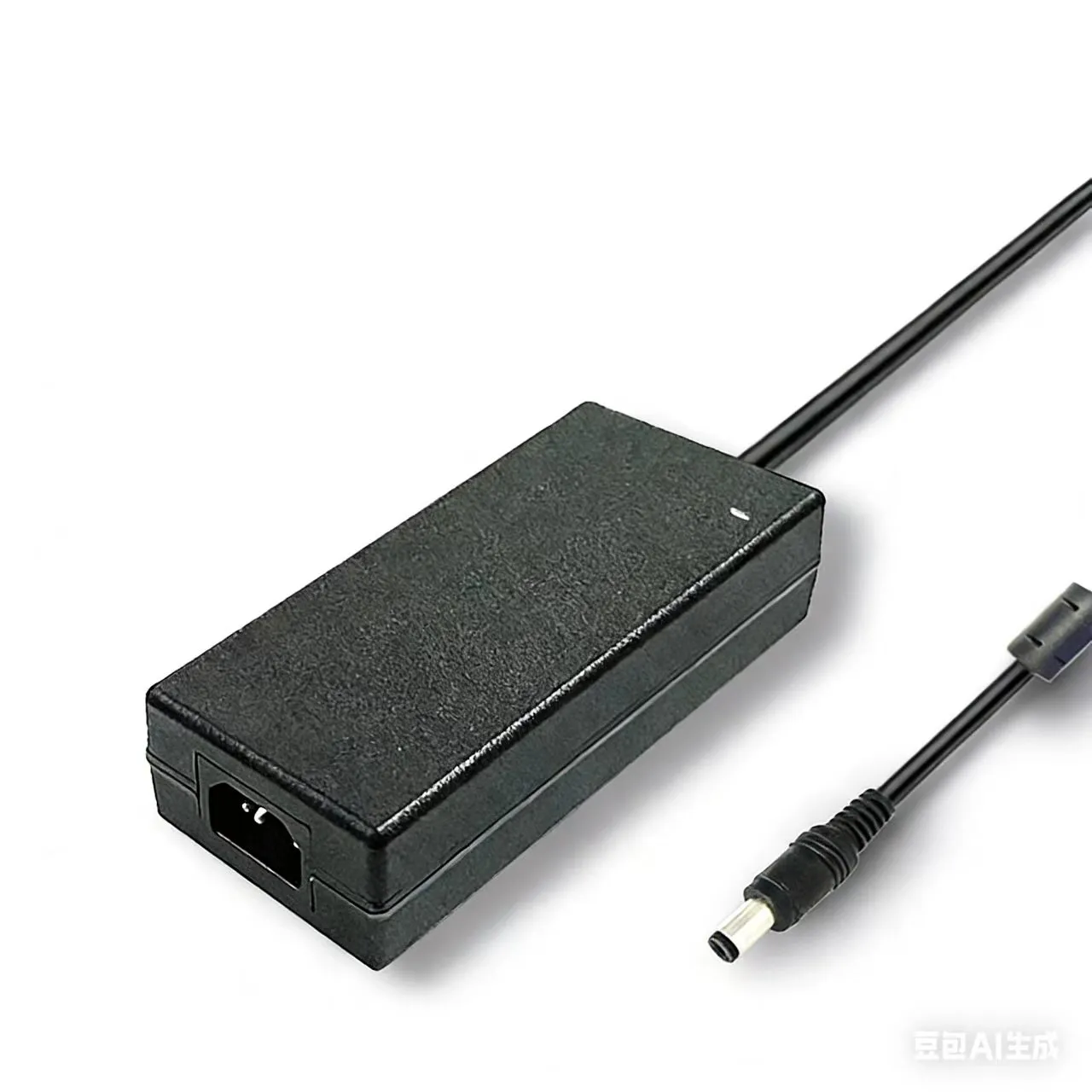
For OEM replacement and custom charging station builds, the Sanyi APN series desktop adapters (48W–144W) provide the clean, regulated DC upstream source that a charging control board needs for 18V/20V packs, while the HP series (120W–480W) covers 36V/40V/60V platforms where power demand exceeds 150W.
Single-Bay Standard vs Multi-Bay Rapid Charger Comparison
OEM chargers come in two broad categories, and the choice between them is primarily a workflow decision:
Single-bay standard chargers ship free with most bare-tool kits. They charge one pack at a time, typically at a moderate rate (1C or below), and take 60–90 minutes for a 5.0 Ah pack. Adequate for homeowners and light-duty users who own 1–2 batteries and can plan around charge time.
Multi-bay rapid chargers (2-bay, 4-bay, or 6-bay) charge multiple packs simultaneously at higher rates (1.5C–2C), often with active cooling fans. A DeWalt DCB104 four-bay charger or a Milwaukee M18 six-bay sequential charger can keep a crew of 3–4 tradespeople running all day without battery downtime.
| Feature | Single-Bay Standard | Multi-Bay Rapid |
|---|---|---|
| Charge time (5.0 Ah) | 60–90 min | 30–45 min per bay |
| Simultaneous packs | 1 | 2–6 |
| Active cooling | Rarely | Yes (fans) |
| Price range | $30–$60 | $150–$400 |
| Best for | Homeowner, light DIY | General contractor, production crew |
| Input power | 100–150W | 300–600W+ |
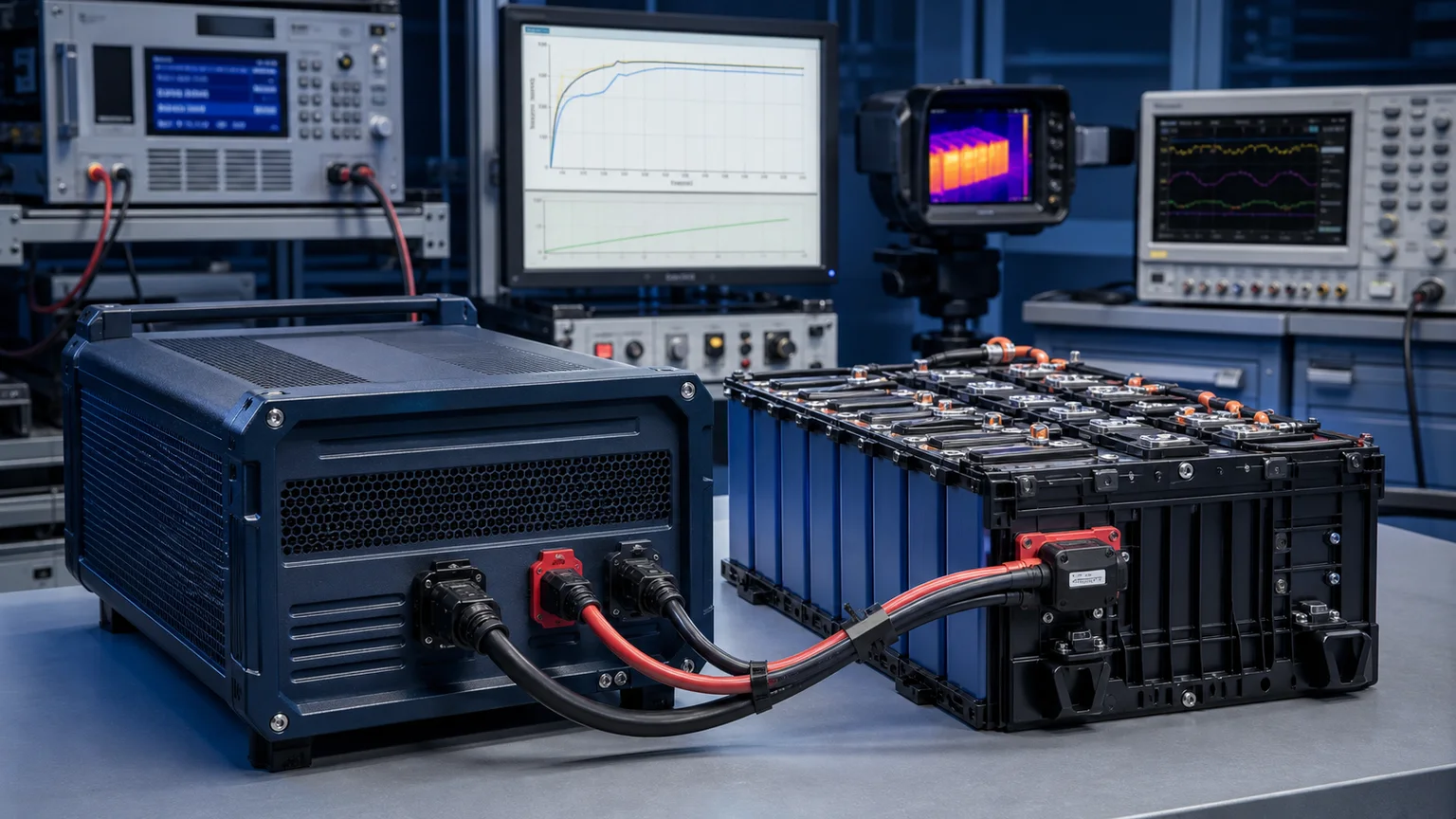
For contractors building custom multi-bay charging stations — for example, a wall-mounted rack in a job trailer that charges 8+ packs overnight — the upstream power supply matters as much as the charger bays themselves. The Sanyi HP series high-power adapters deliver 120W–480W of regulated DC in a compact form factor, making them well-suited as the power backbone for multi-bay stations serving 36V and 60V FlexVolt packs.

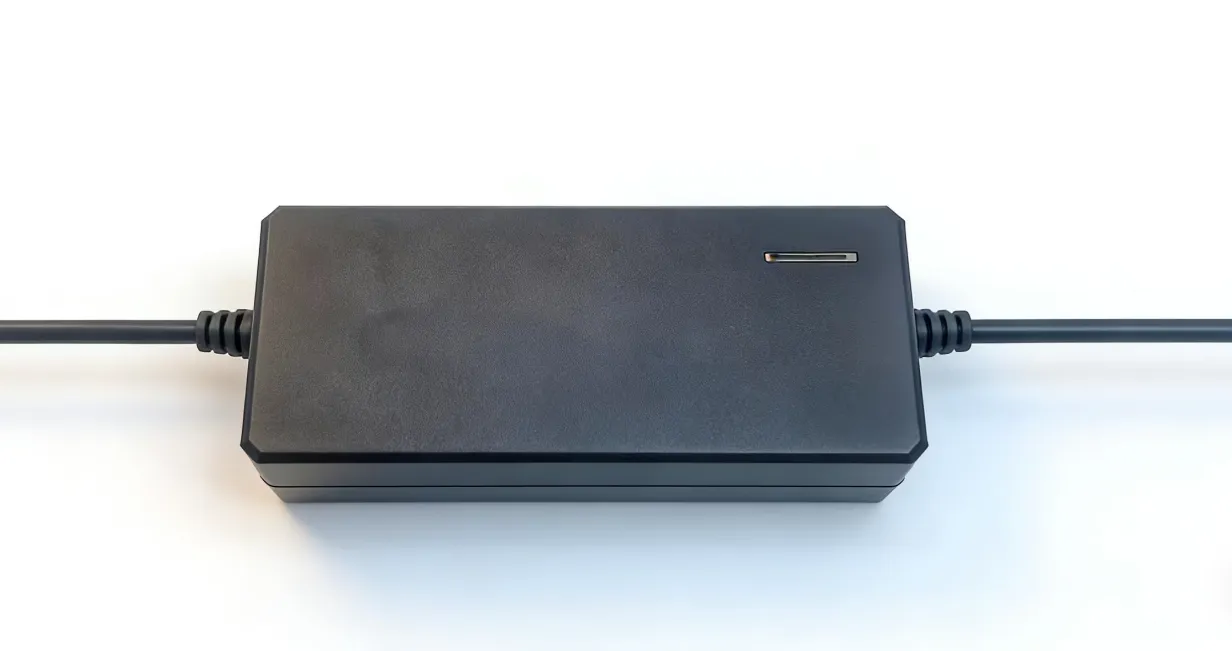
For single-bay or dual-bay setups at standard 18V/20V voltages, the Sanyi SY-C260W smart charger offers programmable charge profiles and thermal monitoring in a compact desktop form factor.
Compatibility Pitfalls — Third-Party Batteries with OEM Chargers and Vice Versa
The aftermarket battery and charger market for cordless power tools is enormous — and risky. Here is what you need to know:
Third-party batteries in OEM chargers. Most aftermarket batteries clone the physical connector but cut corners on the BMS. Common problems include: no temperature sensor (the charger sees 0°C and either refuses to charge or charges blindly), incorrect cell-count reporting (charger applies wrong termination voltage), and cheap cells that sag under load and overheat during fast charge. OEM chargers increasingly use firmware handshake checks (DeWalt, Milwaukee) that reject unrecognized packs outright.
OEM batteries in third-party chargers. Less common but equally problematic. A third-party charger may not implement the BMS communication protocol correctly, leading to unbalanced charging (some cells hit 4.3V while others sit at 4.0V), which accelerates capacity degradation and increases thermal runaway risk. The charger may also lack proper termination logic, continuing to push current after the pack signals "full."
The safe rule: Use OEM batteries with OEM chargers, or source from reputable manufacturers who publish their BMS compatibility testing data. For large fleet deployments where you need standardized upstream power, use a known-good DC source like the Sanyi SY-C500W charger paired with OEM-compatible charge control boards — this separates the "clean power" problem from the "BMS communication" problem.
For deeper background on lithium battery chemistry trade-offs, see our LiFePO4 vs lead-acid charger selection guide.
Jobsite Durability — IP54/IP65, Vibration, Temperature Range
A cordless tool charger on a construction site faces environmental abuse that would kill a consumer charger in weeks:
Dust and water. Construction dust — concrete, drywall, sawdust — is conductive when wet and abrasive when dry. OEM jobsite chargers typically carry an IP54 rating (protected against dust ingress and water splashes from any direction). Chargers intended for outdoor use or permanent installation in job trailers should target IP65 (dust-tight, protected against low-pressure water jets).
Temperature range. Lithium-ion cells cannot be charged below 0°C without risking lithium plating (permanent, dangerous capacity loss). OEM chargers include a cold-weather delay mode that monitors pack temperature and waits until the cells warm above the minimum threshold before starting the charge cycle. The operational temperature range for most professional chargers is −20°C to 60°C for storage, and 0°C to 45°C for active charging.
Vibration and impact. Chargers ride in the back of pickup trucks, fall off saw horses, and get dropped on concrete floors. OEM chargers are tested to withstand repeated 1-meter drops and vibration profiles simulating rough-road transport. This means ruggedized enclosures, potted solder joints on critical components, and strain-relieved power cords.
Safety Certifications — UL 2595, UL 1310 Class 2, IEC 62133-2 for Power Tools
Safety certifications for cordless tool chargers are not optional — they are required by building codes, jobsite safety programs, and insurance underwriters:
UL 2595 — the primary North American safety standard for battery chargers used with lithium-ion packs in portable tools. It covers input/output isolation, fault current limiting, thermal runaway response, and abnormal charge termination. If you are specifying a charger for commercial jobsite use in the US or Canada, UL 2595 listing is the baseline requirement.
UL 1310 Class 2 — covers the power supply portion of the charger, limiting output power to 100W and output voltage to 60V under fault conditions. This is the standard that ensures a charger cannot deliver enough energy to cause a fire even if the output is short-circuited. Many 18V/20V single-bay chargers fall under Class 2 limits; 60V rapid chargers typically exceed Class 2 thresholds and require UL 2595 or equivalent listing instead. For a detailed breakdown of Class 2 requirements, see our UL Class 2 vs Class II power supply guide.
IEC 62133-2 — the international standard for lithium-ion cells and packs used in portable applications. While this standard primarily governs the battery pack rather than the charger, charger manufacturers must ensure their charge profiles are compatible with IEC 62133-2-certified packs (correct termination voltage, current limits, and temperature thresholds).
CE / UKCA — required for European and UK markets, covering the Low Voltage Directive (LVD) and EMC Directive.
Buying Checklist
Before purchasing or specifying a cordless power tool battery charger, verify:
- Platform compatibility — confirm the charger matches your exact brand and voltage tier (do not assume 18V chargers work with 36V packs from the same brand)
- Bay count — match to your daily battery rotation: 1–2 batteries → single bay; 4+ batteries → multi-bay
- Charge rate — standard (60–90 min for 5.0 Ah) vs rapid (30–45 min) based on workflow urgency
- Cold-weather mode — essential if working in climates that drop below 5°C
- Ingress protection — IP54 minimum for jobsite use; IP65 for outdoor or permanent installation
- Safety listing — UL 2595 or UL 1310 Class 2 for North America; CE/UKCA for Europe
- Upstream power quality — if building a custom multi-bay station, specify a regulated DC source rated for continuous duty at full load
- Warranty and support — OEM chargers typically carry 3-year warranties; aftermarket varies widely
Sanyi Product Map for Cordless Power Tool Charging Stations
Sanyi manufactures the upstream power conversion modules that OEM charging station builders integrate into their multi-bay and custom charging solutions:
- APN Series Desktop Adapter (48W–144W) — regulated DC output ideal for single-bay 18V/20V charging boards. Compact form factor, universal AC input (100–240V), Class 2 safety rated.
- HP Series High-Power Adapter (120W–480W) — delivers the sustained high power required for 36V/40V/60V rapid charging bays and multi-bay stations. Fan-cooled, industrial temperature range, suitable for permanent installation in job trailers.
- SY-C260W Smart Charger — programmable charge profiles with thermal monitoring, suitable for 18V–36V standard-voltage tool packs.
- SY-C500W High-Power Charger — 500W continuous output for 60V FlexVolt and 40V XGT rapid-charge applications where charge time is critical.
All Sanyi power products are designed and manufactured in Shenzhen with full UL/CE/FCC certification support. Contact us for OEM integration specifications and volume pricing.
FAQ
Q: Can I use a DeWalt 20V MAX charger with a Makita 18V battery if they are both "18V" internally?
No. Although both platforms use 5s lithium-ion cell configurations with the same nominal voltage, the physical connectors, BMS communication protocols, and firmware handshakes are completely incompatible. Attempting to force a cross-brand connection will either fail to engage mechanically or, worse, damage the BMS communication pins. Always use the charger designed for your specific platform.
Q: Is it safe to leave cordless tool batteries on the charger overnight?
OEM chargers from major brands (DeWalt, Milwaukee, Makita, Bosch) include trickle-charge and maintenance-mode firmware that switches to a low-current float state once the pack reaches full charge. Leaving batteries on the charger overnight is generally safe with OEM chargers. However, aftermarket chargers that lack proper termination logic may continue pushing current into a full pack, generating excess heat and accelerating cell degradation. If you use an aftermarket charger, remove the battery promptly after the charge indicator shows full.
Q: Why does my charger blink red and refuse to charge a cold battery?
Lithium-ion cells cannot safely accept charge current below approximately 0°C (32°F). Charging below this threshold causes metallic lithium to plate on the anode surface, permanently reducing capacity and increasing the risk of internal short circuits. OEM chargers detect pack temperature through the BMS and enter a cold-weather delay mode — the red blinking indicates "waiting for the pack to warm up." Bring the battery indoors for 15–20 minutes, then retry. Never attempt to bypass this protection by using a non-OEM charger that lacks temperature monitoring.
Q: What wattage power supply do I need for a custom 4-bay 60V charging station?
A single 60V FlexVolt rapid charge bay draws approximately 120–150W at peak. A 4-bay station operating all bays simultaneously needs 480–600W of upstream DC power. The Sanyi HP series adapter at 480W is sized for exactly this application, providing continuous rated power with thermal margin for sustained multi-bay operation in enclosed job-trailer environments.
.webp)