


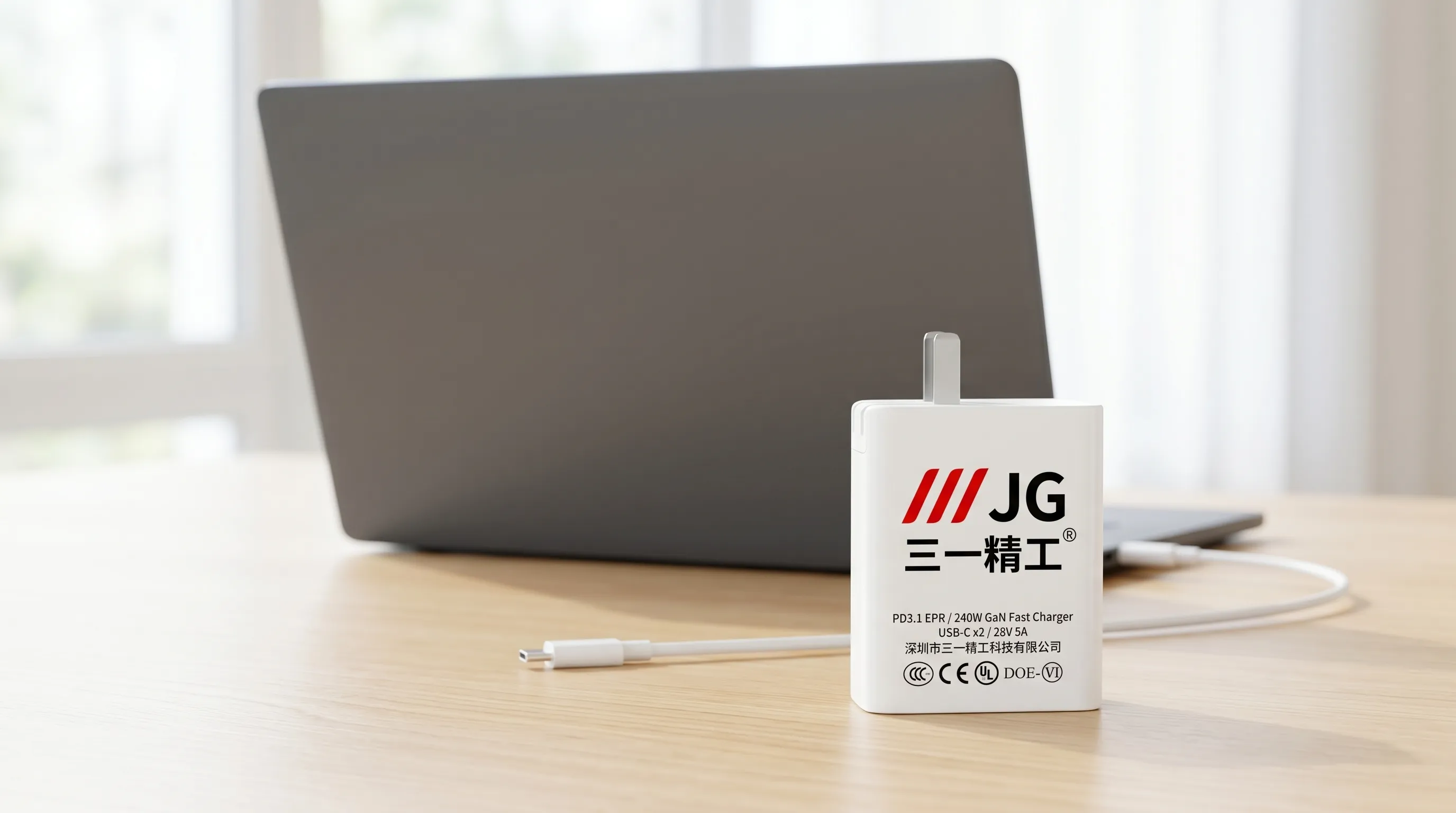

For ten years the USB-C Power Delivery story has been a single sentence: "one cable, one charger, every device." In practice, the story stopped working at exactly 100 watts. Anything that drew more — a 16-inch MacBook Pro, a Lenovo Legion, a Dell Precision workstation, a Razer Blade — kept its proprietary barrel jack and its proprietary brick. That cap is now gone. USB Power Delivery 3.1 Extended Power Range (PD 3.1 EPR) raises the ceiling to 240 watts, and 2026 is the year almost every premium laptop launches with EPR as its only port option.
If you are an OEM picking a bundled adapter, an enterprise IT manager standardizing on a single charger fleet, or a procurement engineer writing a tender, this guide is a direct walkthrough of what changed in the standard, how to read a "240W" claim on a spec sheet, and which traps still produce silently underpowered chargers in 2026.
The 30-second version
- PD 3.1 SPR keeps the legacy 5/9/15/20V profiles. EPR adds 28V, 36V, and 48V — that's where 240W lives.
- EPR requires both a charger that advertises an EPR PDO and a 5A E-Marked USB-C cable rated for 50V/240W.
- A "240W charger" with two USB-C ports almost never delivers 240W on both at once. Read the per-port profile, not the headline number.
- For laptops at or above 140W, only a true EPR charger gets you full charging speed and full sustained performance under load.
What PD 3.1 EPR Actually Changes
USB Power Delivery has gone through three meaningful generations:
| Standard | Max Power | Voltage Range | Dominant use case |
|---|---|---|---|
| PD 2.0 (2014) | 100W | 5/9/15/20V | Phones, tablets, ultrabooks |
| PD 3.0 (2017) | 100W | 5/9/15/20V + PPS | Adds Programmable Power Supply for finer-grained voltage |
| PD 3.1 SPR (2021) | 100W | 5/9/15/20V | Same ceiling, cleaner negotiation |
| PD 3.1 EPR (2021+) | 240W | + 28V, 36V, 48V | Workstations, gaming laptops, monitors, robotics |
EPR — Extended Power Range — is the only part of the standard that lifts the cap. It does it by adding three new fixed voltage profiles above the legacy 20V tier. The math at the top is simple:
240 W = 48 V × 5 A
The reason the standard chose voltage instead of more current is heat. Pushing 12A or 15A down a USB-C cable would melt the connector. Lifting voltage to 48V and keeping current at 5A keeps the cable cool while quadrupling the deliverable wattage. This is also why EPR specifically requires a 5A E-Marked cable with a 50V/240W rating — a 100W cable physically cannot transport EPR power, and a charger that detects a non-EPR cable will drop back to SPR mode.
What "EPR PDO" means on a spec sheet
A charger advertises power through a list of "Power Data Objects" — PDOs. A real EPR adapter will list something like:
Fixed PDOs:  5V/3A, 9V/3A, 15V/3A, 20V/5A
EPR Fixed:   28V/5A (140W), 36V/5A (180W), 48V/5A (240W)
PPS:         3.3-21V/5A
AVS:         15-28V (or 15-48V on EPR-AVS)
If the spec sheet shows only 20V/5A and the box says "240W via dual-port", it isn't EPR. It's two SPR ports running in parallel — useful for charging two devices, useless for a single laptop that needs more than 100W.
Which Laptops Actually Need EPR
In 2026 the EPR-or-bust line has settled around the 140W mark. Below that, a well-designed PD 3.0 100W charger still works (the laptop just charges slower under load). At or above 140W, only EPR delivers enough power to charge while the CPU and GPU are working.
| Laptop class | Typical OEM charger | Minimum 3rd-party spec |
|---|---|---|
| 14" ultrabooks | 65W PD 3.0 | 65W PD 3.0 / 100W PD 3.0 |
| 14" performance (M-series Pro, ZenBook Duo) | 96W / 100W PD 3.0 | 100W PD 3.0 minimum |
| 16" creator (MacBook Pro 16 M-Max, XPS 16) | 140W PD 3.1 EPR | 140W EPR (28V/5A) |
| Mobile workstation (P-series, Precision 7000, ZBook Fury) | 170W–230W proprietary or EPR | 180W EPR (36V/5A) or 240W |
| Gaming laptop (Razer Blade 16, ROG Strix Scar 18, Legion 9i) | 280W–330W barrel | 240W EPR (48V/5A) — supplemental, not full-load |
The last row is the trap. A 330W gaming laptop with a USB-C input will accept a 240W EPR charger and run normally during light use, but it cannot sustain full GPU load on USB-C alone. Treat 240W EPR on a 280W+ class machine as travel-grade or office-grade, not benchmark-grade.
How to Spec a Real 240W EPR Charger
Five things separate a legitimate EPR adapter from a relabelled 100W brick:
1. The PDO list explicitly lists 28V or higher
The headline number is meaningless without the voltage profile. Ask the supplier for the published PDO list and confirm at least one fixed PDO at 28V/5A. If the only fixed profile above 20V is "28V/2A" or "24V/3A", it is not USB-IF compliant EPR — those are non-standard custom profiles that may negotiate down to PD 2.0 with name-brand laptops.
2. GaN, not silicon
For 240W in a hand-portable form factor, gallium nitride (GaN) switching is effectively mandatory. Silicon MOSFET designs at 240W are physically two to three times the volume of an equivalent GaN brick and run substantially hotter at sustained load. The market reference point is <350 g and <125 cm³ for a single-port 240W EPR brick — anything dramatically larger should be questioned.
3. Bundled or specified 240W E-Marked cable
A genuine 240W charger fails politely if shipped without a 240W cable — it falls back to 100W SPR. Buyers routinely bundle a charger with a leftover 100W cable from the bag drawer and conclude "the charger is broken." Specify a USB-C 240W 5A cable (typically 1.0 m or 1.5 m) as part of the SKU, and verify the cable's E-Marker reports 50V/5A capability, not 20V/3A.
4. Honest multi-port behavior
Most real 240W chargers offer two USB-C ports. Almost none deliver 240W on both ports simultaneously. The realistic split is:
- One device: 240W EPR
- Two devices: 140W + 100W, or 180W + 60W
- Three devices (rare): 100W + 65W + 30W
If the data sheet does not publish a multi-port allocation table, assume the worst case (one port at 240W, all others disabled, or both ports forced to SPR).
5. Certifications that matter
Required: USB-IF certification, UL 62368-1 (US safety), CCC (China safety), CE/UKCA (EU/UK), FCC Part 15 (US EMC), DOE Level VI (US efficiency). Optional but increasingly demanded: CEC Tier 2 (California), EU EcoDesign 2024 Lot 7, ENERGY STAR, RoHS 3 / REACH. A charger missing USB-IF certification can still be technically functional, but cannot legally use the official USB-C trident logo or be sold into managed enterprise procurement.
Common Procurement Traps in 2026
Three traps repeat in B2B PD 3.1 procurement, almost always at the lowest landed price:
Trap 1 — Counterfeit EPR profile. The charger advertises "240W EPR" but the EPR PDO is published as 28V / 4A (112W) and the 240W figure is the multi-port total at SPR. A genuine compliant adapter publishes 28V/5A as the floor of EPR.
Trap 2 — Stripped-down cable. Charger ships with a bundled cable that lacks the 50V E-Marker chip. The system silently negotiates down to 20V/5A (100W) and the user blames the laptop.
Trap 3 — Thermal throttling at 30 minutes. The brick boots fine at 240W and runs full power for the first ten minutes of a benchmark. A cheap thermal design then derates to 180W or 140W under sustained load. Always require a 30-minute sustained-load thermal test in the supplier qualification — at 25 °C ambient and at 40 °C ambient.
For a deeper look at thermal margin in 100W+ adapters, see our power supply derating curve guide.
Where Sanyi Fits
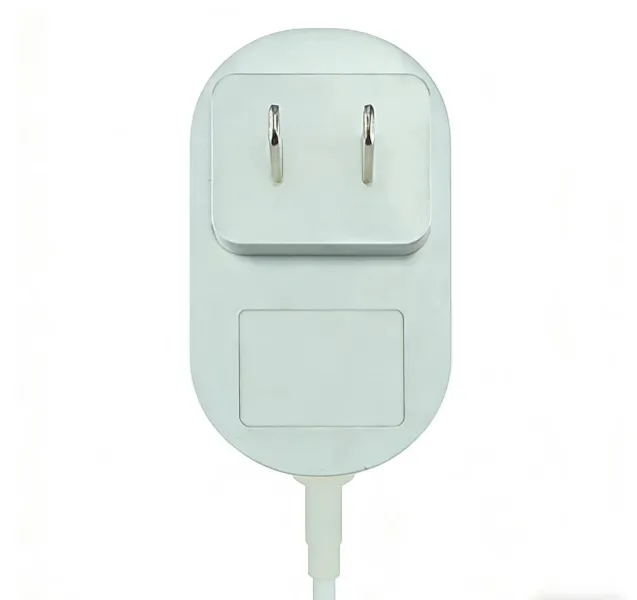
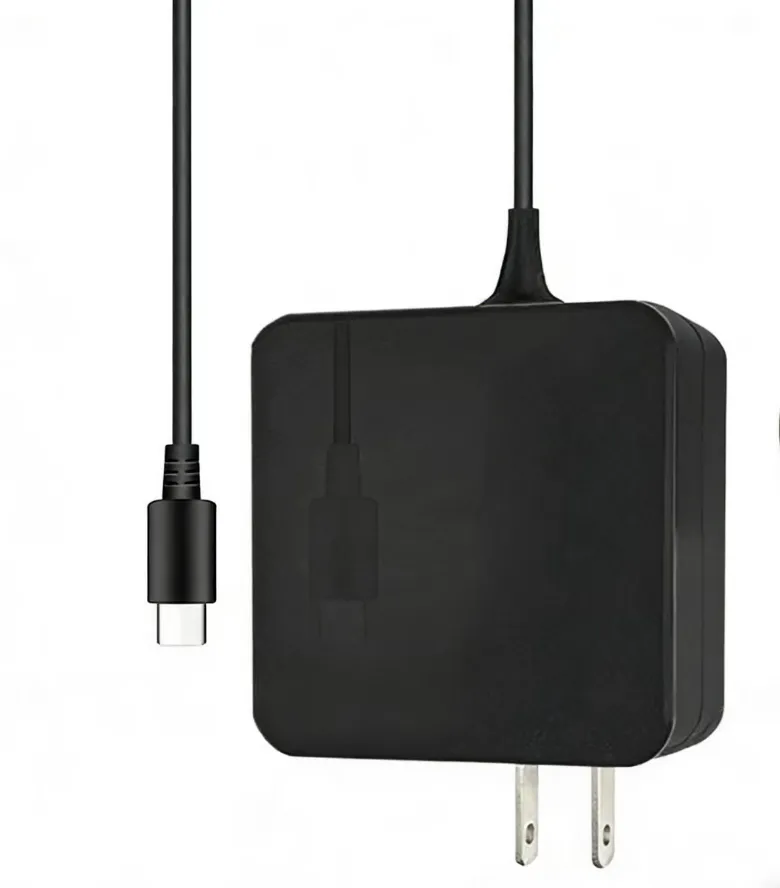
Sanyi has manufactured USB-C PD adapters since 2018 and is currently sampling PD 3.1 EPR designs at the 140W and 240W tiers for OEM bundling. The shipping PD Series fast charging adapter covers PD 2.0 / PD 3.0 / QC 3.0 with the 5V/9V/12V/15V/20V profile family, the form factor most home and office users still want.
For projects that need PD 3.1 EPR specifically, a request to our engineering team via the contact page gets you the current EPR roadmap, a sample run unit with the 28V/5A and 48V/5A profiles enabled, and an OEM compliance pack covering USB-IF, UL, CCC, CE, FCC and DOE-VI. A typical OEM minimum order quantity for a co-branded EPR adapter starts at 5,000 units with about 10–14 weeks lead time including certification updates.
If you are designing a fixed-installation power solution where USB-C charging is one of several outputs (a hospitality nightstand, a meeting room table, an EV-station accessory tray), our switching power supply line and slim PSU series cover the upstream 12V/24V/48V rail, with the EPR converter sitting on top.
Frequently Asked Questions
1. Can I use a 100W PD 3.0 charger on a laptop that ships with a 140W EPR brick?
Yes, but with two caveats. The laptop will charge — slowly, and it will not charge at all under heavy CPU/GPU load (the 100W cap is consumed by the chip and nothing is left for the battery, so the battery actually drains). For productivity at a desk, a 100W charger is a backup, not a daily driver. For a 16" MacBook Pro M-Max or a mobile workstation, plan on a real 140W or 240W EPR brick.
2. Does a 240W EPR cable work on a 65W phone charger?
Yes. EPR cables are fully backward compatible with PD 2.0 and PD 3.0 — they negotiate downward to the lower profile. The reverse is not true: a 100W (3A or 5A non-EPR) cable will not enable EPR on an EPR-capable charger. If you only own one cable, make it the 240W one.
3. Why are most 240W "GaN" chargers still around 300 grams and 130 cm³?
The size floor at 240W is set by isolation transformer volume and EMI filter inductors, not by the switching transistor. GaN halves the transistor volume but the magnetics still need iron and copper, and 240W requires meaningful Y-cap and common-mode choke values to pass FCC Part 15 Class B. A 200 g, 100 cm³ 240W brick is theoretically achievable but typically fails CE radiated EMI testing in the 30–230 MHz band. Treat suspiciously small bricks with skepticism unless they ship with a published EMC test report.
4. Will USB-C PD 3.1 ever exceed 240W?
The roadmap discussion within USB-IF since late 2025 has centered on a possible PD 3.2 with EPR-AVS extending to 60V and 480W class. As of mid-2026 there is no published spec, no certified silicon, and no shipping product. Designing today around 240W is the safe ceiling for the next 24 months.
The transition to USB-C PD 3.1 EPR is the first time in a decade that "one cable, one charger" is genuinely true for performance laptops as well as phones and tablets. The hardware is ready, the certification path is ready, and the standard is locked. What remains is procurement discipline — read the PDO list, demand the right cable, and qualify the thermal envelope before signing the PO.
For OEMs and integrators planning a 2026 USB-C charger refresh, our engineering team is happy to walk through your spec. Visit our contact page or the PD product line to start a conversation.
.webp)