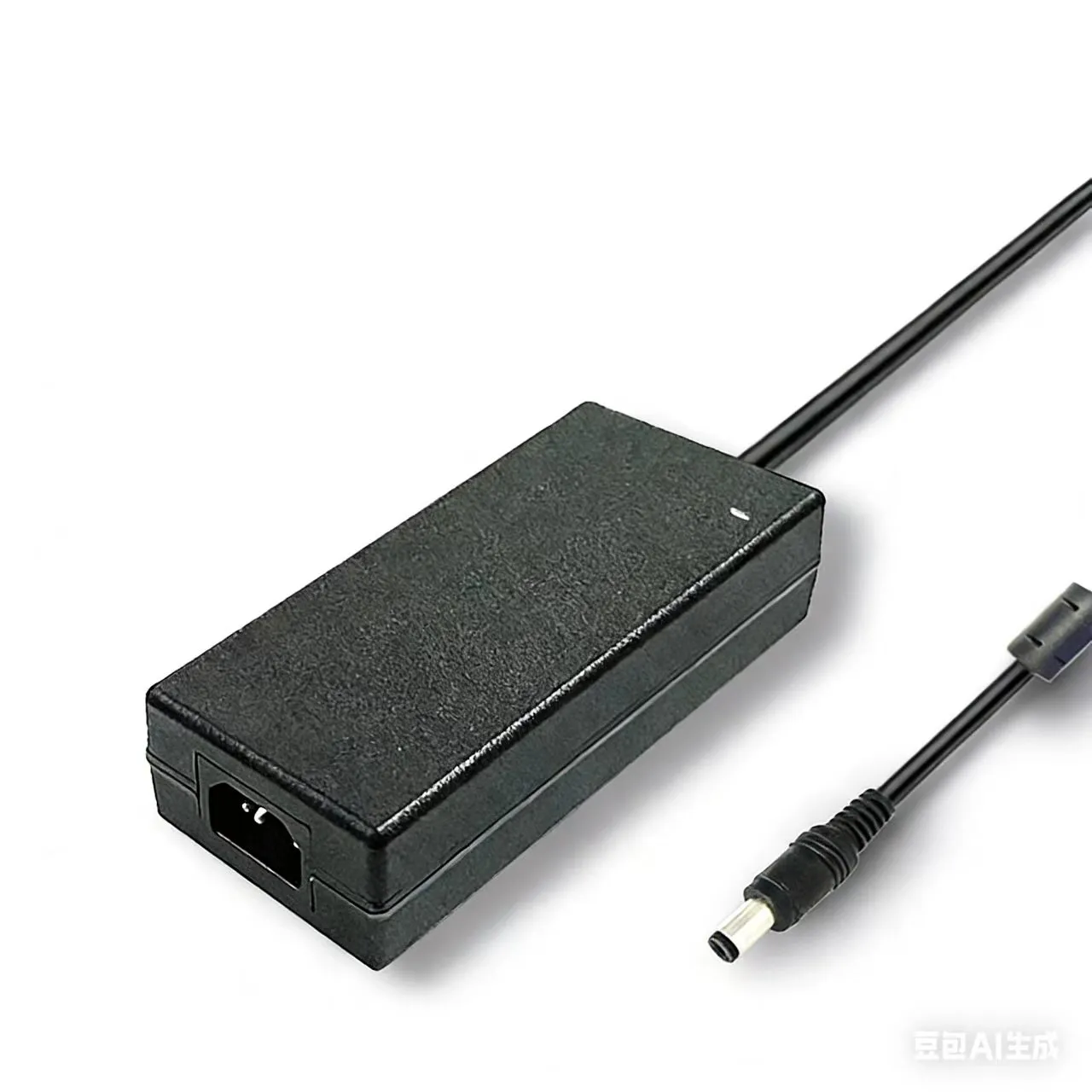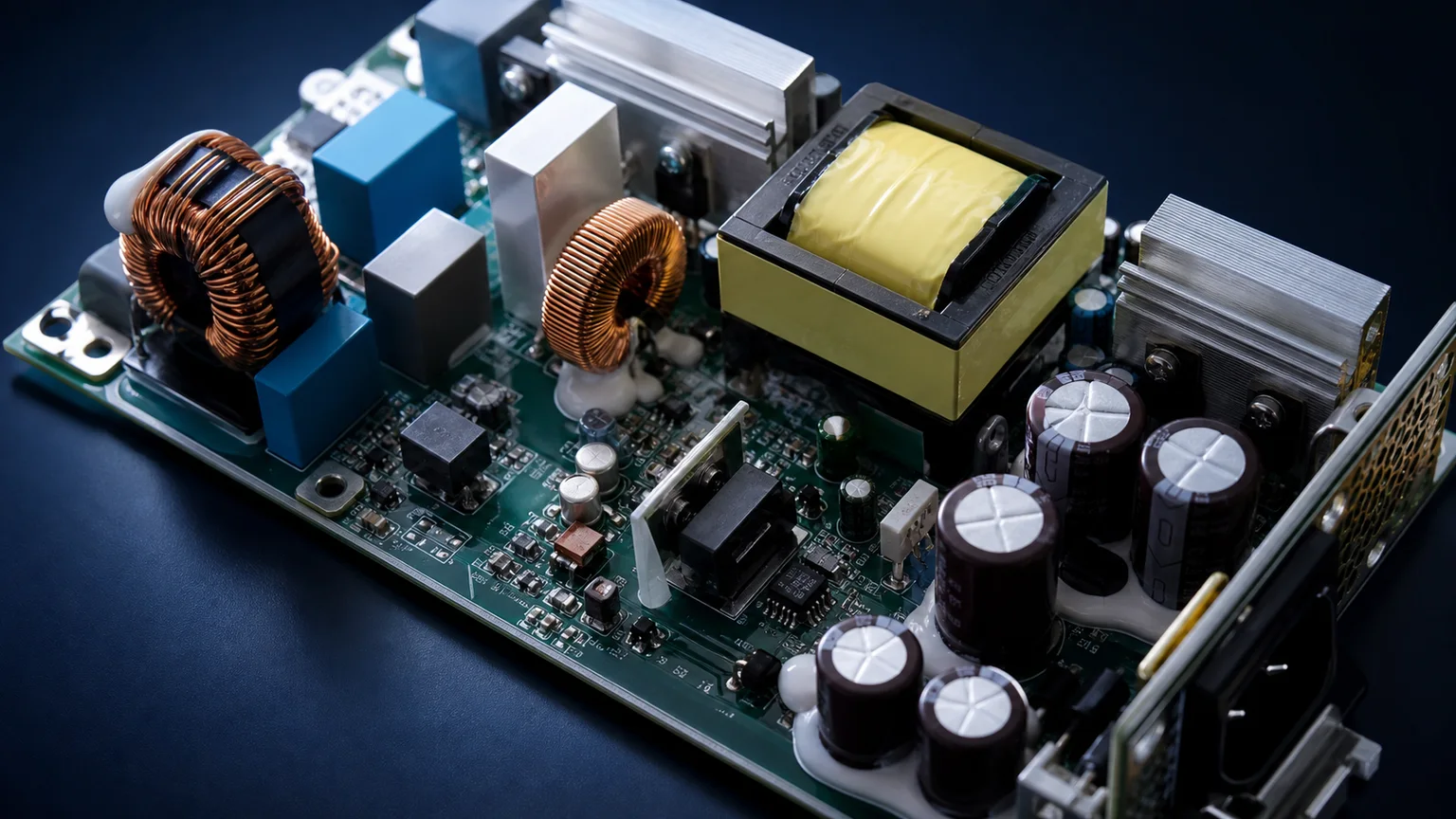

A small clinic loses mains for forty milliseconds during a thunderstorm. The reception desktop reboots, the bench-top biochemistry analyzer dumps its current run, and the network switch in the back office reseats every port. A street-corner café next door — same outage, same forty milliseconds — does not even blink, because the same money was spent on a different UPS topology.
"UPS" is not one product. It is at least three very different machines: standby (offline) UPS, line-interactive UPS, and online double-conversion UPS. They have different transfer times, different output cleanliness, different price-per-kVA curves, and different failure modes when the upstream power is dirty. Buying the wrong one for the load is the most common mistake in small-business and light-industrial backup-power specification — and it is the mistake this guide is built to prevent.
This article walks through the three topologies at a circuit-behavior level, compares them on transfer time, voltage window, harmonics, three-phase capability, and capacity ceilings, and gives a decision tree mapping each load class to a Sanyi UPS product line.
How a Standby (Offline) UPS Works
A standby UPS — sometimes called offline UPS — is the simplest of the three. During normal operation, utility AC passes straight through the unit to the load via a transfer relay. The internal battery is float-charged in the background. The inverter sits idle. When mains drops out of an acceptable window, a fast solid-state or electromechanical transfer relay disconnects the load from the mains and reconnects it to the inverter, which is now driving from the battery.
The architecture has two consequences worth naming:
- Transfer time is non-zero, typically 4–10 ms. Modern switch-mode power supplies in PCs, routers and TVs have enough hold-up capacitance to ride through this, so for typical IT loads it is invisible.
- Output during normal operation is whatever the utility delivers. A standby UPS is not a power conditioner. Spikes, sags, harmonics and frequency drift all pass through to the load until mains drops far enough to trigger the transfer.
That is why a standby UPS is the right answer for a single home-office desktop, a Wi-Fi router and ONT, a security DVR, a point-of-sale terminal, or a small NAS — environments where the upstream power is decent, the load is forgiving, and the question being answered is "ride through a 30-minute neighborhood outage," not "deliver lab-grade power 24/7."
For a deeper dive on this tier specifically, see our UPS for small business and home office guide.
How a Line-Interactive UPS Works
A line-interactive UPS keeps the same pass-through architecture as a standby, but adds an automatic voltage regulator (AVR) — usually an autotransformer with multiple taps — between the mains input and the load. The inverter is also bi-directional: it can charge the battery from mains, and it can drive the load from the battery, sharing the same magnetic component.
This buys two real advantages:
- Brown-out and over-voltage ride-through without going to battery. If utility voltage sags to 180 V or swells to 250 V, the AVR boosts or bucks back into the 220 V window. The battery is left alone, which dramatically extends battery life because cycle count is the dominant aging mechanism for sealed lead-acid packs.
- Slightly faster, more refined transfer. Transfer time is similar to standby (2–6 ms typical) but the inverter is "warmer" — it is already involved in voltage regulation — so the handoff is cleaner.
The trade-off is that line-interactive UPS units still pass-through utility noise during normal operation, just inside a regulated voltage window. They do not isolate the load from frequency drift, harmonics or transient spikes the way a true online UPS does.
Line-interactive is the sweet spot for small server closets, retail POS racks, network edge cabinets, light-duty lab equipment, and small medical devices in areas with unstable grids — exactly the sites where mains voltage routinely wanders but the load does not need lab-grade output.
How an Online Double-Conversion UPS Works
An online UPS (also called double-conversion UPS) is a fundamentally different machine. Utility AC is continuously rectified to a DC bus, and the load is always driven by the inverter off that DC bus. The battery floats on the DC bus in parallel.
Two things follow from that architecture:
- Transfer time is zero. When mains fails, nothing switches — the inverter is already driving the load. The DC bus simply starts draining from the battery instead of the rectifier.
- Output is fully regenerated. Voltage is tightly regulated (±1% typical), frequency is locked (±0.5 Hz or better), and upstream noise, harmonics and transients are isolated by the rectifier-inverter pair. The load sees clean, fresh AC regardless of what the utility is doing.
The price is real: efficiency is lower (typically 92–96% in normal operation versus 97–98% for line-interactive in AVR mode), and the unit is larger and more expensive per kVA because every watt of load energy passes through silicon twice.
That cost is worth paying for servers, network cores, medical imaging, lab instrumentation, telecom, broadcast, and any load with a published "sensitive to power quality" warning. Sanyi's Online UPS 1-3KVA covers the rack-edge tier — a small server, a network core in a branch office, a precision instrument — while the Online UPS 6-20KVA handles full server rooms, MRI/CT auxiliary loads, and small data-center footprints.
Transfer Time Compared
Transfer time is the most cited spec, but it matters only when you understand what your load tolerates.
| Topology | Typical transfer time | What it means for the load |
|---|---|---|
| Standby (offline) | 4–10 ms | Fine for PCs, routers, TVs, POS, DVR. Marginal for older industrial controllers. |
| Line-Interactive | 2–6 ms | Same envelope as standby but cleaner handoff; safe for most SMB IT. |
| Online double-conversion | 0 ms | Required for medical imaging, financial trading, PLCs without UPS-aware firmware, and anything with electromechanical contactors that drop out below 8 ms. |
Most modern switch-mode loads ride through 10 ms easily because their input bulk capacitor holds the DC rail for 16–20 ms. The loads that demand zero transfer time are mostly older single-phase motors, contactors, relays, and legacy controllers whose hold-up time was never designed around UPS behavior.
Voltage Regulation Window
The voltage window the UPS will accept without going to battery directly affects battery cycle life and runtime.
- Standby UPS — narrow input window, often ±10% (≈200–240 V). Drop below 200 V and the UPS transfers to battery immediately, burning a cycle for what may be a benign brown-out.
- Line-Interactive UPS — wide AVR window, typically −25% to +20% (≈160–260 V). The AVR boosts or bucks within this range; only outside it does the unit transfer to battery. On unstable grids, this is the difference between 50 transfers a month and 2.
- Online UPS — widest acceptable input range, often −40% to +20% (≈130–260 V), and the load output is constant regardless. The battery is only drawn when mains is fully lost.
If the site has weekly voltage sags from neighboring industrial loads — pumps starting, welders cycling, VFDs running — anything less than a line-interactive UPS will burn through batteries on a schedule no one budgeted for.
Harmonics, THD and Sensitive Loads
For a sensitive linear load — a precision instrument, an audio mixer, a medical sensor front-end — the input total harmonic distortion (THD) of the AC waveform matters as much as voltage.
- Standby UPS: output during normal operation = utility waveform unchanged. On battery, output is typically modified sine wave (square-stepped) in cheaper units, pure sine wave in better units. Modified sine is not safe for laser printers, some motors, and certain medical devices.
- Line-Interactive UPS: output on mains = utility waveform, AVR-corrected for voltage. On battery, output is pure sine wave in any reputable unit.
- Online UPS: output is always pure sine wave with <3% THD, both on mains and on battery. Frequency is locked. This is the only topology that can sit in front of a hospital biomedical analyzer without an additional isolation transformer.
For any load specifying "<5% THD input" or "requires pure sine wave," skip the first two tiers and specify online. The cost delta is small compared to one replacement of the protected equipment.
Capacity Ceilings and Three-Phase
Capacity matters because the topology bands have natural ceilings:
| Topology | Typical kVA range | Phase configuration |
|---|---|---|
| Standby | 0.4–1.5 kVA | Single-phase only |
| Line-Interactive | 0.5–3 kVA (rarely up to 5 kVA) | Single-phase only |
| Online (HF inverter) | 1–20 kVA single-phase; 10–500 kVA in three-phase | Single-phase or three-phase |
| Online (line-frequency / industrial) | 5–800 kVA | Three-phase, often 3:1 (three-phase in, single-phase out) |
Above 3 kVA, line-interactive essentially disappears from reputable catalogs — the cost of a heavy AVR transformer that big erases its price advantage over a real online UPS. Above 10 kVA, almost every serious UPS is online, because at that load level customers are protecting equipment expensive enough that double-conversion overhead is irrelevant.
Three-phase deserves a separate note. Industrial sites with three-phase service often need 3:1 (three-phase input, single-phase output) UPS units to balance the utility feed while delivering a single-phase critical bus to PLCs and instrumentation. This is a specialized line-frequency online topology — galvanic isolation via transformer, very wide input tolerance, high overload headroom. Sanyi's Line-Frequency UPS (Three-Phase In, Single-Phase Out) covers this segment for factories, control rooms and industrial automation.
For runtime sizing within whichever topology you pick, our UPS runtime calculator and battery sizing guide shows the math.
Selection Decision Tree
Use this short tree to pick a topology before pricing:
-
Is the load a single PC, router, NAS, POS or DVR on a reasonably clean grid? → Standby UPS is sufficient. Budget tier, long battery life because the unit rarely runs.
-
Is the load IT or light commercial, but the grid voltage drifts often (brown-outs, sags)? → Line-Interactive UPS. The AVR will save the battery from constant cycling.
-
Does the load include servers, network cores, medical instruments, or anything with "sensitive to power quality" in its datasheet? → Online UPS, 1–3 kVA for a rack edge or a single critical instrument; 6–20 kVA for a room-scale deployment.
-
Is the site industrial — VFDs, motors, welders sharing the feeder, or three-phase service feeding single-phase critical loads? → Line-Frequency Online UPS (3:1). Transformer isolation, harmonic tolerance, three-phase balancing.
If you are between two tiers — typical for a small clinic, a precision-machining shop, or a regional broadcast studio — choose the higher tier. The cost difference is usually 15–30%; the failure-mode difference is measured in lost runs, lost recordings, or lost equipment.
For the broader question of where UPS ends and emergency lighting begins, see our EPS vs UPS comparison guide, and for site-level topology differences between IT and industrial, see data center UPS vs industrial UPS selection guide.
Sanyi UPS Product Matrix
How the three topologies map onto Sanyi's UPS catalog:
| Tier | Topology | Sanyi product | Typical use |
|---|---|---|---|
| Entry | Standby (offline) | Standby UPS | Home office PC, router, POS, small NAS, DVR |
| Mid | Line-Interactive (AVR) | Standby UPS configured for AVR-grade sites | Small retail rack, branch network closet, light SMB IT |
| Pro single-phase | Online double-conversion 1–3 kVA | Online UPS 1-3KVA | Branch server, network core, precision instrument, small medical |
| Room-scale | Online double-conversion 6–20 kVA | Online UPS 6-20KVA | Server room, MRI/CT auxiliary, small data center, broadcast |
| Industrial | Line-Frequency 3:1 Online | Line-Frequency UPS (Three-Phase In, Single-Phase Out) | Factory floor, pump station, telecom cabinet, plant control |
If you are unsure which line fits, the Sanyi sales team will spec the unit against your site survey — voltage profile, load list, ambient temperature, runtime target — and quote the matching model. The conversation is more useful than a generic online calculator because three sites with the same nameplate load can land on three different topologies.
FAQ
Q1. Can I run a server on a standby (offline) UPS to save money? You can boot it, but you should not deploy it that way. A standby UPS passes utility noise to the PSU 24/7 and adds 4–10 ms transfer time. Modern server PSUs ride through that envelope, but every brown-out, harmonic spike or frequency drift on the upstream feeder reaches the equipment directly. Servers belong on online or, at minimum, line-interactive UPS units. The price delta is typically <$200 for a 1 kVA rack unit — far less than one unplanned downtime event.
Q2. Is line-interactive UPS a "real" UPS or just a glorified surge protector? It is a real UPS. The AVR autotransformer corrects voltage in real time without touching the battery, and the inverter delivers pure sine wave on battery. The distinction from standby is significant: line-interactive units typically survive 5–10 years on the same battery in regions with unstable grids, where a standby UPS would burn through batteries every 18 months from constant cycling.
Q3. Do I need an online UPS if my equipment is "computer-grade"? Depends on the load and the grid. A desktop PC and an Ethernet switch will be fine on line-interactive. A medical analyzer, an industrial PLC without battery-backed memory, a precision measurement instrument, or a server with attached SAN should be on online. The deciding question is not "is the load a computer?" — it is "does the datasheet require <5% THD or zero transfer time?" If yes, go online.
Q4. What about lithium-ion (LiFePO4) batteries in UPS — does that change topology choice? No, topology and battery chemistry are independent. LiFePO4 packs are increasingly common in line-interactive and online UPS units because they triple cycle life and tolerate higher ambient temperature than sealed lead-acid. But the topology decision still hinges on transfer time, voltage window, and THD requirements — chemistry only changes runtime per cubic meter and replacement interval.
Q5. Can I parallel multiple smaller UPS units instead of buying one large online unit? Only if the units explicitly support parallel operation (most online UPS units 6 kVA and up do; most standby and line-interactive units do not). Paralleling non-parallel-capable UPS units creates phase mismatch between inverters and can destroy both units on a transfer event. For redundancy at the room scale, buy a parallel-capable online UPS pair (N+1) rather than stacking small units.
If your site fits one of the rows in the matrix above, the Sanyi UPS product line has the matching unit ready. If it does not — odd voltage profile, unusual runtime target, three-phase to three-phase, or harmonic-heavy industrial mains — contact Sanyi engineering and we will spec a model against your site survey.
.webp)